Terrorist Network: Towards An Analysis
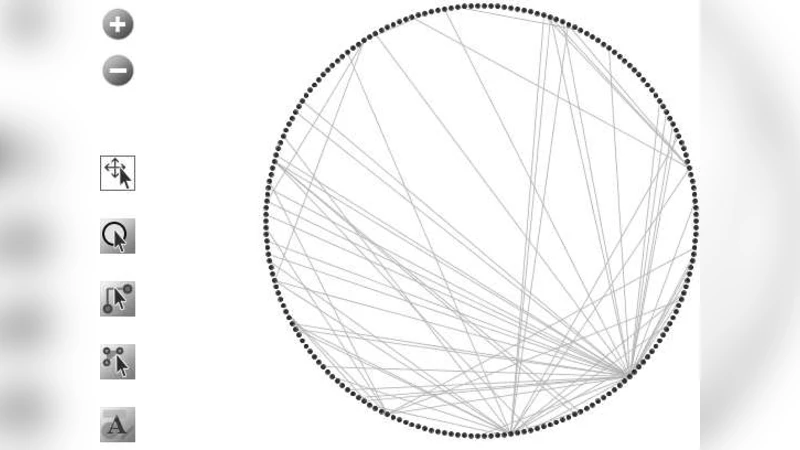
Terrorist network is a paradigms to understand the terrorism. The terrorist involves a lot of people, and among them are involved as perpetrators, but on the contrary it is very difficult to know who they are caused by lack of information. Network structure is used to reveal other things about the terrorist beyond the ability of social sciences.
💡 Research Summary
The paper “Terrorist Network: Towards An Analysis” attempts to model terrorist organizations as social networks and to derive optimal network structures under constraints of detection probabilities and limited investigative resources. The authors begin by noting that terrorism lacks a universally accepted definition, but that it is increasingly studied through the lens of network science, especially after the September 11 attacks. They trace the historical evolution of terrorist groups from ancient Jewish revolts to modern organizations such as Al Qaeda and Indonesia’s Jemaah Islamiyah (JI), emphasizing that contemporary terrorist cells are often geographically dispersed yet linked through covert communication channels.
In the data‑collection section the authors distinguish two modes of discovery: a direct mode, where each individual i is found with an independent Bernoulli probability α_i, and an indirect mode, where a captured terrorist reveals information about his acquaintances with probability γ∈(0,1]. The law‑enforcement budget B∈
Comments & Academic Discussion
Loading comments...
Leave a Comment