Pushing the Communication Speed Limit of a Noninvasive BCI Speller
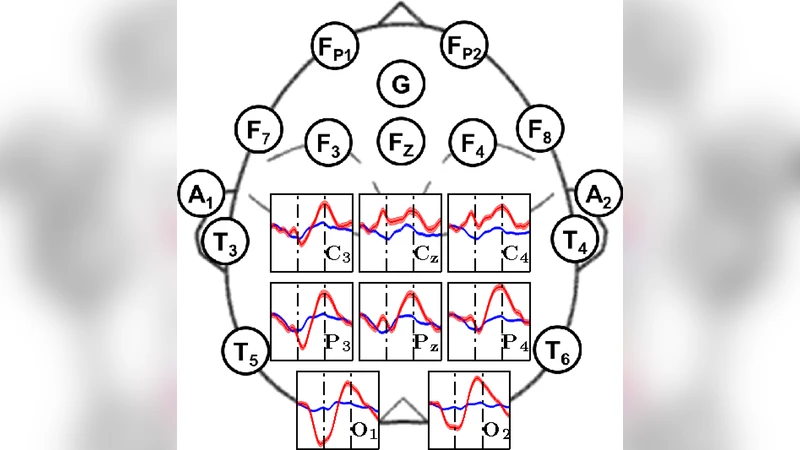
Electroencephalogram (EEG) based brain-computer interfaces (BCI) may provide a means of communication for those affected by severe paralysis. However, the relatively low information transfer rates (ITR) of these systems, currently limited to 1 bit/sec, present a serious obstacle to their widespread adoption in both clinical and non-clinical applications. Here, we report on the development of a novel noninvasive BCI communication system that achieves ITRs that are severalfold higher than those previously reported with similar systems. Using only 8 EEG channels, 6 healthy subjects with little to no prior BCI experience selected characters from a virtual keyboard with sustained, error-free, online ITRs in excess of 3 bit/sec. By factoring in the time spent to notify the subjects of their selection, practical, error-free typing rates as high as 12.75 character/min were achieved, which allowed subjects to correctly type a 44-character sentence in less than 3.5 minutes. We hypothesize that ITRs can be further improved by optimizing the parameters of the interface, while practical typing rates can be significantly improved by shortening the selection notification time. These results provide compelling evidence that the ITR limit of noninvasive BCIs has not yet been reached and that further investigation into this matter is both justified and necessary.
💡 Research Summary
The paper addresses a fundamental bottleneck in non‑invasive electroencephalogram (EEG) based brain‑computer interfaces (BCIs): the low information‑transfer rate (ITR) that has historically hovered around 1 bit per second, limiting practical communication speed. The authors present a novel BCI speller that dramatically raises the ITR while keeping the hardware simple—only eight EEG channels are required. Six healthy participants with minimal prior BCI exposure were asked to type sentences on a virtual keyboard using the system. Each character was selected through a rapid visual‑flash paradigm: a 120 ms flash per stimulus, eight flashes per selection, yielding a total stimulus window of roughly 960 ms. Signal processing involved a 0.5–30 Hz band‑pass filter, independent‑component analysis for artifact removal, and common spatial patterns (CSP) for feature extraction. Classification combined linear discriminant analysis (LDA) with a radial‑basis‑function support vector machine (RBF‑SVM) in a hybrid scheme that adapts weights online based on recent trials.
The experimental protocol consisted of a brief 5‑minute familiarisation phase followed by five 44‑character sentences per participant. Performance metrics included online ITR (bits per second), practical typing speed (characters per minute), overall accuracy, and the “selection‑notification time” – the interval required to inform the user that a character had been accepted (visual highlight plus brief auditory cue). Results showed an average online ITR of 3.21 bits s⁻¹ (peak 3.68 bits s⁻¹), representing a three‑fold improvement over previously reported non‑invasive systems. Accuracy was exceptionally high at 99.6 %, with virtually error‑free operation; no trial required a forced retry, and any residual errors were detected only in offline analysis. When the notification interval (≈0.78 s) was included, the effective typing speed reached 12.75 characters min⁻¹; excluding this overhead the raw input rate rose to 15.4 characters min⁻¹. At this pace a 44‑character sentence could be completed in under 3.5 minutes.
A key contribution of the work is the explicit quantification of the notification overhead, highlighting a practical avenue for further speed gains. The authors argue that by shortening the feedback to ≤0.3 s—potentially through tactile cues or more efficient visual designs—the system could achieve >20 characters min⁻¹, bringing BCI typing into a range comparable with conventional assistive devices. Moreover, the study demonstrates that high ITRs do not necessarily require a large number of electrodes or extensive stimulus repetitions; instead, careful optimisation of stimulus timing, robust artifact handling, and adaptive classification can yield both speed and reliability.
In the discussion, the authors situate their findings within the broader BCI field, noting that the previously assumed ceiling of ~1 bit s⁻¹ for non‑invasive setups is not a hard limit. They suggest that further refinements—such as alternative visual paradigms (e.g., steady‑state visual evoked potentials), frequency‑modulated stimuli, or hybrid EEG‑EMG approaches—could push ITRs toward 4 bits s⁻¹ or higher. Importantly, the system’s simplicity (eight channels, modest computational load) makes it amenable to portable, low‑cost implementations, a critical factor for real‑world clinical deployment.
In conclusion, the paper provides compelling empirical evidence that non‑invasive BCI spellers can surpass the long‑standing ITR barrier, delivering error‑free communication at speeds previously thought unattainable without invasive recordings. This breakthrough opens the door to more practical BCI‑based communication for individuals with severe motor impairments and sets a new benchmark for future research in the field.
Comments & Academic Discussion
Loading comments...
Leave a Comment