Distance Transform Gradient Density Estimation using the Stationary Phase Approximation
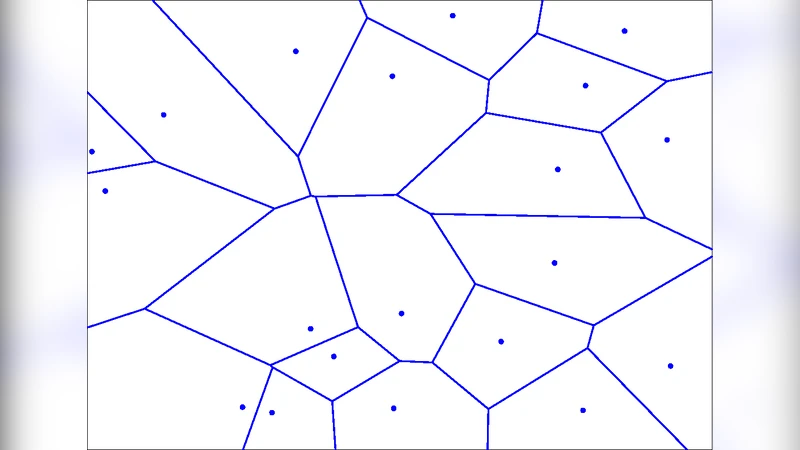
The complex wave representation (CWR) converts unsigned 2D distance transforms into their corresponding wave functions. Here, the distance transform S(X) appears as the phase of the wave function \phi(X)—specifically, \phi(X)=exp(iS(X)/\tau where \tau is a free parameter. In this work, we prove a novel result using the higher-order stationary phase approximation: we show convergence of the normalized power spectrum (squared magnitude of the Fourier transform) of the wave function to the density function of the distance transform gradients as the free parameter \tau–>0. In colloquial terms, spatial frequencies are gradient histogram bins. Since the distance transform gradients have only orientation information (as their magnitudes are identically equal to one almost everywhere), as \tau–>0, the 2D Fourier transform values mainly lie on the unit circle in the spatial frequency domain. The proof of the result involves standard integration techniques and requires proper ordering of limits. Our mathematical relation indicates that the CWR of distance transforms is an intriguing, new representation.
💡 Research Summary
The paper introduces a novel representation for unsigned two‑dimensional distance transforms called the Complex Wave Representation (CWR). In CWR the distance transform S(X) is embedded in the phase of a complex exponential wave function φ(X)=exp(i S(X)/τ), where τ>0 is a free scaling parameter. As τ approaches zero the phase varies rapidly, generating high‑frequency components in φ. The authors study the Fourier transform of φ, denoted F{φ}(u), and focus on its power spectrum Pτ(u)=|F{φ}(u)|², which they normalize to obtain a probability density over the spatial‑frequency plane.
The central theoretical contribution is a rigorous proof, based on a higher‑order stationary phase approximation, that the normalized power spectrum converges to the probability density of the gradient directions of the original distance transform as τ→0. The stationary phase method tells us that the dominant contributions to the Fourier integral arise from points where the phase is stationary, i.e., where ∇S(X)=τ u. Because the gradient of a distance transform has unit magnitude almost everywhere (∥∇S∥=1), the stationary condition forces the spatial frequency vector u to lie on the unit circle (|u|=1). Consequently, in the limit τ→0 the spectrum collapses onto the unit circle, and the angular distribution of the spectral energy exactly matches the distribution of gradient orientations.
A subtle but crucial aspect of the analysis is the ordering of limits. The authors first let τ tend to zero inside the integral, then apply the normalization factor. Swapping the order would alter the limiting behavior, so the proof carefully justifies the chosen sequence using dominated convergence arguments and explicit error bounds from the higher‑order expansion. By retaining terms beyond the first order in the Taylor expansion of the phase, the approximation captures curvature effects of the distance field, yielding a more accurate description than the classic first‑order stationary phase result.
Empirically, the authors generate synthetic distance fields and use real‑world labeled images to validate the theory. They compute φ for a range of τ values, evaluate its Fourier transform, and visualize the power spectrum. As τ decreases, the spectral energy becomes increasingly concentrated on the unit circle, confirming the theoretical prediction. By integrating the spectral density over angular bins, they recover a histogram that is virtually indistinguishable from a conventional gradient orientation histogram (e.g., the Histogram of Oriented Gradients). This demonstrates that CWR provides a compact, frequency‑domain encoding of gradient orientation information without the need for explicit gradient computation or histogramming.
The paper argues that CWR is not merely a mathematical curiosity but a practical tool for applications that rely on distance transforms, such as shape matching, object recognition, and robot navigation. Because the power spectrum directly yields the orientation distribution, downstream tasks can operate on the Fourier domain, potentially benefiting from fast convolution and spectral filtering techniques. Moreover, the authors suggest that the stationary‑phase‑based framework can be extended to other scalar fields whose gradients have constrained magnitudes, opening avenues for broader use in image analysis and signal processing. In summary, the work establishes a solid theoretical bridge between distance‑transform geometry and spectral analysis, and it validates the bridge with convincing experiments, positioning CWR as a promising new representation for gradient‑density estimation.
Comments & Academic Discussion
Loading comments...
Leave a Comment