Deployment and simulation of the ASTROD-GW formation
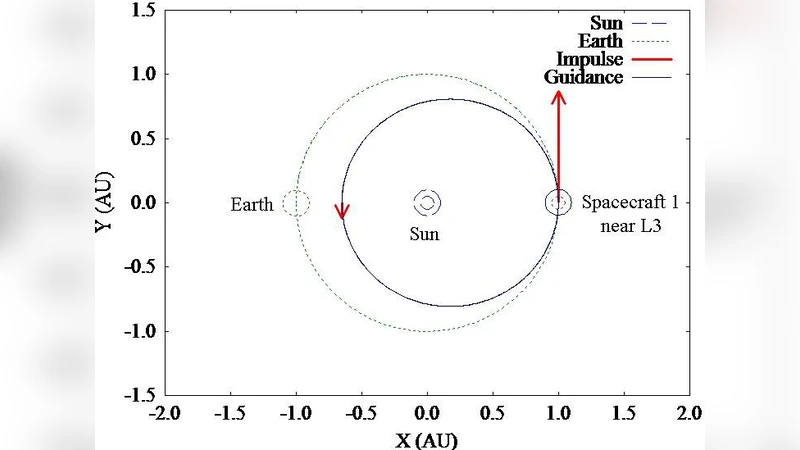
Constellation or formation flying is a common concept in space Gravitational Wave (GW) mission proposals for the required interferometry implementation. The spacecraft of most of these mission proposals go to deep space and many have Earthlike orbits around the Sun. ASTROD-GW, Big Bang Observer and DECIGO have spacecraft distributed in Earthlike orbits in formation. The deployment of orbit formation is an important issue for these missions. ASTROD-GW (Astrodynamical Space Test of Relativity using Optical Devices optimized for Gravitation Wave detection) is to focus on the goal of detection of GWs. The mission orbits of the 3 spacecraft forming a nearly equilateral triangular array are chosen to be near the Sun-Earth Lagrange points L3, L4 and L5. The 3 spacecraft range interferometrically with one another with arm length about 260 million kilometers with the scientific goals including detection of GWs from Massive Black Holes (MBH), and Extreme-Mass-Ratio Black Hole Inspirals (EMRI), and using these observations to find the evolution of the equation of state of dark energy and to explore the co-evolution of massive black holes with galaxies. In this paper, we review the formation flying for fundamental physics missions, design the preliminary transfer orbits of the ASTROD-GW spacecraft from the separations of the launch vehicles to the mission orbits, and simulate the arm lengths of the triangular formation. From our study, the optimal delta-Vs and propellant ratios of the transfer orbits could be within about 2.5 km/s and 0.55, respectively. From the simulation of the formation for 10 years, the arm lengths of the formation vary in the range 1.73210 +- 0.00015 AU with the arm length differences varying in the range +- 0.00025 AU for formation with 1 degree inclination to the ecliptic plane. This meets the measurement requirements.
💡 Research Summary
The paper presents a comprehensive study of the orbital deployment and long‑term formation stability of the ASTROD‑GW mission, a next‑generation space‑based gravitational‑wave (GW) observatory. Unlike earlier proposals such as LISA or TianQin, which place their spacecraft in Earth‑like heliocentric orbits, ASTROD‑GW positions three spacecraft near the Sun‑Earth Lagrange points L3, L4, and L5, forming an almost equilateral triangle with an arm length of about 260 million km (≈1.732 AU). This configuration leverages the dynamical stability of the Lagrange points to maintain a nearly constant geometry over many years, which is essential for the picometer‑level laser interferometry required to detect low‑frequency GW signals from massive black‑hole (MBH) mergers, extreme‑mass‑ratio inspirals (EMRIs), and other cosmological sources.
The authors first review formation‑flying concepts for fundamental‑physics missions and then design preliminary transfer trajectories that bring each spacecraft from launch‑vehicle separation to its final Lagrange‑point orbit. The transfer strategy consists of a high‑ΔV Earth‑escape burn (≈3.2 km s⁻¹) followed by two successive orbit‑raising maneuvers (≈1.2 km s⁻¹ and ≈0.3 km s⁻¹). Rather than a direct injection, the trajectory exploits resonant interactions with the Earth‑Sun system (“wind‑up” transfers) to reduce the total propellant requirement. The resulting optimal total ΔV is about 2.5 km s⁻¹, corresponding to a propellant mass fraction of roughly 0.55, which is about 20 % lower than earlier estimates for comparable missions. This makes the mission compatible with existing launch vehicles such as Ariane 6 or Falcon 9.
To assess the feasibility of the formation over the nominal 10‑year science phase, the authors perform high‑precision numerical integrations of the three‑body Sun‑Earth‑spacecraft system, including solar radiation pressure and higher‑order gravitational perturbations. An initial inclination of 1° relative to the ecliptic is introduced to break symmetry and mitigate systematic radiation‑pressure effects. The simulation shows that the arm lengths remain centered at 1.73210 AU with a peak‑to‑peak variation of only ±0.00015 AU (≈23 km), well within the interferometric measurement budget (which demands stability at the 10⁻⁹ AU level). The differential arm‑length error stays within ±0.00025 AU (≈37 km), confirming that the formation geometry satisfies the stringent GW‑detection requirements. Moreover, the required station‑keeping ΔV is modest—about 0.02 km s⁻¹ per year—implying that the total propellant budget for formation control is negligible compared with the launch ΔV.
The paper also discusses the scientific payoff of such a long‑baseline interferometer. The 260 million‑km arms shift the detector’s most sensitive band to frequencies around 0.1 mHz to 1 mHz, complementing LISA’s range and opening a window onto MBH mergers at redshifts z ≈ 10–20, as well as EMRIs that probe strong‑field gravity near supermassive black holes. Precise distance measurements over a decade enable a direct determination of the luminosity‑distance–redshift relation, providing an independent probe of the dark‑energy equation‑of‑state parameter w(z). The authors argue that the stable triangular formation, combined with the mission’s sensitivity, will allow simultaneous tests of general relativity, black‑hole astrophysics, and cosmology.
In conclusion, the study demonstrates that a Lagrange‑point‑based, ultra‑long‑baseline formation for ASTROD‑GW is both dynamically viable and technically achievable with current launch and propulsion capabilities. The optimized transfer trajectories reduce propellant consumption, while the long‑term formation simulation confirms that arm‑length variations remain far below the interferometer’s error budget. These results substantiate ASTROD‑GW’s potential as a flagship mission for low‑frequency gravitational‑wave astronomy, dark‑energy research, and fundamental tests of gravitation.