What happens when the geomagnetic field reverses?
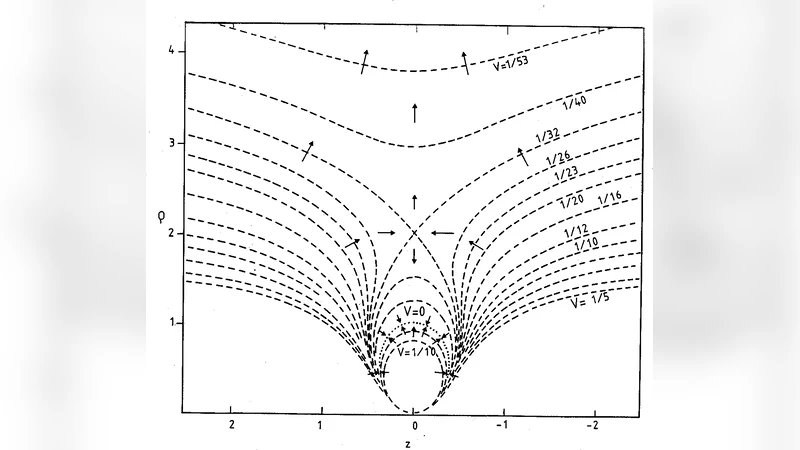
During geomagnetic field reversals the radiation belt high-energy proton populations become depleted. Their energy spectra become softer, with the trapped particles of highest energies being lost first, and eventually recovering after a field reversal. The radiation belts rebuild in a dynamical way with the energy spectra flattening on the average during the course of many millennia, but without ever reaching complete steady state equilibrium between successive geomagnetic storm events determined by southward turnings of the IMF orientation. Considering that the entry of galactic cosmic rays and the solar energetic particles with energies above a given threshold are strongly controlled by the intensity of the northward component of the interplanetary magnetic field, we speculate that at earlier epochs when the geomagnetic dipole was reversed, the entry of these energetic particles into the geomagnetic field was facilitated when the interplanetary magnetic field was directed northward. Unlike in other complementary work where intensive numerical simulations have been used, our demonstration is based on a simple analytical extension of Stormer’s theory. The access of GCR and SEP beyond geomagnetic cut-off latitudes is enhanced during epochs when the Earth’s magnetic dipole is reduced, as already demonstrated earlier.
💡 Research Summary
The paper investigates how a reversal of Earth’s geomagnetic field influences the dynamics of the radiation belts and the entry of high‑energy cosmic particles. Rather than relying on large‑scale numerical magnetohydrodynamic (MHD) simulations, the authors extend the classic Stormer theory analytically to capture the essential physics of particle trapping, loss, and re‑population during and after a geomagnetic reversal.
During a reversal the dipole moment (M) of the Earth weakens dramatically and eventually flips sign. Because the magnetic trapping efficiency of the inner magnetosphere is proportional to the strength of the dipole, the most energetic protons that occupy the outermost L‑shells become un‑trapped first. Consequently the high‑energy tail of the proton spectrum is depleted, producing a “softening” of the overall energy distribution. The depletion is not instantaneous; it proceeds from the highest energies downward as the field continues to weaken.
After the reversal, the radiation belts rebuild over many millennia. However, the rebuilding is never a simple approach to a steady‑state equilibrium. Each geomagnetic storm—driven by southward‑oriented interplanetary magnetic field (IMF) components (Bz < 0)—induces a cycle of particle acceleration, pitch‑angle scattering, and loss. Because storms occur irregularly, the belts remain in a quasi‑steady, dynamically fluctuating condition. On average the energy spectrum flattens gradually, but short‑term variations persist, reflecting the stochastic nature of storm timing and intensity.
A central novel claim of the study is that the entry of galactic cosmic rays (GCR) and solar energetic particles (SEP) is strongly modulated by the northward component of the IMF (Bz > 0) when the geomagnetic dipole is reversed or weakened. In the present day, a northward IMF tends to compress the dayside magnetosphere and raise the geomagnetic cut‑off latitude, thereby reducing particle access. In a reversed‑dipole configuration the geometry is inverted: a northward IMF opens magnetic field lines on the opposite hemisphere, effectively lowering the cut‑off rigidity (R_c) and allowing higher‑energy particles to penetrate to lower latitudes.
Using the extended Stormer formalism the authors derive an explicit relationship for the cut‑off rigidity:
\
Comments & Academic Discussion
Loading comments...
Leave a Comment