Microcanonical thermostatistics of coarse-grained proteins with amyloidogenic propensity
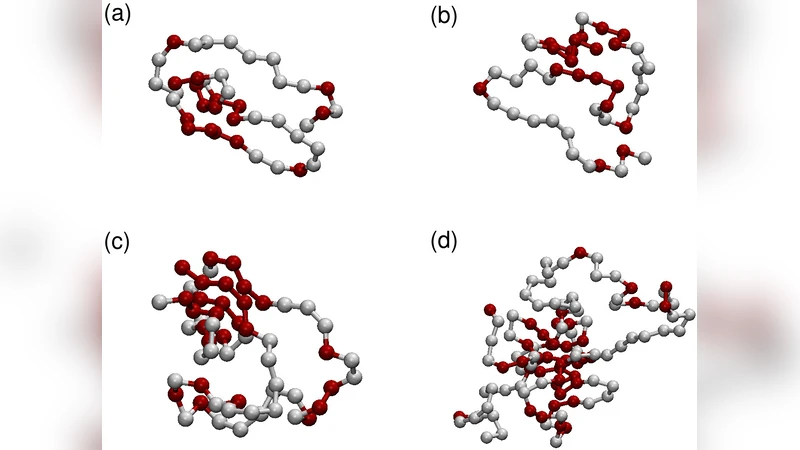
The formation of fibrillar aggregates seems to be a common characteristic of polypeptide chains, although the observation of these aggregates may depend on appropriate experimental conditions. Partially folded intermediates seem to have an important role in the generation of protein aggregates, and a mechanism for this fibril formation considers that these intermediates also correspond to metastable states with respect to the fibrillar ones. Here, using a coarse-grained (CG) off-lattice model, we carry out a comparative analysis of the thermodynamic aspects characterizing the folding transition with respect to the propensity for aggregation of four different systems: two isoforms of the amyloid $\beta$-protein, the Src SH3 domain, and the human prion proteins (hPrP). Microcanonical analysis of the data obtained from replica exchange method (REM) is conducted to evaluate the free-energy barrier and latent heat in these models. The simulations of the amyloid $\beta$ isoforms and Src SH3 domain indicated that the folding process described by this CG model is related to a negative specific heat, a phenomenon that can only be verified in the microcanonical ensemble in first-order phase transitions. The CG simulation of the hPrP heteropolymer yielded a continuous folding transition. The absence of a free-energy barrier and latent heat favors the presence of partially unfolded conformations, and in this context, this thermodynamic aspect could explain the reason why the hPrP heteropolymer is more aggregation-prone than the other heteropolymers considered in this study. We introduced the hydrophobic radius of gyration as an order parameter and found that it can be used to obtain reliable information about the hydrophobic packing and the transition temperatures in the folding process.
💡 Research Summary
The paper investigates the thermodynamic signatures of folding and aggregation propensity in four polypeptide systems—two amyloid‑β (Aβ40 and Aβ42) isoforms, the Src SH3 domain, and the human prion protein (hPrP)—using a coarse‑grained (CG) off‑lattice model. The authors employ replica‑exchange Monte Carlo (REM) simulations to generate extensive energy histograms for each system. These histograms are combined via the weighted‑histogram analysis method (WHAM) to obtain the density of states Ω(E), from which the microcanonical entropy S(E)=k_B ln Ω(E) is derived. By differentiating S(E) they compute the microcanonical temperature T(E)=(\big(dS/dE\big)^{-1}) and the specific heat C(E)=−T(E)^2 dT/dE. This microcanonical framework allows the detection of convex intruders in the S(E) curve—signatures of negative specific heat that are invisible in canonical ensembles.
For the Aβ isoforms and the Src SH3 domain, the S(E) curves display clear convex regions, leading to temperature intervals where C(E) becomes negative. This indicates a first‑order‑like phase transition: a free‑energy barrier ΔF separates a folded basin from an unfolded one, and a latent heat L is released at the transition. Quantitatively, the barrier heights are on the order of 2–3 k_BT and the latent heats are roughly 0.12–0.18 ε (in reduced CG units). The presence of a metastable intermediate state is consistent with experimental observations that partially folded species act as nucleation seeds for amyloid fibrils.
In contrast, the hPrP heteropolymer exhibits a completely convex S(E) without any convex intruder, and its specific heat remains positive throughout the explored energy range. Consequently, no free‑energy barrier or latent heat can be identified; the folding transition is continuous (second‑order‑like). The absence of a barrier permits a substantial population of partially unfolded conformations at equilibrium, providing a thermodynamic rationale for the heightened amyloidogenic propensity of hPrP relative to the other proteins studied.
Beyond the conventional order parameters (radius of gyration, number of native contacts), the authors introduce the hydrophobic radius of gyration, R_g^hyd, which measures the spatial dispersion of hydrophobic residues only. R_g^hyd shows a sharp drop at the same temperature where the microcanonical analysis signals the transition, making it a reliable proxy for both the transition temperature and the degree of hydrophobic core formation. Because the CG model emphasizes hydrophobic interactions as the primary driving force, R_g^hyd captures the essential physics of the folding process more directly than global geometric measures.
The study’s main contributions are threefold. First, it demonstrates that microcanonical analysis can uncover negative specific‑heat regions and latent heats in protein models, providing a clear thermodynamic fingerprint of first‑order‑like folding transitions. Second, it links the presence or absence of a free‑energy barrier to the propensity for amyloid formation: systems with a barrier (Aβ, SH3) have metastable intermediates that can nucleate fibrils, while barrier‑less systems (hPrP) maintain a sizable ensemble of partially unfolded states that are intrinsically aggregation‑prone. Third, it validates R_g^hyd as an effective order parameter for monitoring hydrophobic packing and transition temperatures in coarse‑grained simulations.
Overall, the paper bridges the gap between statistical‑mechanical theory and the phenomenology of protein aggregation. By applying a microcanonical perspective to CG models, the authors provide a quantitative framework that can be extended to atomistic simulations, mutational studies, and drug‑design efforts aimed at stabilizing native states or destabilizing aggregation‑competent intermediates. The methodology offers a powerful tool for dissecting the subtle thermodynamic balances that underlie neurodegenerative diseases such as Alzheimer’s, Parkinson’s, and prion disorders.