Evaluation of the importance of spin-orbit couplings in the nonadiabatic quantum dynamics with quantum fidelity and with its efficient "on-the-fly" ab initio semiclassical approximation
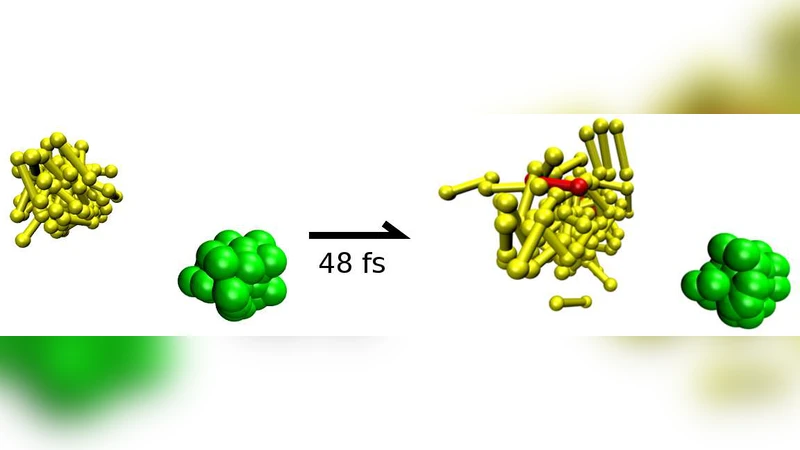
We propose to measure the importance of spin-orbit couplings (SOCs) in the nonadiabatic molecular quantum dynamics rigorously with quantum fidelity. To make the criterion practical, quantum fidelity is estimated efficiently with the multiple-surface dephasing representation (MSDR). The MSDR is a semiclassical method that includes nuclear quantum effects through interference of mixed quantum-classical trajectories without the need for the Hessian of potential energy surfaces. Two variants of the MSDR are studied, in which the nuclei are propagated either with the fewest-switches surface hopping or with the locally mean field dynamics. The fidelity criterion and MSDR are first tested on one-dimensional model systems amenable to numerically exact quantum dynamics. Then, the MSDR is combined with “on-the-fly” computed electronic structure to measure the importance of SOCs and nonadiabatic couplings (NACs) in the photoisomerization dynamics of CH2NH2+ considering 20 electronic states and in the collision of F + H2 considering six electronic states.
💡 Research Summary
This paper introduces a rigorous yet practical way to assess how much spin‑orbit couplings (SOCs) influence non‑adiabatic molecular quantum dynamics. The authors adopt quantum fidelity, defined as the squared overlap between a wavefunction propagated with a Hamiltonian that neglects SOCs and a wavefunction propagated with the full Hamiltonian that includes SOCs, as a quantitative “importance metric.” A fidelity value close to one indicates that SOCs have little effect on the dynamics, whereas a rapid drop signals that SOCs play a decisive role in shaping nuclear motion and electronic transitions.
Direct evaluation of fidelity is infeasible for realistic systems because it would require exact quantum propagation on high‑dimensional potential energy surfaces. To overcome this obstacle, the authors develop an efficient semiclassical estimator based on the Multiple‑Surface Dephasing Representation (MSDR). In MSDR, an ensemble of classical nuclear trajectories is sampled from the initial nuclear wavepacket. For each trajectory two propagations are performed: (i) a “reference” propagation under the SOC‑free Hamiltonian and (ii) a “perturbed” propagation under the Hamiltonian that contains SOCs (and, when desired, non‑adiabatic couplings, NACs). The phase difference accumulated along the two paths produces a dephasing factor; averaging this factor over all trajectories yields an approximation to the quantum fidelity. Crucially, MSDR does not require Hessians of the potential energy surfaces, relying only on the electronic coupling matrices (SOC and NAC elements), which makes it compatible with on‑the‑fly electronic‑structure calculations.
Two distinct schemes for the nuclear dynamics are examined within the MSDR framework. The first is the Fewest‑Switches Surface Hopping (FSSH) algorithm, where each trajectory resides on a single adiabatic surface and hops probabilistically according to the instantaneous non‑adiabatic coupling. The second is Locally Mean‑Field Dynamics (LMFD), in which each trajectory experiences a weighted mean‑field potential that incorporates contributions from all electronic states simultaneously, thus avoiding explicit stochastic hops. Both schemes preserve the essential quantum interference between the reference and perturbed propagations, allowing MSDR to capture the decoherence that underlies fidelity decay.
The methodology is first validated on one‑dimensional model systems for which numerically exact quantum dynamics can be obtained via split‑operator techniques. In these benchmarks, both MSDR‑FSSH and MSDR‑LMFD reproduce the exact fidelity curves with high accuracy, correctly identifying the time intervals where SOCs induce strong dephasing. The tests demonstrate that MSDR scales linearly with the number of trajectories and electronic states, offering a computationally affordable alternative to full quantum propagation.
Having established reliability, the authors combine MSDR with on‑the‑fly ab‑initio electronic‑structure calculations to study two chemically relevant problems. The first application concerns the photo‑isomerization dynamics of the protonated imine CH₂NH₂⁺. Twenty electronic states (including valence‑excited and ionized configurations) are generated on the fly using multi‑reference configuration interaction. By comparing fidelity with and without SOCs, the authors find that, for the early stages of the pump‑probe process, fidelity remains around 0.85, indicating that SOCs are not the dominant factor. However, in specific high‑energy regions the fidelity drops below 0.4, revealing that SOCs open additional spin‑mixed pathways that can alter branching ratios. This nuanced picture shows that SOC importance can be highly state‑ and energy‑dependent even in a relatively small molecular system.
The second case study examines the reactive scattering of fluorine atoms with molecular hydrogen (F + H₂ → FH + H). Six electronic states (including two triplet and four singlet surfaces) are included, and the collision is simulated at a translational energy of 0.5 eV. The MSDR‑FSSH analysis shows a pronounced fidelity decay from ~0.9 to ~0.3 during the encounter, indicating that SOCs substantially modify the reaction pathway. In the SOC‑free simulation only spin‑conserving channels are active, whereas inclusion of SOCs activates spin‑flip channels, leading to measurable changes in product angular distributions and overall reaction rates. This demonstrates that, for open‑shell systems and reactive scattering, SOCs can be a decisive dynamical factor.
Overall, the paper makes four major contributions: (1) it formalizes quantum fidelity as a rigorous metric for SOC (and NAC) relevance; (2) it introduces the MSDR, a semiclassical dephasing approach that avoids Hessian calculations and is compatible with on‑the‑fly electronic‑structure methods; (3) it provides a comparative assessment of two nuclear propagation strategies (FSSH and LMFD) within the MSDR context; and (4) it showcases the practical utility of the method on realistic, multi‑state photochemical and reactive scattering problems. By enabling efficient, quantitative evaluation of spin‑orbit effects in high‑dimensional, non‑adiabatic dynamics, the work opens a pathway for systematic inclusion (or justified exclusion) of SOCs in future theoretical studies of photochemistry, spin‑controlled reactions, and ultrafast spectroscopy.