Constraints on the Galactic Halo Dark Matter from Fermi-LAT Diffuse Measurements
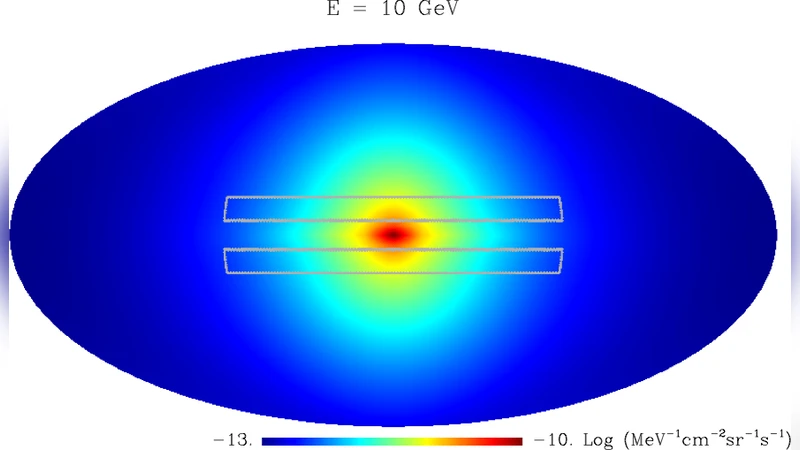
We have performed an analysis of the diffuse gamma-ray emission with the Fermi Large Area Telescope in the Milky Way Halo region searching for a signal from dark matter annihilation or decay. In the absence of a robust dark matter signal, constraints are presented. We consider both gamma rays produced directly in the dark matter annihilation/decay and produced by inverse Compton scattering of the e+e- produced in the annihilation/decay. Conservative limits are derived requiring that the dark matter signal does not exceed the observed diffuse gamma-ray emission. A second set of more stringent limits is derived based on modeling the foreground astrophysical diffuse emission using the GALPROP code. Uncertainties in the height of the diffusive cosmic-ray halo, the distribution of the cosmic-ray sources in the Galaxy, the index of the injection cosmic-ray electron spectrum and the column density of the interstellar gas are taken into account using a profile likelihood formalism, while the parameters governing the cosmic-ray propagation have been derived from fits to local cosmic-ray data. The resulting limits impact the range of particle masses over which dark matter thermal production in the early Universe is possible, and challenge the interpretation of the PAMELA/Fermi-LAT cosmic ray anomalies as annihilation of dark matter.
💡 Research Summary
The authors present a comprehensive analysis of the diffuse gamma‑ray emission measured by the Fermi Large Area Telescope (LAT) in the Milky Way halo, with the aim of searching for signatures of dark matter (DM) annihilation or decay. Two complementary strategies are employed. First, a “conservative” limit is derived by requiring that any putative DM‑induced gamma‑ray component does not exceed the total observed diffuse flux in the high‑latitude sky (|b| > 20°, 30° < l < 330°). This approach makes minimal assumptions about the astrophysical foreground and therefore yields a robust, model‑independent upper bound on the DM signal.
Second, a more stringent set of limits is obtained by explicitly modeling the astrophysical foreground with the GALPROP code. The authors construct a suite of Galactic diffuse emission models that span realistic variations in (i) the height of the cosmic‑ray diffusion halo (z_h), (ii) the spatial distribution of cosmic‑ray (CR) sources (e.g., supernova remnants, pulsars), (iii) the injection spectral index of CR electrons (γ_e), and (iv) the column density of interstellar gas (N_H). These parameters are constrained by fits to local CR data (proton spectrum, B/C ratio, etc.), ensuring that the propagation model is consistent with observations. A profile‑likelihood formalism is then used to treat the foreground parameters as nuisance variables while scanning over DM properties (mass, annihilation cross‑section ⟨σv⟩ or decay lifetime τ).
Both primary gamma‑rays from the DM process (e.g., χχ → b b̄, τ⁺τ⁻) and secondary photons from inverse‑Compton scattering (ICS) of the electrons and positrons produced in the same process are included. The inclusion of the ICS component is crucial because it can dominate the gamma‑ray spectrum at GeV–TeV energies, especially for leptonic final states, thereby tightening the constraints relative to analyses that consider only prompt photons.
The resulting limits are presented for a range of DM masses from ∼10 GeV up to several TeV. Under the conservative assumption, the authors exclude annihilation cross‑sections larger than ∼10⁻²⁴ cm³ s⁻¹ for many channels, already surpassing earlier indirect‑search bounds. When the foreground model is incorporated, the limits improve dramatically: for the canonical thermal relic cross‑section ⟨σv⟩≈3 × 10⁻²⁶ cm³ s⁻¹, only a narrow window of masses (roughly 30–100 GeV for hadronic channels and 10–50 GeV for leptonic channels) remains viable. Decay lifetimes are constrained to be longer than ∼10²⁶ s over a comparable mass range.
A key implication concerns the interpretation of the PAMELA positron excess and the high‑energy electron‑plus‑positron spectrum measured by Fermi‑LAT. Those anomalies have been proposed to arise from DM annihilation into leptons, which would require ⟨σv⟩ values of order 10⁻²³–10⁻²² cm³ s⁻¹—orders of magnitude above the limits derived here. Consequently, the paper strongly disfavors a DM origin for these cosmic‑ray features, favoring astrophysical explanations such as nearby pulsars or supernova remnants.
In summary, this work leverages the full-sky, high‑statistics Fermi‑LAT diffuse gamma‑ray data, couples it with state‑of‑the‑art Galactic emission modeling, and employs a rigorous statistical framework to set some of the most stringent indirect constraints on halo dark matter to date. The analysis narrows the parameter space for thermal relics, challenges DM‑based explanations of cosmic‑ray anomalies, and demonstrates the power of diffuse gamma‑ray observations as a probe of particle dark matter. Future improvements in gas maps, CR source catalogs, and diffusion‑halo measurements are expected to tighten these bounds even further.