Hypothesis Management in Situation-Specific Network Construction
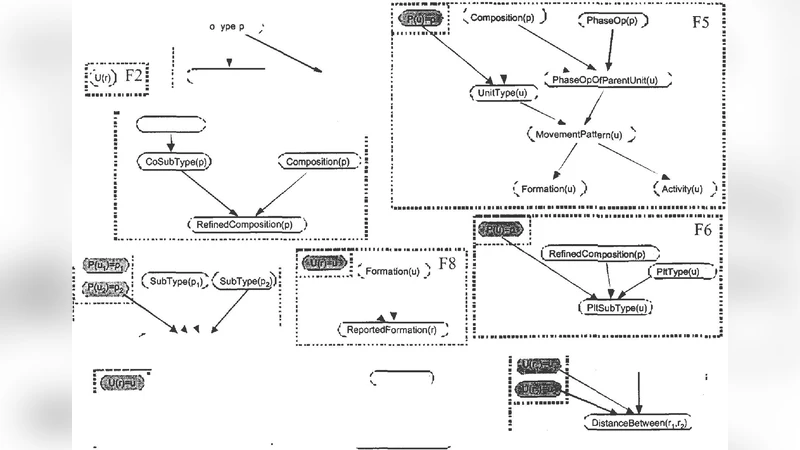
This paper considers the problem of knowledge-based model construction in the presence of uncertainty about the association of domain entities to random variables. Multi-entity Bayesian networks (MEBNs) are defined as a representation for knowledge in domains characterized by uncertainty in the number of relevant entities, their interrelationships, and their association with observables. An MEBN implicitly specifies a probability distribution in terms of a hierarchically structured collection of Bayesian network fragments that together encode a joint probability distribution over arbitrarily many interrelated hypotheses. Although a finite query-complete model can always be constructed, association uncertainty typically makes exact model construction and evaluation intractable. The objective of hypothesis management is to balance tractability against accuracy. We describe an application to the problem of using intelligence reports to infer the organization and activities of groups of military vehicles. Our approach is compared to related work in the tracking and fusion literature.
💡 Research Summary
**
The paper addresses the challenge of constructing knowledge‑based probabilistic models in domains where the number of relevant entities, their relationships, and their association with observable data are uncertain. To overcome the limitations of traditional Bayesian networks, which assume a fixed set of random variables, the authors adopt the Multi‑Entity Bayesian Network (MEBN) framework. MEBN represents knowledge as a hierarchy of reusable Bayesian network fragments, each describing a specific entity type (e.g., vehicle, platoon, mission) and its local probabilistic relationships. By instantiating these fragments as needed, MEBN can model arbitrarily many interrelated hypotheses without a predefined bound on the number of variables.
A central difficulty in applying MEBN to real‑world intelligence analysis is association uncertainty: a sensor report or human observation may correspond to any of several possible entities, leading to a combinatorial explosion of potential mappings. Moreover, maintaining all possible mappings quickly becomes computationally infeasible for real‑time inference. The authors introduce a systematic hypothesis management process to balance tractability and accuracy. The process consists of three steps: (1) hypothesis generation, where every plausible association between a new observation and existing entities is created; (2) hypothesis evaluation, where each association is scored using Bayesian updating that incorporates prior probabilities, observation reliability, temporal continuity, and spatial proximity; and (3) hypothesis selection or pruning, where associations with low posterior scores are discarded according to a cost‑benefit criterion that respects memory and time constraints.
The hypothesis management scheme defines a priority score for each hypothesis, combining factors such as sensor confidence, time gap, distance, and relational consistency. By setting a threshold on this score, the system automatically eliminates low‑probability hypotheses, keeping the overall model size manageable while preserving the most informative associations. This approach yields a controllable trade‑off: higher thresholds improve computational speed at the expense of some accuracy, whereas lower thresholds retain more hypotheses for finer‑grained inference.
The methodology is demonstrated on an intelligence‑analysis scenario involving military vehicle convoys. Reports provide incomplete information about vehicle identifiers, positions, speeds, and mission status. The authors construct MEBN fragments for “Vehicle,” “Platoon,” and “Mission,” and map each report to the appropriate fragment. The hypothesis manager merges duplicate reports, infers likely vehicle trajectories, and estimates the probability that a particular vehicle belongs to a given platoon or is engaged in a specific operation. The resulting probabilistic inference supports decision makers in assessing enemy force composition and activity.
A comparative analysis with traditional tracking and data‑fusion techniques is provided. Conventional multi‑target tracking methods such as Joint Probabilistic Data Association (JPDA) and Multi‑Hypothesis Tracking (MHT) focus on associating sensor measurements with tracks but typically ignore higher‑level relational information (e.g., unit hierarchy, mission objectives). In contrast, the MEBN‑based approach naturally incorporates relational structure and can fuse heterogeneous, non‑numeric reports (e.g., human intelligence) alongside sensor data.
Experimental results show that hypothesis management dramatically reduces inference time while maintaining or slightly improving accuracy relative to baseline methods. The authors evaluate performance across a range of uncertainty levels, including sensor noise, report errors, and identifier ambiguities. Even when the number of hypotheses grows rapidly, the pruning strategy keeps processing within real‑time limits, demonstrating scalability.
The paper concludes with several avenues for future work: (1) dynamic learning of new fragments to accommodate previously unseen entity types, (2) integration of multi‑modal data sources such as imagery, radar, and textual reports, and (3) distributed hypothesis management for large sensor networks where individual nodes perform local pruning and periodically synchronize with a central server. These extensions aim to broaden the applicability of knowledge‑based probabilistic modeling to increasingly complex and uncertain operational environments.
Comments & Academic Discussion
Loading comments...
Leave a Comment