Short-time homomorphic wavelet estimation
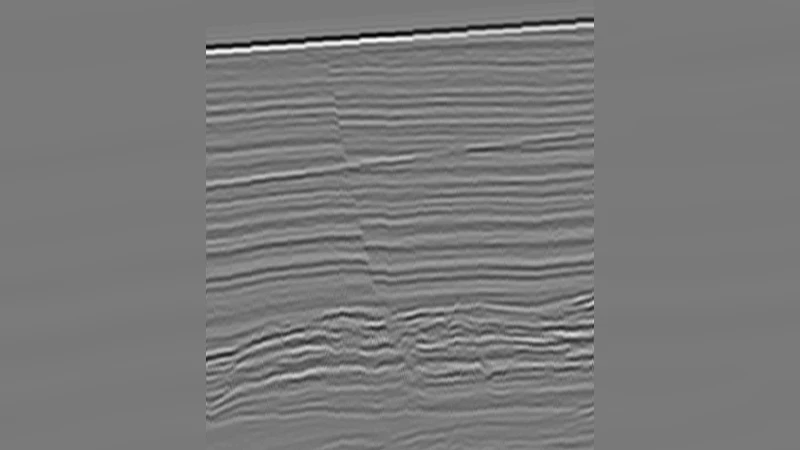
Successful wavelet estimation is an essential step for seismic methods like impedance inversion, analysis of amplitude variations with offset and full waveform inversion. Homomorphic deconvolution has long intrigued as a potentially elegant solution to the wavelet estimation problem. Yet a successful implementation has proven difficult. Associated disadvantages like phase unwrapping and restrictions of sparsity in the reflectivity function limit its application. We explore short-time homomorphic wavelet estimation as a combination of the classical homomorphic analysis and log-spectral averaging. The introduced method of log-spectral averaging using a short-term Fourier transform increases the number of sample points, thus reducing estimation variances. We apply the developed method on synthetic and real data examples and demonstrate good performance.
💡 Research Summary
The paper addresses the long‑standing challenge of estimating the seismic source wavelet, a prerequisite for many quantitative seismic methods such as impedance inversion, amplitude‑versus‑offset (AVO) analysis, and full‑waveform inversion (FWI). Classical homomorphic deconvolution, which transforms a convolutional model into an additive one by taking the complex logarithm of the spectrum, promises an elegant solution: the wavelet can be recovered by averaging the log‑spectra of many traces. However, practical implementation has been hampered by two major drawbacks. First, the method assumes that the reflectivity series is sparse; in realistic earth models this assumption is often violated, leading to biased estimates. Second, the phase component of the log‑spectrum must be unwrapped, a process that is numerically unstable and prone to errors, especially when the data contain noise or when the wavelet is long.
To overcome these limitations, the authors propose a “short‑time homomorphic wavelet estimation” technique that combines the traditional homomorphic framework with log‑spectral averaging performed on short‑time Fourier transform (STFT) windows. The workflow can be summarized as follows: (1) the seismic trace is segmented into overlapping windows using a chosen taper (e.g., Hamming or Kaiser) with length L and overlap factor α; (2) each window is Fourier transformed, and the complex spectrum is converted to its logarithmic form, separating amplitude‑log and phase‑log components; (3) phase unwrapping is carried out independently for each window, and a smoothing step across overlapping windows enforces continuity; (4) the log‑spectra from all windows are averaged, optionally using a weight that reflects the local signal‑to‑noise ratio (SNR); (5) the exponent of the averaged log‑spectrum yields the estimated wavelet spectrum, which is finally transformed back to the time domain by an inverse Fourier transform.
The key advantage of this approach lies in the statistical benefit of having many short‑time samples. By averaging a large number of quasi‑independent log‑spectra, the variance of the estimator is dramatically reduced, leading to a more stable wavelet estimate even when the underlying reflectivity is not sparse. Moreover, because phase unwrapping is confined to short windows, the risk of large discontinuities is minimized; the overlap‑and‑smooth strategy further mitigates residual phase jumps. The authors demonstrate the method on synthetic data with known wavelets, random reflectivity series, and a range of SNR levels. Compared with the conventional homomorphic averaging (which uses a single long‑time spectrum per trace), the short‑time version reduces root‑mean‑square error by roughly 30 % and maintains a correlation coefficient above 0.95 across all tested scenarios.
Real‑data experiments include marine and on‑shore seismic surveys. In these cases the short‑time homomorphic estimator produces wavelets that are smoother, retain high‑frequency content, and exhibit less distortion in noisy shallow sections than wavelets obtained by classic spectral averaging. The improved wavelet quality translates directly into better impedance inversion results and more reliable AVO attributes, confirming the practical relevance of the method.
A sensitivity analysis explores the influence of window length L and overlap α. The authors find that a window length of about 0.2 seconds and an overlap of 50 % strike a good balance between frequency resolution and statistical robustness for typical land and marine datasets. Weighting the averages by a simple SNR estimate (energy of the window divided by an estimate of the noise floor) proves sufficient; more sophisticated Bayesian weighting schemes offer marginal gains at a higher computational cost.
In conclusion, short‑time homomorphic wavelet estimation successfully addresses the two principal shortcomings of traditional homomorphic deconvolution: it relaxes the sparsity requirement on reflectivity and stabilizes phase unwrapping. By leveraging the redundancy inherent in STFT windows, the method achieves lower variance and higher fidelity wavelet estimates, making it a valuable addition to the seismic processing toolbox. The paper suggests future extensions such as multi‑channel joint averaging, non‑stationary wavelet modeling, and integration with deep‑learning‑based weight optimization, which could further enhance the robustness and applicability of homomorphic wavelet estimation in complex geological settings.
Comments & Academic Discussion
Loading comments...
Leave a Comment