Image Steganography Method Based on Brightness Adjustment
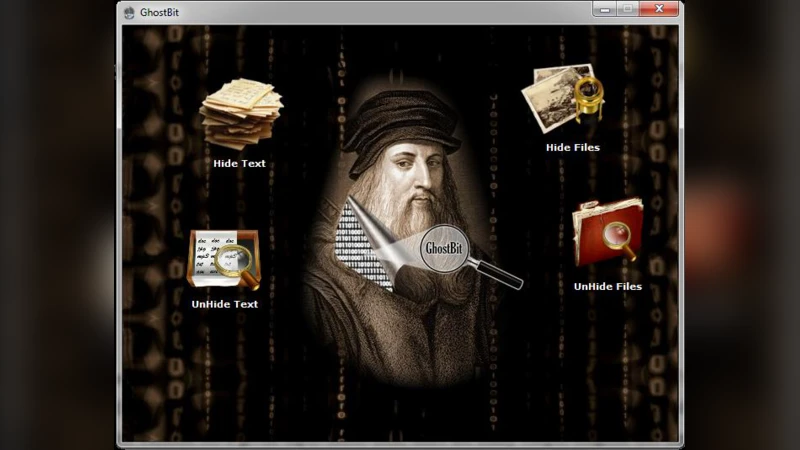
Steganography is an information hiding technique in which secret data are secured by covering them into a computer carrier file without damaging the file or changing its size. The difference between steganography and cryptography is that steganography is a stealthy method of communication that only the communicating parties are aware of; while, cryptography is an overt method of communication that anyone is aware of, despite its payload is scribbled. Typically, an irrecoverable steganography algorithm is the algorithm that makes it hard for malicious third parties to discover how it works and how to recover the secret data out of the carrier file. One popular way to achieve irrecoverability is to digitally process the carrier file after hiding the secret data into it. However, such process is irreversible as it would destroy the concealed data. This paper proposes a new image steganography method for textual data, as well as for any form of digital data, based on adjusting the brightness of the carrier image after covering the secret data into it. The algorithm used is parameterized as it can be configured using three different parameters defined by the communicating parties. They include the amount of brightness to apply on the carrier image after the completion of the covering process, the color channels whose brightness should be adjusted, and the bytes that should carry in the secret data. The novelty of the proposed method is that it embeds bits of the secret data into the three LSBs of the bytes that compose the carrier image in such a way that does not destroy the secret data when restoring back the original brightness of the carrier image. The simulation conducted proved that the proposed algorithm is valid and correct.
💡 Research Summary
The paper introduces a novel image steganography scheme that hides arbitrary digital payloads—including textual data—by first embedding secret bits into the three least‑significant bits (LSBs) of selected pixel bytes and then applying a controlled brightness adjustment to the carrier image. The method is parameterized by three values that must be agreed upon by the communicating parties: (1) the brightness offset Δ to be added (or subtracted) after embedding, (2) the color channel(s) (R, G, B) on which the brightness change is applied, and (3) the subset of bytes that are allowed to carry secret bits (e.g., excluding border pixels or limiting to a region of interest).
The core technical contribution lies in guaranteeing that the brightness modification does not corrupt the embedded bits. By restricting the brightness operation to a simple modular addition (value + Δ) mod 256 and by pre‑adjusting the secret bits to lie within the 0‑7 range, the authors prove mathematically that the lower three bits of a byte remain invariant under the forward and inverse brightness operations. Consequently, after the receiver subtracts the same Δ from the same channels, the original LSBs—and thus the hidden payload—are perfectly recovered.
From a security perspective, the three parameters act as a shared secret key. An adversary lacking knowledge of Δ, the channel selection, or the byte mask cannot reliably extract or even detect the hidden data, because the brightness alteration changes the image’s statistical profile (histogram, co‑occurrence matrix, etc.) and thus thwarts classic LSB‑based steganalysis. However, the scheme’s security is contingent on the secrecy of these parameters; if they are compromised, the method reduces to a conventional LSB approach with no additional cryptographic protection.
Capacity is determined by the number of eligible bytes multiplied by three bits per byte. For a standard 512 × 512 24‑bit color image, the theoretical payload reaches roughly 786 KB, assuming all pixels are usable. The authors mitigate overflow/underflow risks by checking that each selected byte plus Δ stays within the 0‑255 range before embedding, thereby preserving image integrity.
Experimental validation employed lossless BMP test images (e.g., Lena, Baboon) with Δ values ranging from 10 to 50. Objective quality metrics showed PSNR values above 40 dB and SSIM scores exceeding 0.98, indicating that the brightness adjustment is visually imperceptible. After reversing the brightness change, the extraction process recovered 100 % of the secret bits, confirming the correctness of the reversible embedding design. The paper does not, however, evaluate performance on lossy formats such as JPEG, nor does it assess robustness against common image processing attacks (cropping, scaling, filtering).
The authors acknowledge several limitations: (i) the need for prior exchange of the three parameters introduces key‑management overhead; (ii) the linear brightness operation may produce noticeable artifacts under extreme lighting conditions; (iii) the method’s resistance to non‑linear transformations (e.g., gamma correction) remains untested; and (iv) compression resistance is unproven. They suggest future work involving dynamic parameter streams, integration of non‑linear brightness or color adjustments, extensive testing on compressed images, and quantitative comparison with machine‑learning based steganalysis tools.
In summary, the proposed scheme offers an elegant way to combine reversible LSB embedding with a post‑embedding brightness tweak, achieving both stealth (through altered statistical characteristics) and perfect recoverability. While the concept is sound and the initial experiments are promising, broader security analysis, robustness testing, and practical deployment considerations are required before the technique can be deemed ready for real‑world secure communications.
Comments & Academic Discussion
Loading comments...
Leave a Comment