Boolean network-based model of the Bcl-2 family mediated MOMP regulation
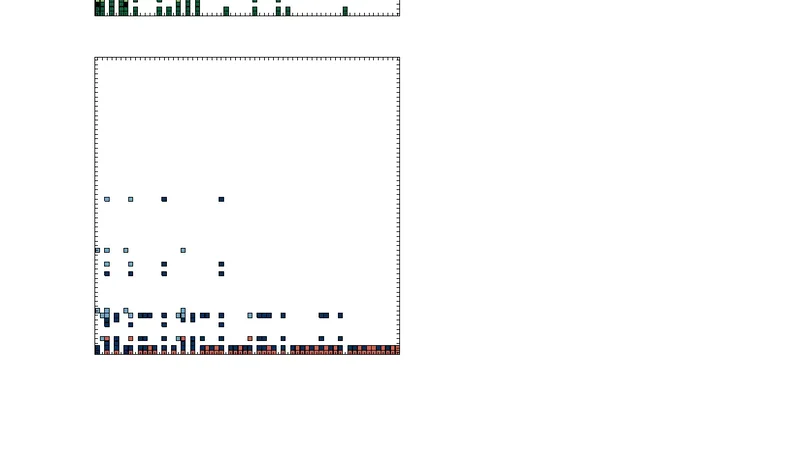
Mitochondrial outer membrane permeabilization (MOMP) is one of the most important points, in majority of apoptotic signaling cascades. Decision mechanism controlling whether the MOMP occurs or not, is formed by an interplay between members of the Bcl-2 family. To understand the role of individual members of this family within the MOMP regulation, we constructed a boolean network-based mathematical model of interactions between the Bcl-2 proteins. Results of computational simulations reveal the existence of the potentially malign configurations of activities of the Bcl-2 proteins, blocking the occurrence of MOMP, independently of the incoming stimuli. Our results suggest role of the antiapoptotic protein Mcl-1 in relation to these configurations. We demonstrate here, the importance of the Bid and Bim according to activation of effectors Bax and Bak, and the irreversibility of this activation. The model further shows the distinct requirements for effectors activation, where the antiapoptic protein Bcl-w is seemingly a key factor preventing the Bax activation. We believe that this work may help to describe the functioning of the Bcl-2 regulation of MOMP better, and hopefully provide some contribution regarding the anti-cancer drug development research.
💡 Research Summary
Mitochondrial outer membrane permeabilization (MOMP) is a pivotal checkpoint in most apoptotic pathways, and its regulation is orchestrated by a tightly interwoven network of Bcl‑2 family proteins. To dissect the individual contributions of these proteins, the authors constructed a Boolean network model that captures the binary (active/inactive) states of 14 key Bcl‑2 family members, including the pro‑apoptotic effectors Bax and Bak, the BH3‑only initiators (Bid, Bim, Puma, Noxa, etc.), and the anti‑apoptotic guardians (Mcl‑1, Bcl‑2, Bcl‑xL, Bcl‑w). External cues are represented by two input nodes: “Death” (pro‑apoptotic stimulus) and “Survival” (anti‑apoptotic stimulus). Each node’s update rule is a logical expression derived from experimentally validated interactions; for example, Bid and Bim directly activate Bax/Bak, while Mcl‑1, Bcl‑2, Bcl‑xL, and Bcl‑w inhibit them. The network updates synchronously, meaning all nodes evaluate their logical functions simultaneously at each discrete time step.
The authors exhaustively explored the state space (2^14 ≈ 16,384 possible configurations) under all combinations of the input signals. Attractor analysis revealed two dominant fixed points: a “MOMP‑ON” state in which Bax and Bak are simultaneously active, leading to outer‑membrane permeabilization, and a “MOMP‑OFF” state where all effectors remain inactive, preserving mitochondrial integrity. Crucially, the simulations identified a set of “malignant” configurations in which persistent activation of the anti‑apoptotic protein Mcl‑1 forces the system into the MOMP‑OFF attractor regardless of the presence of a Death signal. This suggests that over‑expression of Mcl‑1, as observed in many cancers, can create a robust block to apoptosis that is difficult to overcome by upstream stimuli.
The model also highlighted the indispensable role of the BH3‑only proteins Bid and Bim. When both are active, Bax/Bak become rapidly activated, and once turned on, the logical rules keep them on, reflecting an irreversible switch—consistent with the biological observation that MOMP, once initiated, cannot be reversed. Conversely, if both Bid and Bim are absent, Bax/Bak never activate, even under strong Death inputs, underscoring their function as essential “gatekeepers” of the apoptotic decision.
A particularly interesting finding concerns the anti‑apoptotic member Bcl‑w. Simulations showed that Bcl‑w strongly suppresses Bax activation while having a weaker effect on Bak. This differential inhibition aligns with experimental data indicating that Bax and Bak have distinct sensitivities to specific BH3‑only proteins and anti‑apoptotic partners. Consequently, Bcl‑w emerges as a key factor that protects cells from Bax‑mediated apoptosis, suggesting that selective inhibition of Bcl‑w could preferentially sensitize cells to Bax‑driven death pathways.
The authors acknowledge several limitations inherent to Boolean modeling. Binary states ignore quantitative protein concentrations, post‑translational modifications, and kinetic parameters that influence reaction rates. The synchronous update scheme simplifies the inherently asynchronous nature of intracellular signaling. Nevertheless, the Boolean framework provides a clear, tractable representation of the network topology, allowing systematic identification of stable states, critical nodes, and potential failure modes that would be cumbersome to explore with detailed kinetic models.
From a translational perspective, the study offers actionable insights for anti‑cancer drug development. Targeting Mcl‑1 to dismantle the malignant MOMP‑OFF attractor could restore apoptotic competence in tumors that rely on Mcl‑1 over‑expression for survival. Similarly, disrupting Bcl‑w’s interaction with Bax may lower the threshold for Bax activation, making cancer cells more vulnerable to BH3‑mimetic agents that activate Bid or Bim. The irreversible nature of the Bid/Bim‑driven switch also suggests that therapeutic strategies aimed at sustaining BH3‑only activity could push cells irreversibly toward death, reducing the likelihood of resistance.
In summary, this work translates the complex biochemical interplay of the Bcl‑2 family into a Boolean network that faithfully reproduces known biological behaviors—such as the necessity of Bid/Bim for MOMP initiation, the irreversible activation of Bax/Bak, and the protective role of specific anti‑apoptotic proteins. By revealing how particular configurations, especially persistent Mcl‑1 activity, can lock the system in a non‑permeabilized state, the model provides a mechanistic foundation for designing combination therapies that strategically target these nodes to overcome apoptotic resistance in cancer.
Comments & Academic Discussion
Loading comments...
Leave a Comment