Truthy: Enabling the Study of Online Social Networks
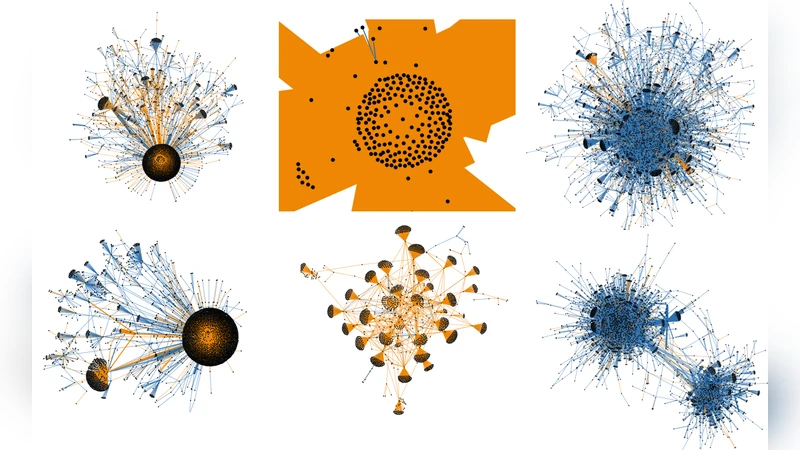
The broad adoption of online social networking platforms has made it possible to study communication networks at an unprecedented scale. Digital trace data can be compiled into large data sets of online discourse. However, it is a challenge to collect, store, filter, and analyze large amounts of data, even by experts in the computational sciences. Here we describe our recent extensions to Truthy, a system that collects Twitter data to analyze discourse in near real-time. We introduce several interactive visualizations and analytical tools with the goal of enabling citizens, journalists, and researchers to understand and study online social networks at multiple scales.
💡 Research Summary
The paper presents an extensive description of the latest extensions to Truthy, a platform designed to collect, store, filter, analyze, and visualize large‑scale Twitter data in near‑real‑time. The authors begin by outlining the fundamental challenges that researchers face when working with massive online social network data: the sheer volume of digital trace data, the difficulty of maintaining low‑latency pipelines, and the need for intuitive tools that allow non‑technical users to explore complex network structures and textual content.
Data Acquisition and Pre‑Processing
Truthy leverages the Twitter Streaming API to ingest tweets continuously. In addition to a basic keyword/hashtag filter, the system incorporates a “smart filtering engine” that combines pre‑trained topic models with live trend detection. This dual‑layer filter discards irrelevant or spammy content at ingestion time, dramatically reducing storage costs and downstream processing load. Each tweet is stored in its original JSON format, preserving all metadata (author ID, timestamp, geolocation, language, etc.) while separating the textual payload for later natural‑language processing (NLP).
Distributed Storage Architecture
To handle petabyte‑scale archives, Truthy adopts a hybrid storage strategy: the Hadoop Distributed File System (HDFS) for bulk immutable files and Apache Cassandra for fast key‑value lookups. Data are automatically partitioned by time, geography, and language, enabling efficient parallel queries. A novel “time‑window index” allows rapid extraction of interaction patterns within any user‑specified interval, which is essential for time‑series analyses of viral events.
Analytical Engine
The analytical component fuses network science with state‑of‑the‑art NLP.
Network analysis constructs a directed graph where edges represent mentions, retweets, and follows. Community detection is performed in real time using scalable algorithms such as Louvain and Infomap, yielding dynamic sub‑networks that evolve as the conversation progresses. Nodes are enriched with attributes like follower count, tweet frequency, and sentiment score; edges carry weights reflecting retweet counts or mention intensity.
Textual analysis employs Latent Dirichlet Allocation (LDA) and Non‑negative Matrix Factorization (NMF) to uncover dominant topics, while sentiment is quantified through a hybrid approach that combines lexicon‑based scoring with a fine‑tuned BERT model. The output includes a topic‑by‑time matrix and sentiment heatmaps, facilitating the detection of shifts in public mood.
Temporal analytics integrate the time‑window index to generate time‑series of tweet volume, average sentiment, and network centrality measures. Sudden spikes—such as those caused by breaking news or coordinated campaigns— are automatically flagged and can trigger alerts.
Interactive Visualizations
Truthy’s front‑end is built on D3.js and WebGL, delivering a multi‑level zoom interface that lets users fluidly transition from a global view of the entire Twitter ecosystem down to the micro‑level of individual conversation clusters. Key visual components include:
- Dynamic Network Graph – Nodes are colored by community and sized by influence; clicking a node opens a pop‑up with the user’s profile and recent tweets.
- Trend Lines – Real‑time plots of keyword/hashtag frequencies and average sentiment over selectable intervals.
- Word Clouds & Topic Bar Charts – Visual summaries of the most salient terms and their associated topics.
- Sentiment Heatmaps – Geographic and temporal sentiment distributions rendered as color gradients.
- Snapshot Animation – Fixed‑time snapshots of the network that can be animated to illustrate structural changes before, during, and after an event.
These visual tools are tightly coupled with the analytical backend, allowing on‑the‑fly adjustments of node/edge attributes, filter parameters, and time windows without re‑running batch jobs.
Accessibility and Reproducibility
A core design principle of Truthy is low entry barriers. All components are containerized with Docker, and the pipeline relies exclusively on open‑source libraries (Python, Apache Spark, Neo4j, D3.js). Users can deploy the system on a modest cloud instance or a local workstation. Export formats (CSV, JSON‑LD) adhere to standard metadata schemas, enabling other researchers to replicate analyses or combine Truthy outputs with external datasets. Comprehensive documentation, tutorials, and an API further empower journalists, policymakers, and citizen scientists to conduct independent investigations.
Use‑Case Demonstrations
The authors showcase three real‑world applications:
Election Monitoring – By visualizing support and opposition networks around candidate‑specific hashtags, Truthy revealed rapid shifts in coalition structures and identified influential “bridge” accounts that amplified cross‑party discourse.
Disaster Response – During a sudden natural disaster, the platform captured a surge in location‑tagged tweets, mapped sentiment spikes, and highlighted emergent needs (e.g., shelter, medical aid) that were not captured by official channels.
Fake‑News Propagation – Truthy traced the diffusion path of a misinformation story, pinpointed core propagators, and measured the decay of the narrative after fact‑checking interventions, illustrating how real‑time network analytics can inform mitigation strategies.
Limitations and Future Directions
Currently confined to Twitter, Truthy’s architecture will be extended to ingest data from other platforms (Facebook, Reddit, Instagram) through standardized APIs and cross‑platform entity resolution. The authors acknowledge that sentiment models still struggle with multilingual nuance and cultural context; future work will incorporate multilingual transformer models and domain‑adapted lexicons. Privacy‑preserving techniques such as differential privacy and synthetic data generation are also slated for integration to address ethical concerns.
Conclusion
Truthy represents a comprehensive, open‑source solution that bridges the gap between massive, fast‑moving social media data streams and the analytical needs of scholars, journalists, and the broader public. By combining smart filtering, distributed storage, multi‑scale network and textual analytics, and highly interactive visualizations, the platform lowers technical barriers and promotes reproducible, data‑driven inquiry into online social networks. The paper demonstrates that such an integrated system can not only accelerate academic research but also empower citizens and decision‑makers to monitor, understand, and respond to the dynamics of digital public discourse in real time.