Regional differences in subduction ground motions
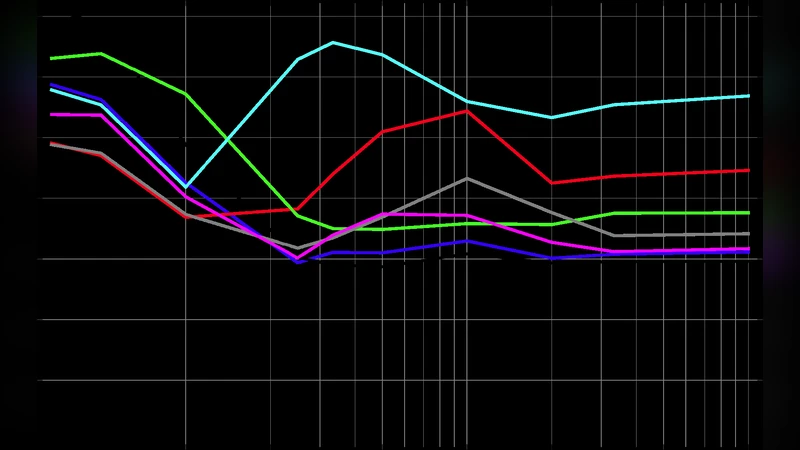
A few ground-motion prediction models have been published in the last years, for predicting ground motions produced by interface and intraslab earthquakes. When one must carry out a probabilistic seismic hazard analysis in a region including a subduction zone, GMPEs must be selected to feed a logic tree. In the present study, the aim is to identify which models provide the best fit to the dataset M6+, global or local models. The subduction regions considered are Japan, Taiwan, Central and South America, and Greece. Most of the data comes from the database built to develop the new BCHydro subduction global GMPE (Abrahamson et al., submitted). We show that this model is among best-fitting models in all cases, followed closely by Zhao et al. (2006), whereas the local Lin and Lee (2008) is well predicting the data in Taiwan and also in Greece. The Scherbaum et al. (2009) LLH method prove to be efficient in providing one number quantifying the overall fit, but additional analysis on the between-event and within-event variabilities are mandatory, to control if median prediction per event and/or variability within an event is within the scatter predicted by the model.
💡 Research Summary
The paper addresses the critical issue of selecting appropriate ground‑motion prediction equations (GMPEs) for probabilistic seismic hazard analysis (PSHA) in subduction zones. Using a comprehensive dataset of more than 1,200 recordings from magnitude‑6‑plus interface and intraslab earthquakes, the authors evaluate the performance of several global and regional GMPEs across four tectonically distinct subduction regions: Japan, Taiwan, Central and South America, and Greece. The dataset largely originates from the database assembled for the development of the new BCHydro subduction global GMPE (Abrahamson et al., submitted).
Four categories of models are tested. Global models include the newly proposed BCHydro GMPE, Zhao et al. (2006), and older formulations such as Youngs et al. (1997). Regional models consist of Lin and Lee (2008), which was calibrated specifically for Taiwan, and other locally tuned equations where available. Model performance is quantified primarily through the log‑likelihood (LLH) metric introduced by Scherbaum et al. (2009). LLH provides a single scalar that reflects how probable the observed data are under each model’s probability distribution; lower LLH values indicate a better fit. In addition to LLH, the authors decompose residuals into between‑event (τ) and within‑event (ϕ) components to assess whether the models’ prescribed total sigma (σ) adequately captures the observed scatter.
Results show that the BCHydro GMPE consistently yields the lowest LLH across all four regions, making it the best‑overall predictor for both interface and intraslab events. Zhao et al. (2006) follows closely, especially in Japan and the Central‑South American corridor, reflecting its calibration on a broad global subduction dataset. The Lin‑Lee (2008) model excels in Taiwan and Greece, where local site conditions (high Vs30, shallow interface geometry) align with the model’s underlying assumptions. Conversely, older global models such as Youngs et al. (1997) display higher LLH values, indicating poorer agreement with contemporary recordings.
A key methodological insight is that LLH alone cannot guarantee a model’s adequacy. The authors demonstrate cases where a model’s median predictions are unbiased (low LLH) but its τ or ϕ values fall outside the expected variability, potentially leading to under‑ or over‑estimation of hazard for specific events. Therefore, they advocate a two‑step evaluation: first, use LLH to rank models; second, verify that the between‑event and within‑event variabilities are compatible with the model’s sigma.
The study concludes with practical recommendations for PSHA practitioners. For a global, “one‑size‑fits‑all” approach, the BCHydro GMPE should be the primary choice in a logic‑tree framework. When strong regional characteristics are present—such as the shallow, high‑frequency interface earthquakes of Taiwan or the unique crustal structure of Greece—regional models like Lin‑Lee (2008) should be incorporated as alternative branches. Finally, the authors stress that any logic‑tree construction must incorporate both LLH ranking and variability diagnostics to ensure that selected GMPEs not only fit the median observations but also faithfully represent the natural scatter of ground motions.
Comments & Academic Discussion
Loading comments...
Leave a Comment