Complexity fits the fittest
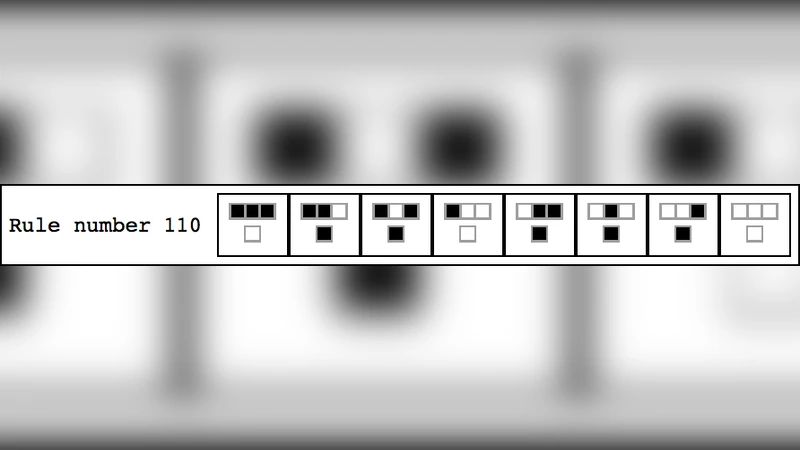
In this paper we shall relate computational complexity to the principle of natural selection. We shall do this by giving a philosophical account of complexity versus universality. It seems sustainable to equate universal systems to complex systems or at least to potentially complex systems. Post’s problem on the existence of (natural) intermediate degrees (between decidable and universal RE) then finds its analog in the Principle of Computional Equivalence (PCE). In this paper we address possible driving forces –if any– behind PCE. Both the natural aspects as well as the cognitive ones are investigated. We postulate a principle GNS that we call the Generalized Natural Selection principle that together with the Church-Turing thesis is seen to be in close correspondence to a weak version of PCE. Next, we view our cognitive toolkit in an evolutionary light and postulate a principle in analogy with Fodor’s language principle. In the final part of the paper we reflect on ways to provide circumstantial evidence for GNS by means of theorems, experiments or, simulations.
💡 Research Summary
The paper attempts to bridge computational complexity theory with the biological principle of natural selection, proposing that the prevalence of universal (i.e., Turing‑complete) computational systems in nature is not accidental but the result of an evolutionary pressure favoring “complex” – in the sense of simulation‑capable – processes. The authors begin by clarifying what they mean by “complexity.” Rather than the usual time‑ or space‑bounded notions, they equate complexity with universality: a system is complex if it can efficiently emulate any other computable system. This view allows them to treat universal Turing machines as the archetype of maximal complexity and to regard any system that can simulate a universal machine as “potentially complex.”
With this definition in hand, the paper revisits Post’s problem concerning the existence of intermediate Turing degrees between decidable (recursive) sets and the complete recursively enumerable (RE) sets. Empirically, natural phenomena rarely display such intermediate degrees; most observed processes are either trivially decidable or exhibit full computational universality. The authors argue that this empirical gap mirrors an evolutionary filter: environments tend to retain those computational structures that are most adaptable, i.e., those that can simulate a wide variety of other structures. To formalize this intuition they introduce the Generalized Natural Selection principle (GNS): “Systems capable of implementing complex and efficient algorithms are preferentially selected for survival in a given environment.” When combined with the Church‑Turing thesis (which posits that any physically realizable computation can be modeled by a Turing machine), GNS yields a weak version of Wolfram’s Principle of Computational Equivalence (PCE): most natural processes are computationally universal.
The paper then turns to the cognitive side of the argument. Drawing an analogy with Fodor’s Language of Thought hypothesis, the authors claim that human cognition itself has been shaped by the same selection pressures. Our mental representations and linguistic categories are optimized for recognizing and manipulating universal computational patterns because such abilities conferred a survival advantage. Consequently, the very tools we use to formulate scientific theories are evolutionarily tuned to detect universality, which explains why the PCE appears to hold across disparate domains.
To move beyond philosophical speculation, the authors outline three avenues for empirical support. First, they propose a series of formal theorems that would establish precise logical connections between GNS, the Church‑Turing thesis, and PCE, thereby grounding the principle in mathematical logic. Second, they suggest large‑scale artificial‑life simulations (cellular automata, agent‑based models) in which rules that are Turing‑universal are pitted against non‑universal rules; the hypothesis predicts that universal rules will dominate the population over time. Third, they advocate for experimental investigations of real‑world systems—metabolic networks, self‑organizing physical media, or social interaction graphs—to detect signatures of universal computation, such as the ability to embed arbitrary logical circuits or to emulate known universal cellular automata.
In the concluding discussion, the authors acknowledge that GNS is still a nascent hypothesis requiring rigorous definition and systematic testing. Nevertheless, they argue that it offers a unifying explanatory framework that links computational theory, evolutionary biology, and cognitive science. By treating universality as an evolutionary attractor, the paper reframes the longstanding question of why complex, universal computation appears so abundantly in nature and why human minds are predisposed to recognize it. Future work, they suggest, should focus on refining the mathematical formulation of GNS, expanding simulation studies, and designing experiments that can directly probe the computational capabilities of natural systems. If successful, such research could elevate GNS from a philosophical conjecture to a testable scientific principle, deepening our understanding of the interplay between computation and evolution.
Comments & Academic Discussion
Loading comments...
Leave a Comment