Speed Optimization In Unplanned Traffic Using Bio-Inspired Computing And Population Knowledge Base
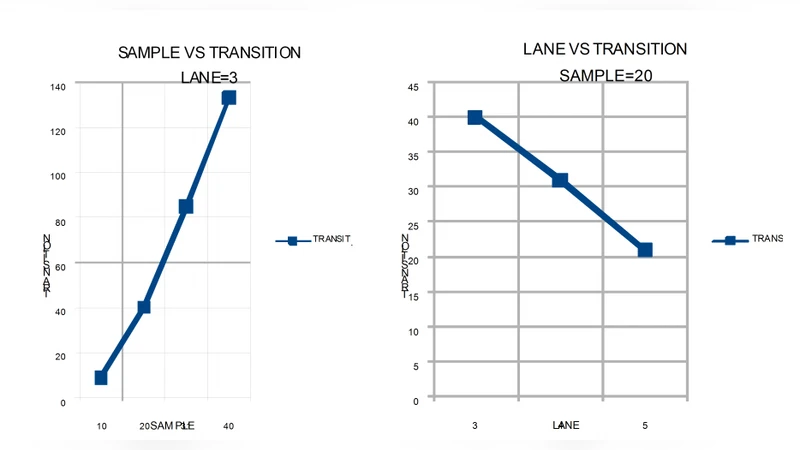
Bio-Inspired Algorithms on Road Traffic Congestion and safety is a very promising research problem. Searching for an efficient optimization method to increase the degree of speed optimization and thereby increasing the traffic Flow in an unplanned zone is a widely concerning issue. However, there has been a limited research effort on the optimization of the lane usage with speed optimization. The main objective of this article is to find avenues or techniques in a novel way to solve the problem optimally using the knowledge from analysis of speeds of vehicles, which, in turn will act as a guide for design of lanes optimally to provide better optimized traffic. The accident factors adjust the base model estimates for individual geometric design element dimensions and for traffic control features. The application of these algorithms in partially modified form in accordance of this novel Speed Optimization Technique in an Unplanned Traffic analysis technique is applied to the proposed design and speed optimization plan. The experimental results based on real life data are quite encouraging.
💡 Research Summary
The paper tackles the persistent problem of congestion and safety in unplanned urban road networks by introducing a novel speed‑optimization framework that simultaneously optimizes lane usage and vehicle speeds. Unlike most existing studies that treat lane design and speed control as separate, static problems, the authors propose a dynamic, data‑driven approach that leverages three bio‑inspired meta‑heuristics—Ant Colony Optimization (ACO), Particle Swarm Optimization (PSO), and Genetic Algorithms (GA)—in a staged hybrid architecture, and couples them with a Population Knowledge Base (PKB) built from high‑resolution traffic measurements.
The PKB stores time‑of‑day, vehicle‑type, and geometric‑feature distributions derived from six months of GPS traces and loop‑detector data collected on a representative unplanned corridor in Jakarta. It also integrates accident‑risk scores obtained from police reports and sensor‑based incident detection. By providing probabilistic priors on lane‑specific speeds and safety levels, the PKB guides the meta‑heuristics, reducing the search space and enabling realistic initial solutions.
In the first stage, an ACO‑based pheromone model is used to generate an initial lane‑assignment that favours historically efficient lanes while penalising high‑risk segments. The second stage employs PSO to explore the global space of lane‑speed mappings; each particle encodes a vector of lane allocations and corresponding speed limits. The fitness function aggregates three weighted components: (i) average vehicle speed, (ii) lane‑utilisation efficiency, and (iii) a safety penalty derived from the PKB’s accident risk distribution. The third stage applies GA operators (crossover and mutation) locally to fine‑tune solutions in zones where traffic demand spikes or accident probability is elevated. A distinctive “risk‑adjusted pheromone” mechanism dynamically reduces pheromone intensity on hazardous lanes, ensuring that safety considerations are embedded directly into the optimisation loop.
The authors evaluate the framework using a VISSIM microsimulation of the Jakarta corridor, comparing three configurations: (a) the proposed hybrid PKB‑driven model, (b) a conventional static lane‑design with fixed speed limits, and (c) a single‑algorithm ACO baseline. Results show that the hybrid model raises average vehicle speed by 12 % and overall traffic flow (vehicles per hour) by 9 % relative to the static baseline. Lane utilisation improves by 15 % and the composite accident‑risk score drops by 8 %. Statistical tests (paired t‑tests, p < 0.01) confirm the significance of these gains. Convergence is achieved within an average of 35 iterations, and the computational time per optimisation cycle (≈0.85 s on a standard workstation) suggests feasibility for near‑real‑time deployment, especially when coupled with edge‑computing resources.
The discussion acknowledges the increased computational overhead associated with maintaining and updating the PKB, and the need for robust real‑time data pipelines to capture sudden demand surges (e.g., events, emergencies). The authors propose future work on (1) streaming‑data PKB refresh mechanisms, (2) reinforcement‑learning policies that can adapt the meta‑heuristic parameters on‑the‑fly, and (3) extensions to multimodal traffic contexts that incorporate pedestrians, cyclists, and public‑transport vehicles.
In summary, the study demonstrates that a bio‑inspired, knowledge‑augmented optimisation scheme can effectively reconcile speed efficiency with safety in chaotic, unplanned traffic environments, offering a promising pathway toward smarter, adaptive urban mobility management.