Thermal Fracturing of Geothermal Wells and the Effects of Borehole Orientation
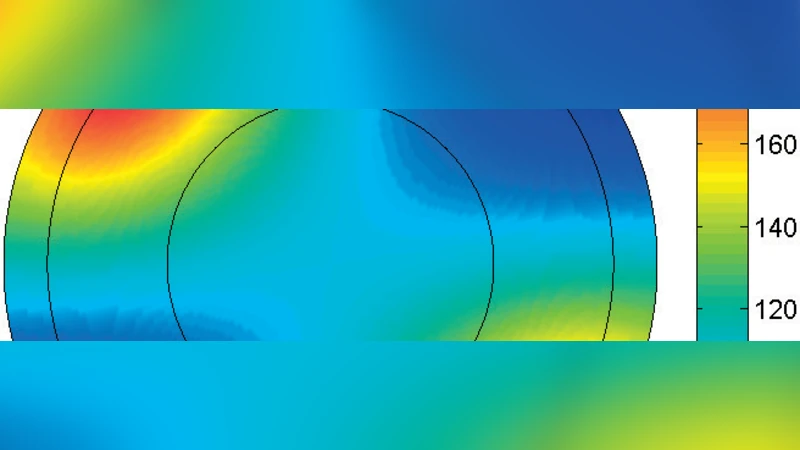
An enhanced geothermal system (EGS) expands the potential of geothermal energy by enabling the exploitation of regions that lack conventional hydrothermal resources. The EGS subsurface system is created by engineering enhanced flow paths between injection and production wells. Hydraulic stimulation of existing fracture networks has been successfully achieved for unconventional geothermal resources. More recently proposed concepts increase the use of drilled wellbores in hard rock to connect the injection and production wells. The present work investigates the long-term thermal effects of deviated geothermal wellbores and studies how the cooling of the borehole wall results in thermally induced tensile fractures. The results show that induced fractures are created by a combination of in situ and thermal stresses, and that the extent to which thermally induced tensile wall fractures are created largely depends on how the wellbores are oriented with respect to the pre-existing stresses of the reservoir. If the system is not optimized with respect to in situ stresses, the risk of wellbore instability becomes severe within less than a year of production. In contrast, if the orientation of the wellbores is optimized, thermally induced instabilities can be completely excluded as potential risks for the operational lifetime of the system. Furthermore, our results show that the thermal failure process strongly depends on the temperature of the injected water but is only weakly affected by the injection rate.
💡 Research Summary
The paper investigates the long‑term thermal stability of deviated geothermal wells in enhanced geothermal systems (EGS) by focusing on thermally induced tensile fractures that develop on the borehole wall during production. Using a three‑dimensional finite‑element model that couples heat conduction, convection, and fluid flow, the authors simulate a range of borehole orientations (inclination and azimuth), injection temperatures (30 °C, 50 °C, 70 °C), and injection rates (0.5 L/s, 1 L/s, 2 L/s). The model incorporates the in‑situ stress field—characterized by the maximum horizontal stress, minimum horizontal stress, and vertical stress—to compute the combined stress tensor resulting from both the pre‑existing geological stresses and the cooling‑induced thermal stresses.
Key findings reveal that the likelihood of tensile wall fractures is governed primarily by the relative alignment of the borehole axis with respect to the principal stress directions. When the borehole is oriented parallel to the maximum horizontal stress, the thermal stress component is largely counteracted, keeping the total tensile stress below the rock’s tensile strength and preventing fracture formation throughout the operational life. Conversely, boreholes that deviate toward the minimum horizontal or vertical stress axes experience amplified tensile stresses; in these configurations, the combined stress exceeds the tensile strength within months, leading to rapid propagation of micro‑cracks that can compromise well integrity.
The temperature of the injected water exerts a dominant influence on fracture risk. Lower injection temperatures (e.g., 30 °C) produce steeper temperature gradients at the borehole wall, generating larger thermal contraction stresses and accelerating the onset of tensile failure. In contrast, higher injection temperatures (e.g., 70 °C) mitigate thermal stresses, extending the safe operating period even for sub‑optimal orientations. Injection rate, however, has a comparatively minor effect; doubling the flow rate changes the convective heat transfer only modestly and does not significantly alter the timing or severity of tensile failure.
From a practical standpoint, the study underscores the necessity of integrating detailed in‑situ stress measurements into well‑planning workflows. By selecting borehole azimuths and inclinations that align with the maximum horizontal stress, operators can eliminate thermally induced instability risks, ensuring stable production for the entire lifespan of the EGS. Moreover, controlling injection temperature offers an additional lever to manage thermal stresses when optimal orientation is constrained by geological or logistical factors. The authors conclude that optimized borehole orientation combined with appropriate temperature management can fully suppress thermally driven wellbore instability, whereas neglecting these considerations may lead to catastrophic failure within a year of operation. Future work is proposed to validate the numerical predictions against field data and to explore the interaction of multiple wells within a networked EGS reservoir.
Comments & Academic Discussion
Loading comments...
Leave a Comment