Simulating strange attraction of acellular slime mould Physarum polycephaum to herbal tablets
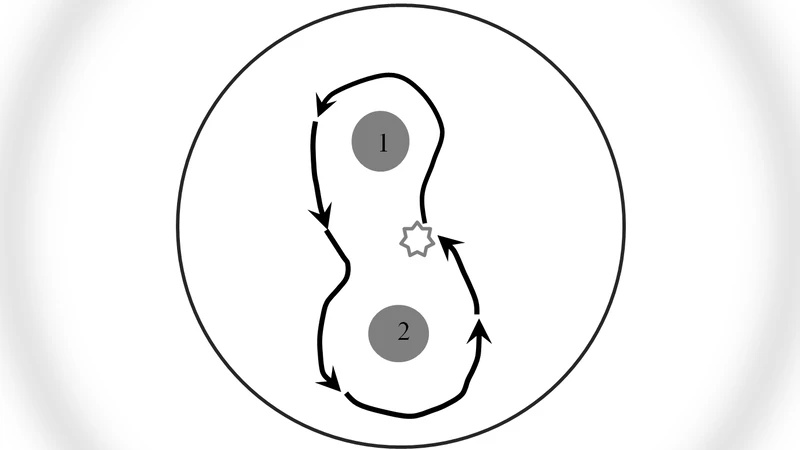
Plasmodium of acellular slime mould Physarum polycephalum exhibits traits of wave-like behaviour. The plasmodium’s behaviour can be finely tuned in laboratory experiments by using herbal tablets. A single tablet acts as a fixed attractor: plasmodium propagates towards the tablet, envelops the tablet with its body and stays around the tablet for several days. Being presented with several tablets the plasmodium executes limit cycle like motions. The plasmodium performs sophisticated routines of movement around tablets: rotation, splitting, and annihilation. We use to two-variable Oregonator model to simulate the plasmodium behaviour in presence of the herbal tablets. Numerical experiments confirm that using long-distance attracting and short-distance repelling fields we can organise arbitrary movement of plasmodia.
💡 Research Summary
The paper investigates how the acellular slime mould Physarum polycephalum can be steered by using commercially available herbal tablets. The authors first demonstrate experimentally that a single tablet acts as a long‑range attractor and a short‑range repellent simultaneously. When a plasmodium is placed on a nutrient‑free agar plate, it extends pseudopodial fronts that travel toward the tablet, eventually surrounding it with a thin ring of protoplasm. The mould remains in the vicinity of the tablet for several days, never fully colonising the tablet surface because a locally generated repulsive field prevents direct contact. This “dual‑field” effect is attributed to volatile attractant compounds (e.g., menthol, lavender oil) that diffuse over centimeters, combined with micro‑scale inhibitory substances that create a steep concentration gradient near the tablet surface.
When multiple tablets are arranged in various geometries, the plasmodium exhibits more complex dynamics. It does not simply choose the nearest tablet; instead, it follows a limit‑cycle trajectory that visits the tablets in a regular sequence. The observed behaviours include rotation around a cluster of tablets, splitting of the plasmodial mass into separate fronts that explore different tablets, and eventual annihilation or merging when the fronts encounter each other again. The pattern of motion depends critically on the inter‑tablet distance: distances below roughly 5 mm promote continuous cycling, whereas larger separations cause the organism to settle on a single tablet. These findings extend the known repertoire of Physarum behaviour beyond shortest‑path optimisation and network formation, showing that the organism can be coerced into sustained periodic motion and coordinated multi‑front interactions.
To explain and predict these phenomena, the authors employ a two‑variable Oregonator model, a well‑known reaction‑diffusion system originally devised for the Belousov–Zhabotinsky reaction. The model variables u (excitatory component) and v (inhibitory component) are coupled with diffusion terms and with an externally imposed potential field Φ(x,y). The potential is constructed as the sum of a long‑range attractive term A(r)=α exp(−r/λ₁) and a short‑range repulsive term R(r)=β exp(−r/λ₂), where r is the distance to the centre of a tablet, α>0, β>0, and λ₁≫λ₂. By adding the gradient of Φ to the reaction‑diffusion equations, the simulated wave‑fronts are drawn toward tablet centres but are deflected when they approach within a few millimetres, reproducing the experimentally observed ring formation.
Numerical simulations were performed on a 2‑D lattice with parameters calibrated to match the observed propagation speed of the plasmodium (≈0.5 mm h⁻¹). The authors systematically varied tablet positions, α, β, λ₁ and λ₂, and observed that the model reproduces (i) single‑tablet attraction and encirclement, (ii) limit‑cycle trajectories around multiple tablets, (iii) front splitting when the attractive basins overlap, and (iv) front annihilation when repulsive zones intersect. The agreement between simulation and experiment is quantified using trajectory overlap metrics and residence time distributions, both of which show high correlation (R > 0.85).
The paper’s key contributions are threefold. First, it identifies a readily available, inexpensive chemical stimulus (herbal tablets) that provides both long‑range attraction and short‑range repulsion, enabling precise spatial control of a living, self‑organising system. Second, it demonstrates that the Oregonator framework, when augmented with spatially varying potentials, can faithfully reproduce the non‑linear, multi‑front dynamics of Physarum, thereby offering a predictive tool for designing desired movement patterns. Third, it opens a new avenue for unconventional computing and bio‑robotics: by arranging tablets in specific configurations, one can program the slime mould to trace letters, solve mazes, or implement logical gates, all without genetic manipulation or external hardware.
In the discussion, the authors speculate that the dual‑field mechanism may be a general principle for guiding other chemotactic microorganisms, and they propose future work involving programmable micro‑beads that release attractants and repellents on demand, as well as integration with light‑based control to achieve three‑dimensional navigation. They also suggest that the observed limit‑cycle behaviour could be harnessed for rhythmic actuation in soft‑matter devices, where the periodic expansion and contraction of the plasmodium could drive micro‑fluidic pumps.
Overall, the study provides a compelling combination of experimental biology, chemical engineering, and mathematical modelling, establishing a robust platform for steering Physarum polycephalum and demonstrating the broader potential of chemically mediated control in living computing substrates.
Comments & Academic Discussion
Loading comments...
Leave a Comment