A Study on Fuzzy Systems
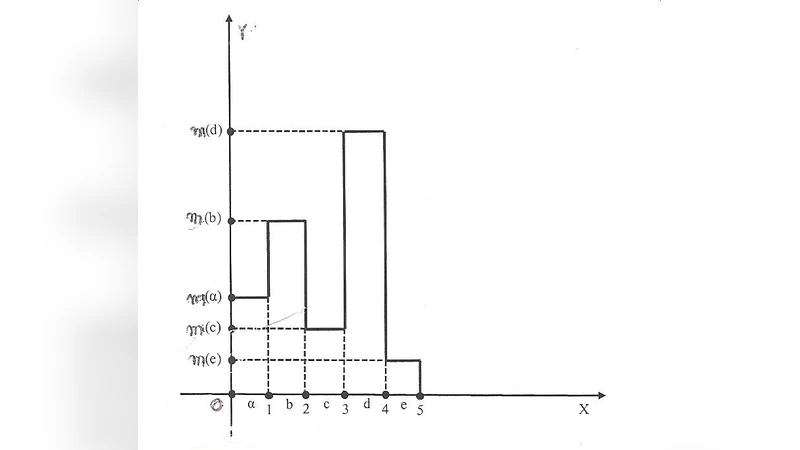
We use princiles of fuzzy logic to develop a general model representing several processes in a system’s operation characterized by a degree of vagueness and/or uncertainy. Further, we introduce three altenative measures of a fuzzy system’s effectiveness connected to the above model. An applcation is also developed for the Mathematical Modelling process illustrating our results.
💡 Research Summary
The paper presents a comprehensive framework that leverages fuzzy logic to model and evaluate processes characterized by vagueness and uncertainty. It begins by reviewing the fundamentals of fuzzy set theory, membership functions, and the limitations of conventional fuzzy control and inference systems, which often rely on static rule bases and simple error‑based performance metrics. Recognizing that many real‑world systems involve ambiguous linguistic assessments (e.g., “high risk”, “moderate confidence”) and noisy sensor data, the authors propose a general fuzzy modeling approach that can be applied across diverse domains.
The core of the methodology is a mathematically defined fuzzy relation R that links an input vector X to an output vector Y. Unlike traditional crisp rule matrices, R is constructed from variable‑specific membership functions of the Laplace form μ_i(x_i)=exp(−|x_i−c_i|/σ_i) and a set of adaptive weights w_i that reflect the relative importance of each input under the current operating conditions. The inference mechanism replaces the classic max‑min composition with a weighted‑average aggregation:
μ_Y(y)=∑_{i=1}^{n} w_i·min