Gamma-rays From Warm WIMP Dark Matter Annihilation
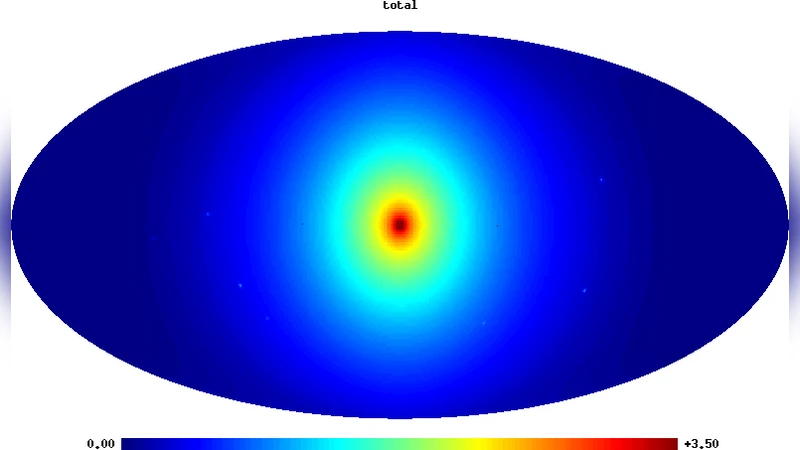
The weakly interacting massive particle (WIMP) often serves as a candidate for the cold dark matter, however when produced non-thermally it could behave like warm dark matter. In this paper we study the properties of the $\gamma$-ray emission from annihilation of WIMP dark matter in the halo of our own Milky-Way Galaxy with high resolution $N$-body simulations of a Milky-Way like dark matter halo, assuming different nature of WIMPs. Due to the large free-streaming length in the scenario of warm WIMPs, the substructure contend of the dark matter halo is significantly different from that of the cold WIMP counterpart, resulting in distinct predictions of the $\gamma$-ray signals from the dark matter annihilation. We illustrate these by comparing the predicted $\gamma$-ray signals from the warm WIMP annihilation to that of cold WIMPs. Pronounced differences from the subhalo skymap and statistical properties between two WIMP models are demonstrated. Due to the potentially enhanced cross section of the non-thermal production mechanism in warm WIMP scenario, the Galactic center might be prior for the indirect detection of warm WIMPs to dwarf galaxies, which might be different from the cold dark matter scenario. As a specific example we consider the non-thermally produced neutralino of supersymmetric model and discuss the detectability of warm WIMPs with Fermi $\gamma$-ray telescope.
💡 Research Summary
The paper investigates the gamma‑ray signatures expected from annihilation of warm WIMP dark matter, a scenario in which WIMPs are produced non‑thermally and therefore possess a large free‑streaming length. Using high‑resolution N‑body simulations of a Milky‑Way‑like halo, the authors compare the structural properties of a warm‑WIMP halo with those of a conventional cold‑WIMP halo and propagate these differences into predictions for the gamma‑ray sky.
Key points:
-
Warm versus cold WIMP – In the warm case the primordial velocity dispersion suppresses the formation of low‑mass subhalos. The simulation implements a cut‑off in the initial power spectrum corresponding to a free‑streaming scale of order tens of kiloparsecs, which raises the minimum subhalo mass to ∼10⁸ M⊙. Consequently the subhalo mass function is flatter (α≈1.6 instead of ≈1.9) and the total number of subhalos in the 10⁶–10⁸ M⊙ range is reduced by roughly 30–50 % relative to the cold case.
-
Gamma‑ray flux calculation – The annihilation flux scales as ⟨σv⟩∫ρ²dl. Warm WIMPs can have an enhanced annihilation cross‑section because the non‑thermal production mechanism often requires larger ⟨σv⟩ to obtain the observed relic density (values up to 10⁻²⁴ cm³ s⁻¹ are considered). The reduced subhalo population weakens the “point‑source” contribution from subhalos, while the smooth halo component, especially near the Galactic centre, becomes comparatively more important.
-
Sky‑map and statistical differences – The authors generate mock gamma‑ray skymaps for both models. Warm‑WIMP maps show fewer bright spots and a more uniform background, reflected in lower clustering statistics and a Poisson‑like distribution of residuals. Cold‑WIMP maps are dominated by numerous subhalo point sources, leading to a highly non‑Poissonian tail.
-
Observational implications – Because the smooth component is amplified and the subhalo contribution is suppressed, the Galactic centre emerges as the most promising target for indirect detection of warm WIMPs. In contrast, dwarf spheroidal galaxies, which are the standard cold‑WIMP targets, provide little advantage for warm WIMPs due to the paucity of substructure and lower overall J‑factors.
-
Concrete SUSY example – The paper illustrates the scenario with a non‑thermally produced neutralino in a supersymmetric framework. A benchmark neutralino mass of ~200 GeV and ⟨σv⟩≈2×10⁻²⁴ cm³ s⁻¹ satisfy both relic density and collider constraints while yielding a gamma‑ray flux from the Galactic centre that is within the sensitivity of the Fermi‑LAT after ten years of observation.
-
Detection prospects – The authors argue that current instruments (Fermi‑LAT) already have the capability to test the warm‑WIMP hypothesis by focusing on the inner few degrees of the Milky Way. Future facilities such as the Cherenkov Telescope Array (CTA) will improve angular resolution and sensitivity, allowing a more precise separation of smooth‑halo emission from residual point‑source contamination.
In summary, the study demonstrates that a warm‑WIMP dark matter candidate leads to a markedly different subhalo population and gamma‑ray sky signature compared with the standard cold‑WIMP picture. The combination of a suppressed subhalo contribution and a potentially larger annihilation cross‑section shifts the optimal indirect‑detection strategy from dwarf galaxies to the Galactic centre, offering a novel avenue to probe non‑thermal dark‑matter production mechanisms.