The triple evolution dynamical instability: Stellar collisions in the field and the formation of exotic binaries
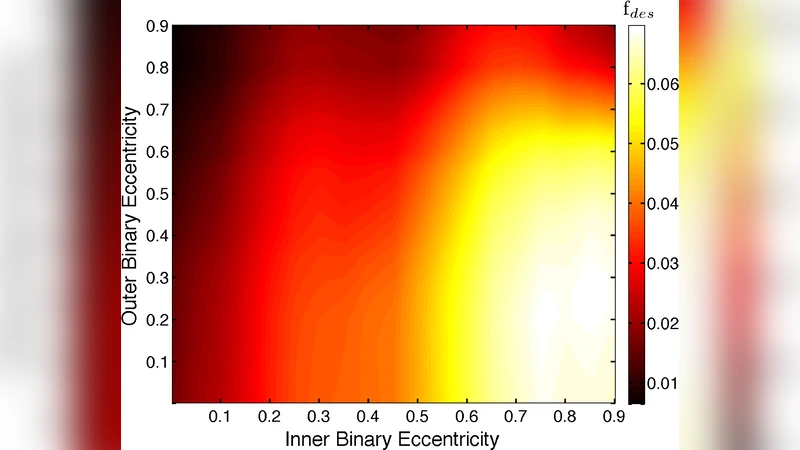
Physical collisions and close approaches between stars play an important role in the formation of exotic stellar systems. Standard theories suggest that collisions are rare, occurring only via random encounters between stars in dense clusters. We present a different formation pathway, the triple evolution dynamical instability (TEDI), in which mass loss in an evolving triple star system causes orbital instability. The subsequent chaotic orbital evolution of the stars triggers close encounters, collisions, exchanges between the stellar components, and the dynamical formation of eccentric compact binaries (including Sirius like binaries). We demonstrate that the rate of stellar collisions due to the TEDI is approximately 10^{-4} yr^{-1} per Milky-Way Galaxy, which is nearly 30 times higher than the total collision rate due to random encounters in the Galactic globular clusters. Moreover, we find that the dominant type of stellar collisions is qualitatively different; most collisions involve asymptotic giant branch stars, rather than main sequence, or slightly evolved stars, which dominate collisions in globular clusters. The TEDI mechanism should lead us to revise our understanding of collisions and the formation of compact, eccentric binaries in the field.
💡 Research Summary
The paper introduces a novel pathway for stellar collisions that operates outside dense star clusters, termed the Triple Evolution Dynamical Instability (TEDI). In a hierarchical triple system, the most massive component eventually evolves off the main sequence and ascends the asymptotic giant branch (AGB). During this phase the star undergoes rapid mass loss, which alters the total mass, the mass ratios, and the orbital separations of the triple. When the change pushes the system across a critical stability boundary—defined by the ratio of the outer to inner semi‑major axes and the mass distribution—the triple becomes dynamically unstable.
Once instability sets in, the three‑body problem enters a chaotic regime. Energy and angular momentum are exchanged in a highly non‑linear fashion, leading to a variety of outcomes: (i) two stars may pass within a few stellar radii, producing a direct physical collision; (ii) close passages can trigger tidal stripping, mass transfer, or even the formation of a temporary common envelope; (iii) the third star can be ejected from the system, or the remaining pair can settle into a new binary with a very high eccentricity (e≈0.5–0.9). The authors emphasize that the collisions produced by TEDI are dominated by the AGB star, whose large radius dramatically increases the geometric cross‑section for impact. This contrasts sharply with collisions in globular clusters, which are typically between main‑sequence or slightly evolved stars.
To quantify the importance of TEDI, the authors combine observational estimates of the Galactic triple fraction (≈10 % of all stellar systems), stellar evolution models that give the timing and magnitude of mass loss, and N‑body simulations of unstable triples. Their calculations yield an average collision rate of roughly 10⁻⁴ yr⁻¹ per Milky Way‑type galaxy, i.e., one event every ten thousand years. This is about thirty times larger than the total collision rate inferred from random close encounters in all Galactic globular clusters combined (≈3×10⁻⁶ yr⁻¹). Moreover, because the dominant colliding objects are AGB stars, the post‑collision remnants are expected to be unusually massive white dwarfs, neutron stars, or even black holes surrounded by enriched circumstellar material.
A particularly compelling implication of TEDI is the natural formation channel for eccentric compact binaries such as the Sirius system. After the chaotic phase, the surviving binary often retains a high eccentricity while the components have already evolved into a white dwarf and a main‑sequence star, matching the observed properties of many field binaries that are difficult to explain with standard binary evolution alone. The authors also note that the ejected third star can become a high‑velocity runaway, providing a potential explanation for some isolated high‑speed stars observed in the Galactic halo.
The paper concludes that TEDI fundamentally reshapes our understanding of where and how stellar collisions occur. It demonstrates that field triples, through their intrinsic evolutionary mass loss, can generate collisions far more frequently than dense clusters, and that the nature of those collisions (AGB‑driven, high‑eccentricity outcomes) is qualitatively different. The authors call for targeted observational campaigns—such as Gaia astrometry to identify unstable triples, time‑domain surveys to catch transient collision signatures, and gravitational‑wave detectors to search for eccentric compact binaries—to test the predictions of the TEDI framework. In doing so, they open a new avenue for linking stellar evolution, three‑body dynamics, and the observed population of exotic binaries in the Milky Way.