Seismic Solvability Problems
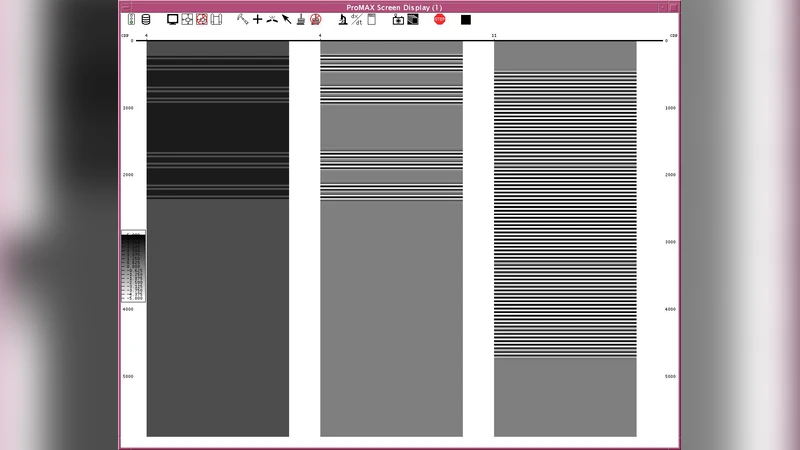
Classical approach of solvability problem has shed much light on what we can solve and what we cannot solve mathematically. Starting with quadratic equation, we know that we can solve it by the quadratic formula which uses square root. Polynomial is a generalization of quadratic equation. If we define solvability by using only square roots, cube roots etc, then polynomials are not solvable by radicals (square root, cube root etc). We can classify polynomials into simple (solvable by radicals) and complex (not solvable by radicals). We will use the same metaphor to separate what is solvable (simple part) and what is not solvable (complex part). This paper is a result of our presentation at a University of Houston seminar. In this paper, we will study seismic complexity through the eyes of solvability. We will investigate model complexity, data complexity and operator complexity. Model complexity is demonstrated by multiple scattering in a complex model like Cantor layers. Data complexity is studied through Betti numbers (topology/cohomology). Data can be decomposed as simple part and complex part. The simple part is solvable as an inverse problem. The complex part could be studied qualitatively by topological method like Betti numbers. Operator complexity is viewed through semigroup theory, specifically through idempotents (opposite of group theory). Operators that form a group are invertible (solvable) while semigroup of operators is not invertible (not solvable) in general.
💡 Research Summary
The paper “Seismic Solvability Problems” re‑examines the classical notion of solvability—originally formulated for algebraic equations—and transfers it to three fundamental aspects of seismic imaging: model complexity, data complexity, and operator complexity. In algebra, a quadratic equation is solvable by radicals (square roots); by contrast, higher‑degree polynomials are not always solvable by radicals, a fact formalized by Galois theory. The authors adopt this dichotomy, labeling problems that can be expressed using a finite set of elementary operations (square roots, cube roots, etc.) as “simple” and those that cannot as “complex.”
Model complexity is illustrated with a Cantor‑layer construction. A Cantor set consists of an infinite hierarchy of gaps and solid intervals; when such a structure is used as a layered earth model, seismic waves experience an unbounded number of scattering events. The resulting wavefield cannot be described exactly by the standard linear propagation operator, placing the model in the “complex” category. The authors propose to split the model into a simple background (e.g., average velocity layers) that can be inverted with conventional methods, and a complex fractal component that must be treated qualitatively, for example by examining its fractal dimension or by statistical scattering models.
Data complexity is quantified using Betti numbers (β0, β1, …), topological invariants that count connected components and holes in a data set. By constructing a simplicial complex from seismic amplitudes and computing its Betti numbers, the authors can distinguish regions where the data topology is simple (low Betti numbers, indicating few independent events) from regions where the topology is intricate (high Betti numbers, indicating many overlapping arrivals, multiples, and noise). Simple data are amenable to standard inverse‑problem techniques (full‑waveform inversion, migration), whereas complex data require a qualitative interpretation based on their topological signature, such as identifying hidden reflectors or assessing the degree of scattering.
Operator complexity is examined through the lens of group versus semigroup theory. Inverse operators that belong to a mathematical group are invertible; they represent “simple” operators that can be undone analytically or numerically. Real seismic processing, however, often involves non‑invertible steps—band‑limited filtering, thresholding, or non‑linear amplitude corrections—that form a semigroup. Within a semigroup, idempotent elements (operators satisfying P² = P) play a central role: once applied, further applications have no additional effect, signalling loss of information and non‑recoverability. The paper argues that any complex operator can be approximated by a composition of simpler, possibly idempotent, operators, allowing a systematic error analysis and a pathway to partially recover information lost in non‑invertible stages.
The overall workflow proposed by the authors is as follows: (1) classify each component of the seismic problem (model, data, operator) as simple or complex; (2) apply conventional linear inversion or regularized optimization to the simple parts; (3) employ topological (Betti numbers, fractal dimensions) and semigroup‑based analyses for the complex parts; (4) recombine the results to obtain a comprehensive interpretation. This strategy makes explicit the limits of traditional inversion, provides quantitative metrics (e.g., Betti numbers) for when those limits are reached, and offers mathematically grounded alternatives for the remaining “unsolvable” portion.
By bridging abstract algebraic solvability with concrete seismic practice, the paper opens a new interdisciplinary avenue. It suggests that future research should refine fractal model generation, develop higher‑dimensional topological descriptors, and design efficient algorithms for semigroup decomposition. Such advances could transform how geophysicists handle highly scattered, noisy, or non‑linear data, ultimately extending the reach of seismic imaging beyond the conventional “solvable” regime.
Comments & Academic Discussion
Loading comments...
Leave a Comment