Estudio del Proceso de Adsorcion-Desorcion de Contaminantes en Medios Confinados mediante Simulaciones Computacionales
The study of dispersion of solid wastes through a porous media is important in order to estimate the ecological impact that, in particular, a radioactive solid waste could produce when it spreads in the soil. There are some models available in literature which can help one simulate the dispersion of contaminants through a porous media, taking into account the physicochemical properties of the waste and its effect over the mobility, the adsorption-desorption equilibrium, and the irreversible adsorption over the walls that constitute the channel where it diffuses. However, the majority of these models do not consider the cooperative behavior given by the presence of other species competing each other for the substrate, nor the consequences that this competition produces in the thermodynamic equilibrium of the system. In this cases, the mesoscopic simulations have shown to be a viable alternative to study these kinds of systems. This work presents the study of the adsorption-desorption process for different components in a contaminated fluid by electrostatic mesoscopic molecular simulation using the dissipative particle dynamics method (DPD). It also shows how the presence of different components modifies the adsorption-desorption equilibrium, and this result suggests the importance of including the presence of all species in order to obtain results closer to reality.
💡 Research Summary
The paper addresses a critical gap in the modeling of contaminant transport through porous media, specifically the adsorption‑desorption behavior of radioactive solid waste when multiple chemical species are present. Traditional models often treat the waste as a single component and neglect the competitive interactions among co‑existing ions, leading to inaccurate predictions of ecological impact. To overcome these limitations, the authors employ a mesoscopic simulation framework based on Dissipative Particle Dynamics (DPD) augmented with explicit electrostatic forces (Charged‑DPD).
In the methodological section, the DPD particles are assigned conservative, dissipative, and random forces, while long‑range Coulomb interactions are calculated using an Ewald‑type summation to capture charge screening and electric double‑layer formation. The porous medium is represented as a three‑dimensional rectangular channel containing a regular lattice of pores, each pore acting as an adsorption site with a defined saturation capacity (N_max) and species‑specific binding energy (ε_i). Three particle types are introduced: (1) positively charged radioactive solid particles, (2) negatively charged competing ions, and (3) neutral solvent particles. The system is initialized with a composition of 10 % radioactive particles, 20 % competing ions, and 70 % solvent, and simulated under NVT conditions for one million time steps (Δt = 0.02 DPD units). Data on site occupancy, free‑particle concentration, system free energy, and charge distribution are recorded every 10⁴ steps.
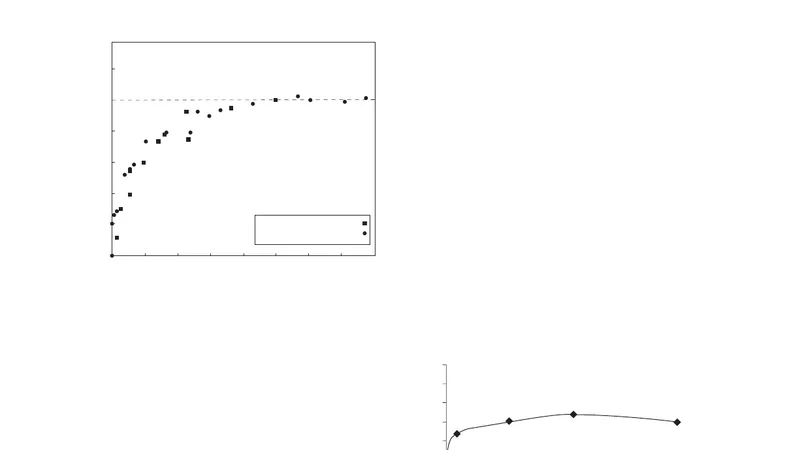
Results show that, in the single‑component case, the simulated adsorption isotherm matches experimental Langmuir data, validating the model. When competing ions are added, the occupancy of adsorption sites drops markedly, and the adsorption isotherm becomes less steep, indicating a shift to a new thermodynamic equilibrium. The presence of high‑charge radioactive particles leads to pronounced electrostatic screening, reducing their effective adsorption affinity. Moreover, the desorption kinetics become non‑linear, reflecting the influence of inter‑species interactions on both adsorption and release rates.
The discussion emphasizes that ignoring competitive adsorption and electrostatic effects can cause substantial over‑estimation of the immobilization of radioactive waste in soils. By integrating charge screening, multi‑species competition, and irreversible wall adsorption into a unified DPD framework, the study provides a more realistic tool for long‑term risk assessment. The authors propose future work that includes (i) modeling irregular pore geometries to better mimic natural soils, (ii) exploring the impact of temperature, pH, and ionic strength, and (iii) coupling the simulations with microfluidic experiments for empirical validation.
In conclusion, the research demonstrates that mesoscopic Charged‑DPD simulations are capable of capturing the complex cooperative behavior of multiple contaminants in confined porous media, offering a significant improvement over conventional single‑species models and paving the way for more accurate environmental impact predictions of radioactive waste dispersion.