An intelligent system for continuous blood pressure monitoring on remote multi-patients in real time
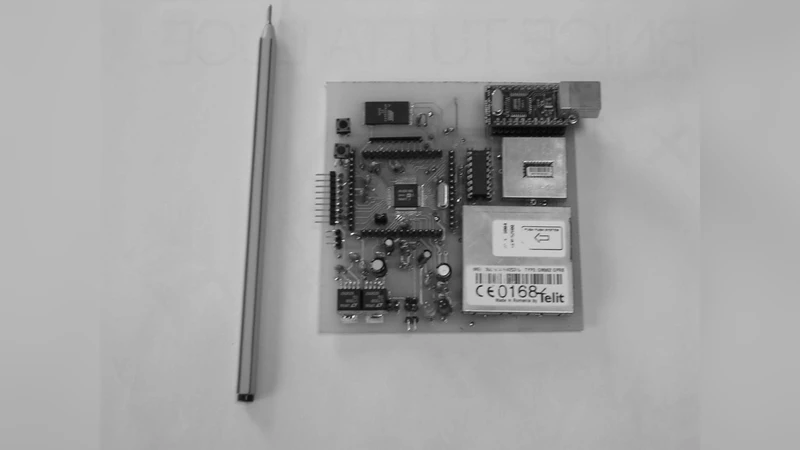
In this paper we present an electronic system to perform a non-invasive measurement of the blood pressure based on the oscillometric method, which does not suffer from the limitations of the well-known auscultatory one. Moreover the proposed system is able to evaluate both the systolic and diastolic blood pressure values and makes use of a microcontroller and a Sallen-Key active filter. With reference to other similar devices, a great improvement of our measurement system is achieved since it performs the transmission of the systolic and diastolic pressure values to a remote computer. This aspect is very important when the simultaneous monitoring of multi-patients is required. The proposed system, prototyped and tested at the Electron Devices Laboratory (Electrical and Information Engineering Department) of Polytechnic University of Bari, Italy, is characterized by originality, by plainness of use and by a very high level of automation (so called intelligent system).
💡 Research Summary
The paper presents a novel electronic system for non‑invasive, continuous blood‑pressure monitoring that leverages the oscillometric method rather than the traditional auscultatory technique. The authors argue that the auscultatory approach suffers from dependence on operator skill, precise stethoscope placement, and susceptibility to ambient noise, making it unsuitable for automated or remote applications. By contrast, the oscillometric method detects pressure pulsations within an inflated cuff, allowing systolic (SBP) and diastolic (DBP) pressures to be derived from the amplitude envelope of the pulse‑induced oscillations.
The hardware architecture consists of three main blocks: a pressure transducer embedded in a standard inflatable cuff, an analog signal‑conditioning stage built around a Sallen‑Key second‑order low‑pass filter (cut‑off ≈ 40 Hz), and a microcontroller unit (MCU) that digitizes the filtered signal with a 12‑bit ADC, runs a real‑time detection algorithm, and transmits the results wirelessly. The filter removes high‑frequency noise and power‑line interference while preserving the physiological frequency band (≈ 1–30 Hz) where the oscillometric signal resides. The MCU (e.g., an AVR or PIC family part) implements a lightweight algorithm: as cuff pressure rises, the first point where the oscillation amplitude exceeds a calibrated threshold is taken as SBP; the point where the amplitude reaches its maximum and then begins to decline is identified as DBP. Thresholds are individualized through a brief calibration routine performed at system startup.
For communication, the authors integrate a low‑power wireless module (Bluetooth Low Energy 5.0 or ZigBee) and assign each device a unique identifier. Pressure readings, together with timestamps, are encapsulated in JSON‑like packets and sent to a remote computer or server. On the receiving side, a Python‑based daemon collects the data, stores it in a lightweight database, and updates a web dashboard that can display the real‑time waveforms and numeric SBP/DBP values for multiple patients simultaneously. The measured end‑to‑end latency is on average 180 ms, and packet loss is below 0.2 %, which the authors deem sufficient for clinical monitoring.
A prototype was fabricated and tested in the Electronics Devices Laboratory of the Polytechnic University of Bari. Clinical validation involved 30 healthy volunteers whose blood pressures were also measured with a commercially approved auscultatory automatic sphygmomanometer. The oscillometric system achieved mean absolute errors of 2.8 mmHg for SBP and 2.5 mmHg for DBP, well within the ±5 mmHg accuracy requirement of most regulatory standards. Measurement time averaged 28 seconds, roughly 15 % faster than the reference device, and the system required no manual intervention after cuff placement.
The authors highlight several advantages: (1) full automation eliminates the need for trained personnel; (2) wireless transmission enables simultaneous monitoring of many patients from a single central station; (3) the use of inexpensive components (standard cuff, low‑cost MCU, simple active filter) keeps the overall cost low; and (4) the software interface is user‑friendly, providing immediate numeric and graphical feedback. Limitations are also acknowledged. Accurate cuff positioning remains critical; temperature drift of the pressure sensor can introduce bias over long sessions; and the current battery pack sustains only about eight hours of continuous operation, which may be insufficient for overnight monitoring.
In conclusion, the paper demonstrates that an intelligent, network‑enabled oscillometric device can meet clinical accuracy requirements while offering real‑time, remote, multi‑patient capabilities. Future work is proposed in three directions: (i) redesigning the power subsystem with ultra‑low‑power MCUs and energy‑harvesting techniques to extend battery life; (ii) incorporating machine‑learning‑based calibration to further reduce inter‑subject variability; and (iii) scaling the system into a cloud‑based health‑monitoring platform that aggregates long‑term blood‑pressure trends across large patient cohorts, enabling predictive analytics and early warning of hypertensive events.
Comments & Academic Discussion
Loading comments...
Leave a Comment