ModuLand plug-in for Cytoscape: determination of hierarchical layers of overlapping network modules and community centrality
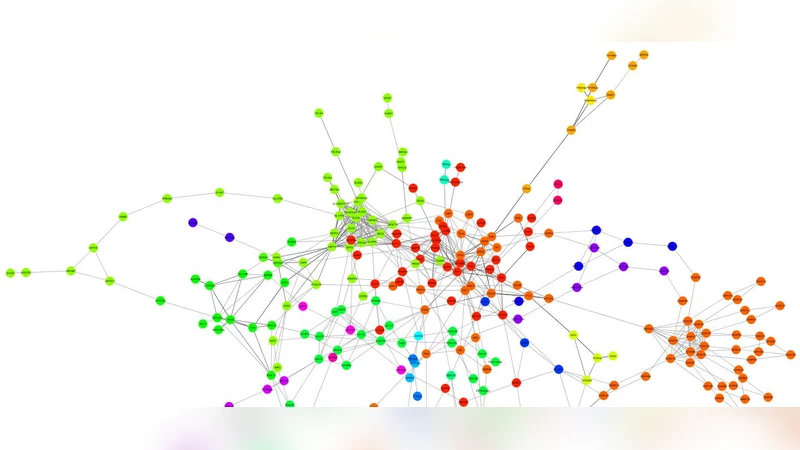
Summary: The ModuLand plug-in provides Cytoscape users an algorithm for determining extensively overlapping network modules. Moreover, it identifies several hierarchical layers of modules, where meta-nodes of the higher hierarchical layer represent modules of the lower layer. The tool assigns module cores, which predict the function of the whole module, and determines key nodes bridging two or multiple modules. The plug-in has a detailed JAVA-based graphical interface with various colouring options. The ModuLand tool can run on Windows, Linux, or Mac OS. We demonstrate its use on protein structure and metabolic networks. Availability: The plug-in and its user guide can be downloaded freely from: http://www.linkgroup.hu/modules.php. Contact: csermely.peter@med.semmelweis-univ.hu Supplementary information: Supplementary information is available at Bioinformatics online.
💡 Research Summary
**
The paper introduces the ModuLand plug‑in for Cytoscape, a comprehensive tool designed to detect extensively overlapping network modules, construct hierarchical layers of those modules, and identify key nodes such as module cores and bridges. While many existing Cytoscape clustering plug‑ins focus on non‑overlapping community detection or lack hierarchical capabilities, ModuLand builds on the authors’ previously published ModuLand framework (Kovács et al., 2010) and implements two core algorithms: LinkLand for influence‑zone calculation and ProportionalHill for module assignment.
LinkLand quantifies the “influence zone” of each node or edge, essentially measuring how much of the network’s local influence a particular element receives. By summing these influence zones across the whole network, the method derives a community centrality value for each element. This value is visualized as the height (z‑axis) of a three‑dimensional community landscape, where hills correspond to network modules. Because the landscape is continuous, hills can overlap, naturally yielding modules with shared nodes.
ProportionalHill then assigns each node to modules proportionally to its contribution to the underlying hills, producing a set of overlapping modules. The node with the highest assignment value within a module is designated the module core, which the authors show often predicts the biological function of the entire module. Nodes that belong strongly to multiple modules receive a “bridgeness” score, highlighting inter‑modular connectors that may facilitate signal propagation or metabolic flux between functional units.
A distinctive feature of the plug‑in is its automatic construction of a modular hierarchy. Modules identified at a lower level become meta‑nodes at the next higher level; the degree of overlap between lower‑level modules determines the weight of meta‑edges linking those meta‑nodes. This recursive aggregation proceeds until the network collapses into a single meta‑node, providing a multi‑scale view of network organization. The authors report that the computational complexity remains O(n³) as in the original algorithm, but an optional optimization that discards very low‑weight meta‑edges can speed up higher‑level calculations by up to sevenfold for large networks.
The software is distributed as a single Java .jar file, runs on Windows, Linux, and macOS, and integrates seamlessly with Cytoscape’s existing data structures. Users can load any undirected, weighted network, invoke the plug‑in through a straightforward dialog, and obtain visualizations with customizable colour schemes: nodes can be coloured by their dominant module, by blended colours reflecting overlapping assignments, or by centrality measures such as weighted degree, betweenness, community centrality, overlap, and bridgeness. Reports summarizing each hierarchical level—including numbers of nodes, edges, effective modules, module sizes, and the top‑10 core nodes per module—can be exported in CSV or TXT format for downstream analysis.
To demonstrate biological relevance, the authors applied ModuLand to two case studies. First, they analyzed the protein‑structure network of Escherichia coli methionyl‑tRNA synthetase (Met‑tRNA‑syn). The algorithm identified five modules at the second hierarchical level, which correspond precisely to the five known structural sub‑domains of the enzyme. Importantly, amino acids that participate in the most frequently used communication pathways (as previously reported by Ghosh and Vishveshwara, 2007) were either module cores or high‑bridgeness nodes, confirming that the identified modules capture functional communication routes within the protein.
Second, they compared metabolic networks of the free‑living bacterium E. coli and the obligate endosymbiont Buchnera aphidicola. ModuLand revealed a richer, more differentiated modular architecture in the E. coli network, whereas Buchnera’s network collapsed into a few large twin‑modules. Statistical tests showed that E. coli module cores overlapped significantly with previously defined functional modules (Guimerà & Amaral, 2005) and that each core in E. coli covered fewer metabolic functions on average than Buchnera’s cores (0.53 vs. 0.67 functions per core, p ≈ 0.04). Random sub‑network controls confirmed that these differences were not merely due to size disparities. The findings support the hypothesis that organisms inhabiting variable environments evolve more specialized metabolic modules, while symbionts in stable niches retain broader, less specialized modules.
Overall, the ModuLand Cytoscape plug‑in offers (1) detection of extensively overlapping modules, (2) automatic multi‑level hierarchical organization, (3) quantitative identification of module cores and bridge nodes, and (4) an intuitive graphical interface with flexible visual encoding. The authors argue that these capabilities make ModuLand a valuable addition to the network‑analysis toolbox, especially for researchers interested in functional compartmentalization, signal transduction, or metabolic pathway organization in complex biological systems. Future directions may include parallelization for very large networks, integration with additional centrality measures, and application to other domains such as social or ecological networks.
Comments & Academic Discussion
Loading comments...
Leave a Comment