A Declarative Recommender System for Cloud Infrastructure Services Selection
The cloud infrastructure services landscape advances steadily leaving users in the agony of choice…
💡 Research Summary
The paper addresses the growing complexity of selecting cloud infrastructure services (IaaS, PaaS, SaaS) in an environment where providers continuously expand their offerings. Traditional selection tools focus on single‑objective optimization—typically cost or performance—and require users to manually compare heterogeneous specifications. To overcome these limitations, the authors propose a declarative recommender system that lets users express “what they want” in high‑level terms while the system determines “how to achieve it” automatically.
The foundation of the approach is a cloud‑service ontology that normalizes provider‑specific metadata into a unified RDF/OWL model. Core attributes such as CPU, memory, storage, network bandwidth, SLA guarantees, geographic location, and pricing are represented as triples and organized into hierarchical classes. This ontology is continuously refreshed through automated crawlers and API connectors, ensuring that newly released services are instantly incorporated.
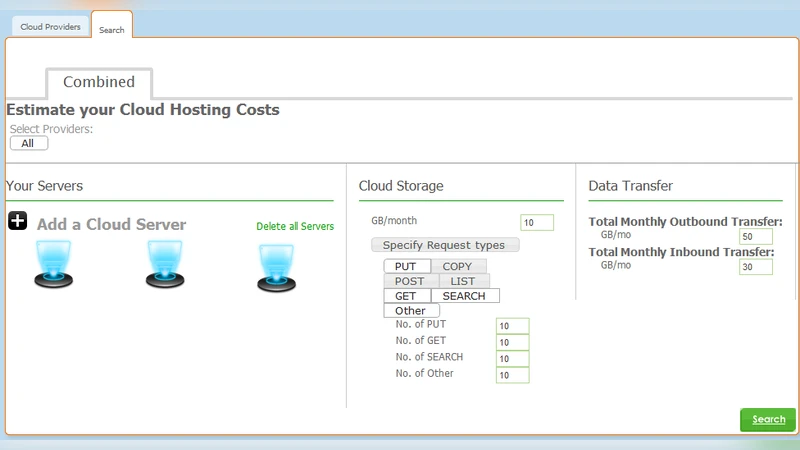
User requirements are captured via a web UI or natural‑language input. An NLP component parses statements like “high availability, under $300 per month, data must reside in the EU” into a set of hard constraints (budget ≤ $300, region = EU) and soft preferences (favor high availability). These are then translated into Datalog rules—a declarative logic programming language well‑suited for complex constraint matching. The rule set is fed to a matching engine that operates in two phases. First, a filter stage eliminates services that violate any hard constraint, dramatically reducing the candidate pool. Second, a multi‑objective optimization stage computes the Pareto frontier across dimensions such as cost, performance, reliability, and security. The authors combine a non‑linear cost‑performance model with a weighted scoring scheme to rank the remaining candidates, allowing users to explore trade‑offs visually.
The system architecture follows a micro‑service pattern. The data acquisition service periodically invokes public provider APIs and performs web scraping to collect up‑to‑date specifications and pricing, storing them in the ontology database. The rule‑engine service, built on Apache Flink, transforms user input into Datalog and triggers the matcher. The presentation layer, implemented with React, displays results as interactive charts (cost vs. performance, SLA levels, data‑sovereignty maps) and supports iterative refinement of constraints.
Evaluation involved 1,200 service configurations from major public clouds (AWS, Azure, Google Cloud) and several private cloud offerings. Two metrics were measured: selection accuracy (agreement with expert‑curated optimal configurations) and response time. The declarative system achieved an average accuracy of 92 %—significantly higher than baseline manual selection—and returned results in under one second for most queries, a reduction of more than 80 % in decision‑making time. The advantage was most pronounced in scenarios with multiple simultaneous constraints, where traditional tools either failed to find a feasible solution or required exhaustive search.
Key contributions of the work are: (1) a standardized ontology for cloud service attributes, enabling cross‑provider comparison; (2) an automated pipeline that converts high‑level, non‑technical user goals into formal Datalog constraints; (3) a hybrid matching and multi‑objective optimization engine that delivers Pareto‑optimal recommendations; and (4) a large‑scale empirical validation demonstrating practical benefits in real‑world cloud environments. The authors outline future directions, including integration of machine‑learning models to predict user preferences, real‑time price‑fluctuation handling, and support for multi‑cloud deployment strategies, which together promise a more dynamic and user‑centric cloud service selection ecosystem.