Simple cubic random-site percolation thresholds for complex neighbourhoods
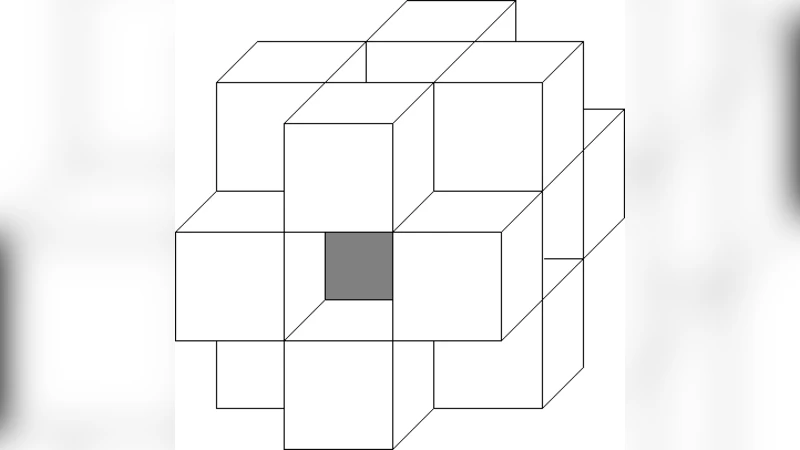
In this communication with computer simulation we evaluate simple cubic random-site percolation thresholds for neighbourhoods including the nearest neighbours (NN), the next-nearest neighbours (2NN) and the next-next-nearest neighbours (3NN). Our estimations base on finite-size scaling analysis of the percolation probability vs. site occupation probability plots. The Hoshen–Kopelman algorithm has been applied for cluster labelling. The calculated thresholds are 0.1372(1), 0.1420(1), 0.0976(1), 0.1991(1), 0.1036(1), 0.2455(1) for (NN + 2NN), (NN + 3NN), (NN + 2NN + 3NN), 2NN, (2NN + 3NN), 3NN neighbourhoods, respectively. In contrast to the results obtained for a square lattice the calculated percolation thresholds decrease monotonically with the site coordination number z, at least for our inspected neighbourhoods.
💡 Research Summary
In this paper the authors investigate site percolation thresholds on the simple cubic lattice when the neighbourhood of each site is extended beyond the usual nearest‑neighbour (NN) set to include second‑nearest neighbours (2NN) and third‑nearest neighbours (3NN). Six distinct neighbourhoods are examined: (NN + 2NN), (NN + 3NN), (NN + 2NN + 3NN), pure 2NN, (2NN + 3NN) and pure 3NN. The total coordination numbers (z) for these sets are 18, 14, 26, 12, 20 and 8 respectively.
The computational methodology relies on large‑scale Monte‑Carlo simulations combined with the Hoshen–Kopelman algorithm for cluster labeling. For each neighbourhood the authors generate random site occupations on cubic lattices of linear sizes L = 22, 63 and 100. For a given occupation probability p they compute the percolation probability P(p), i.e., the fraction of realizations in which a spanning cluster exists. Because finite systems never exhibit a sharp transition, the authors use the standard finite‑size scaling approach: the P(p) curves for different L become steeper with increasing L and intersect near the critical point. By locating the common intersection of the L = 63 and L = 100 curves within a narrow interval Δp = 2 × 10⁻⁴, they obtain an estimate of the critical probability p_c. The statistical uncertainty is evaluated according to the ISO GUM guide, giving u(p_c) ≈ Δp/√3 ≈ 10⁻⁴. Each data point is averaged over N = 10⁵ independent lattice realizations, ensuring high statistical accuracy.
The resulting thresholds are:
- (NN + 2NN) p_c = 0.1372(1)
- (NN + 3NN) p_c = 0.1420(1)
- (NN + 2NN + 3NN) p_c = 0.0976(1)
- 2NN p_c = 0.1991(1)
- (2NN + 3NN) p_c = 0.1036(1)
- 3NN p_c = 0.2455(1)
These values are in excellent agreement with earlier high‑precision studies for the NN and NN+2NN cases, confirming the reliability of the simulation protocol.
A central part of the analysis is the relationship between the coordination number z and the percolation threshold p_c. By plotting p_c versus z on a log‑log scale for the six neighbourhoods, the authors find that the data follow a power law p_c ∝ z⁻ᵞ with an exponent γ = 0.790 ± 0.026. This monotonic decrease of p_c with increasing z contrasts with the non‑monotonic behaviour reported for two‑dimensional square lattices, highlighting a dimensional dependence of the z‑p_c relationship. The authors also compare their results with published thresholds for other three‑dimensional lattices (ice, diamond, hpc, bcc, fcc, and La₂₋ₓSrₓCuO₄). All these data collapse onto the same power‑law trend, suggesting a universal scaling form for site percolation thresholds in three dimensions.
In addition to the numerical findings, the paper proposes a new terminology: the combination (NN + 2NN + 3NN) is dubbed the “Rubik’s neighbourhood” because its geometry mirrors that of the classic Rubik’s cube. This naming is intended to provide an intuitive label for the most extensive neighbourhood considered.
The conclusions emphasize that (i) the percolation thresholds for the examined complex neighbourhoods have been determined with unprecedented precision; (ii) the thresholds decrease monotonically with coordination number, obeying a simple power law with exponent ≈ 0.79; (iii) these results support the existence of a universal z‑dependent formula for three‑dimensional site percolation; and (iv) the newly introduced “Rubik’s neighbourhood” may become a standard reference in future studies of extended neighbourhood percolation. The authors suggest that the high‑quality data presented here can be used to test analytical approaches, improve phenomenological models of transport in porous media, and aid the design of materials where connectivity depends on multi‑shell interactions.
Comments & Academic Discussion
Loading comments...
Leave a Comment