The Allen Telescope Array: The First Widefield, Panchromatic, Snapshot Radio Camera for Radio Astronomy and SETI
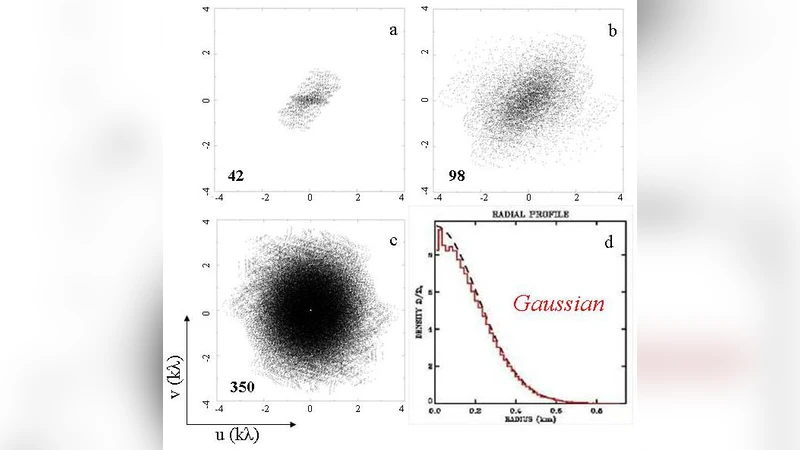
The first 42 elements of the Allen Telescope Array (ATA-42) are beginning to deliver data at the Hat Creek Radio Observatory in Northern California. Scientists and engineers are actively exploiting all of the flexibility designed into this innovative instrument for simultaneously conducting surveys of the astrophysical sky and conducting searches for distant technological civilizations. This paper summarizes the design elements of the ATA, the cost savings made possible by the use of COTS components, and the cost/performance trades that eventually enabled this first snapshot radio camera. The fundamental scientific program of this new telescope is varied and exciting; some of the first astronomical results will be discussed.
💡 Research Summary
The paper presents the Allen Telescope Array (ATA), an innovative “large‑number‑of‑small‑dishes” (LNSD) radio instrument designed to serve both conventional radio‑astronomy surveys and the Search for Extraterrestrial Intelligence (SETI). The first 42 antennas (ATA‑42) have been built and are operating at the Hat Creek Radio Observatory. The authors describe the overall design philosophy, hardware implementation, cost‑saving strategies, and early scientific results.
The ATA concept is based on the observation that for wide‑field surveys the point‑source sensitivity scales with the product of the number of dishes (N) and dish diameter (D), rather than with total collecting area (N·D²). Consequently, a large array of modest‑size (6 m) dishes provides optimal survey speed at reduced cost. The final goal is a 350‑element array delivering a total collecting area of roughly one hectare, continuous frequency coverage from 0.5 GHz to 10 GHz, and the ability to form up to 32 simultaneous beams.
Each antenna is an offset Gregorian reflector. The primary is a 6 m hydro‑formed aluminum paraboloid; the secondary is a 2.4 m aluminum ellipsoid. The offset geometry eliminates aperture blockage, reduces sidelobes, and minimizes ground spillover, which is especially important for mitigating satellite interference. A cylindrical shroud and a radio‑transparent radome protect the feed while contributing less than –40 dB of reflection loss. Surface measurements show a night‑time RMS error of 0.7 mm (≈λ/20 at the shortest wavelength) and a daytime error of about 1.5 mm. Pointing accuracy is ~10 arcsec at night.
The feed is a pyramidal log‑periodic antenna covering 500 MHz–10 GHz. Its design places a cryogenically cooled (≈60 K) MMIC low‑noise amplifier (LNA) directly behind the feed apex, minimizing cable loss. Measured feed gain varies logarithmically with frequency, averaging about 11.5 dB, and input return loss is better than –14 dB across the band. The overall aperture efficiency is estimated at ~60 %. System temperature measurements confirm a value of 30–40 K up to 5 GHz, rising to ~80 K above 8.5 GHz, indicating higher than expected input losses at the high‑frequency end.
All analog signals from 0.5–10 GHz are transmitted to a central processing building via analog fiber‑optic links with temperature‑controlled electronics (±0.1 °C). The back‑end provides four independently tunable 600 MHz bands, each feeding a 1024‑channel, 100 MHz‑wide correlator, and up to 32 digital beamformers that can feed SETI spectrometers or transient detectors. This architecture enables true snapshot imaging (a single pointing yields an image with ~15 000 independent pixels) and simultaneous multi‑target observations.
Cost reduction is achieved through extensive use of commercial off‑the‑shelf (COTS) components and mass‑production techniques. Antenna mirrors are hydro‑formed, the structural steel is welded with a specialized machine, and the entire antenna can be assembled in about eight person‑days. By balancing the cost of the dish, feed, and receiver, the overall array cost per unit is roughly a tenth of that of traditional radio arrays.
Early scientific work with ATA‑42 includes wide‑field surveys, studies of Galactic and extragalactic sources, and pilot SETI observations. The system’s large field of view (≈2.5°) and rapid imaging capability make it well suited for detecting fast radio bursts, mapping molecular lines in the Galactic center, and conducting continuous narrow‑band searches for artificial signals. The authors conclude that the full 350‑element array will dramatically increase survey speed—by orders of magnitude compared with existing facilities—while maintaining a flexible platform for both astrophysics and SETI.
Comments & Academic Discussion
Loading comments...
Leave a Comment