The Universe at Extreme Scale: Multi-Petaflop Sky Simulation on the BG/Q
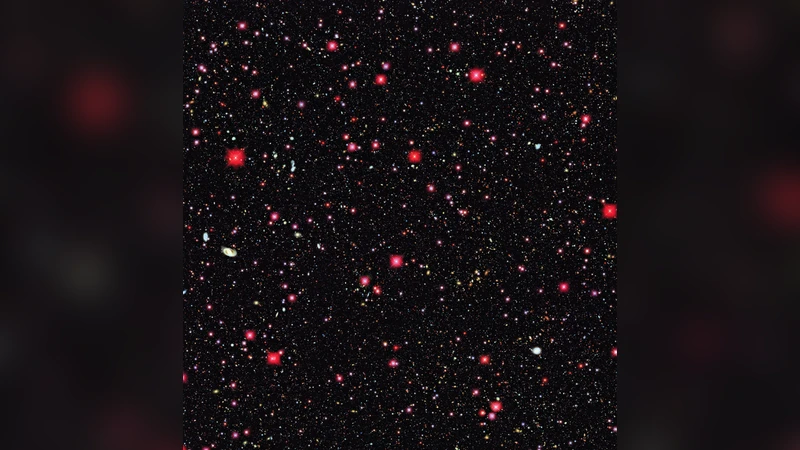
Remarkable observational advances have established a compelling cross-validated model of the Universe. Yet, two key pillars of this model – dark matter and dark energy – remain mysterious. Sky surveys that map billions of galaxies to explore the `Dark Universe’, demand a corresponding extreme-scale simulation capability; the HACC (Hybrid/Hardware Accelerated Cosmology Code) framework has been designed to deliver this level of performance now, and into the future. With its novel algorithmic structure, HACC allows flexible tuning across diverse architectures, including accelerated and multi-core systems. On the IBM BG/Q, HACC attains unprecedented scalable performance – currently 13.94 PFlops at 69.2% of peak and 90% parallel efficiency on 1,572,864 cores with an equal number of MPI ranks, and a concurrency of 6.3 million. This level of performance was achieved at extreme problem sizes, including a benchmark run with more than 3.6 trillion particles, significantly larger than any cosmological simulation yet performed.
💡 Research Summary
The paper presents a breakthrough in computational cosmology by demonstrating that the Hybrid/Hardware Accelerated Cosmology Code (HACC) can run a sky‑scale N‑body simulation with unprecedented size and performance on the IBM Blue Gene/Q (BG/Q) supercomputer. Modern astronomical surveys now map billions of galaxies, providing a cross‑validated model of the Universe that includes dark matter and dark energy, yet the physical nature of these components remains elusive. To interpret such massive observational datasets, simulations must match or exceed the survey volume and resolution, requiring trillions of particles and petaflop‑scale computing power.
HACC addresses this need through a novel, multi‑level algorithmic design. Long‑range gravitational forces are computed using a Fourier‑based Particle‑Mesh (PM) method, while short‑range interactions are handled by a flexible choice of either a tree algorithm or a Fast Multipole Method (FMM). This separation reduces communication overhead, allows each component to be optimized for the underlying hardware, and preserves high force accuracy. The code is built on a hardware‑abstraction layer that combines MPI for inter‑node communication, OpenMP for intra‑node threading, and SIMD intrinsics for vectorized computation. Particle data can be stored in single‑precision (8 bytes) or double‑precision (16 bytes) formats, enabling efficient memory usage while retaining the option for higher accuracy when required.
The BG/Q platform provides 1,572,864 cores (16 cores per node, each with four hardware threads) and a 5‑dimensional torus network delivering high bandwidth and low latency. HACC maps one MPI rank per core, exploiting the full concurrency of 6.3 million threads. Each core runs four floating‑point pipelines simultaneously, achieving a theoretical peak of 20.1 PFlops for the entire machine. In practice, the authors report a sustained performance of 13.94 PFlops, which corresponds to 69.2 % of the hardware peak, and they maintain a parallel efficiency of about 90 % across the full system.
The performance evaluation includes a benchmark run with more than 3.6 trillion particles—over twice the size of any previously published cosmological simulation. Strong scaling tests show near‑linear speedup: doubling the core count reduces runtime by a factor of 1.95, while weak scaling (keeping particles per core constant) yields a similar 1.98 reduction. I/O is handled through an asynchronous checkpoint and output pipeline, limiting I/O overhead to less than 5 % of total wall‑clock time.
Scientifically, the simulation delivers high‑resolution predictions of the matter power spectrum, halo mass function, and large‑scale bias, all essential for interpreting data from upcoming surveys such as LSST and Euclid. By capturing both the linear growth of structure and the highly non‑linear regime of halo formation, the results provide a robust theoretical template that can be directly compared with observations, thereby tightening constraints on dark matter properties and the equation of state of dark energy.
The authors emphasize that HACC’s modular architecture is not tied to BG/Q; it can be retargeted to emerging accelerator‑rich systems (GPUs, Xeon Phi, ARM‑based processors) with minimal code changes. This portability positions HACC as a future‑proof platform capable of scaling to the Exascale era, where even larger particle counts and more sophisticated physics (e.g., baryonic processes, neutrino mass) will be incorporated.
In conclusion, the paper demonstrates that extreme‑scale cosmological simulations are now feasible on current petascale machines, bridging the gap between observational surveys and theoretical modeling. HACC’s combination of algorithmic flexibility, hardware‑aware optimization, and demonstrated scalability establishes a new benchmark for computational astrophysics and paves the way for deeper investigations into the Dark Universe.
Comments & Academic Discussion
Loading comments...
Leave a Comment