Hannys Voorwerp and the Antikythera Mechanism - similarities, differences and insights
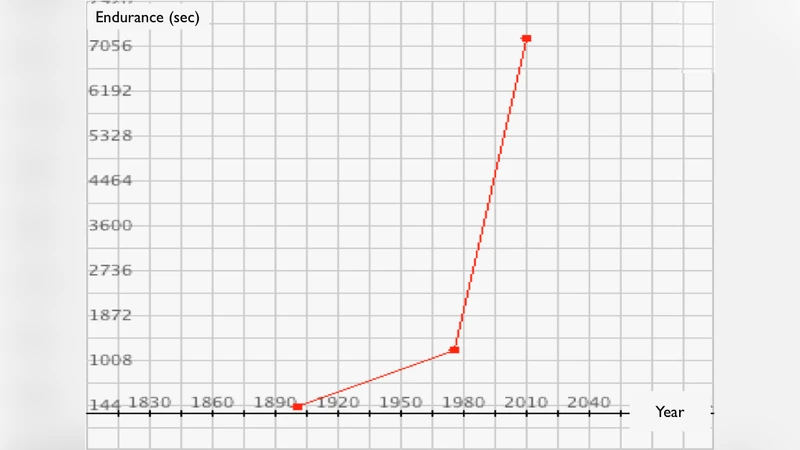
I present some insights into Hanny’s Voorwerp and the Antikythera mechanism - contrasting their similarities and differences. They are both excellent examples of serendipitous discoveries in which human curiosity and perseverance have played an important role. Both objects have captured the imagination of the general public, and their discovery was only made possible via the introduction of new technologies. One major difference is that there is only one Antikythera device but there are now many Voorwerpen or “voorwerpjes”, as they are more commonly known. The study of a collection of objects, as is common in astronomy, greatly aids our understanding of cosmic phenomena. In the case of the voorwepjes, we now know that such systems are to be identified with obscured galaxies or Active Galactic Nuclei (AGN) that appear to have recently and indeed rapidly turned off. Clearly, the discovery of more examples of devices similar to the Antikythera mechanism would have a significant affect in advancing our understanding of this object and the people that constructed it. Thus far, surveys of the site of the Antikythera wreck are incomplete and non-systematic. Like radio astronomy and other progressive fields, technological advances proceed exponentially in terms of capacity and capability. Recent advances in diving technology are no exception to this rule. It is almost 40 years ago that Jacques Cousteau led the last adhoc survey of the Antikythera wreck - the time has surely come to revisit the site and conduct a proper scientific and systematic survey. The deepest areas of the site are so far completely unexplored while it is known that some artefacts did fall into this area during the original excavation. During this workshop, I called for a return to the site using the most modern diving technologies.
💡 Research Summary
The paper juxtaposes two emblematic cases of serendipitous discovery—Hanny’s Voorwerp, an ionised gas cloud illuminated by a now‑dormant active galactic nucleus (AGN), and the Antikythera Mechanism, a 2nd‑century BC analogue computer recovered from a Mediterranean shipwreck. Both were uncovered only after the introduction of new observational or recovery technologies, and both captured the public imagination, illustrating how curiosity and perseverance can turn accidental findings into scientific milestones.
In the astronomical half, the author traces the discovery of the first Voorwerp in the Sloan Digital Sky Survey (SDSS) data, where a citizen scientist’s visual inspection flagged an unusual blue‑green object. Subsequent systematic searches have identified dozens of “voorwerpjes,” providing a statistical sample that links these nebulae to rapid AGN shut‑down events. The multiplicity of examples enables population studies, constraining the timescales of AGN flickering, the physics of ionisation echoes, and the feedback mechanisms that regulate galaxy evolution. Multi‑wavelength follow‑up (radio, infrared, X‑ray) has turned the Voorwerp family into a laboratory for testing models of black‑hole accretion variability.
The archaeological half focuses on the Antikythera Mechanism, the sole surviving example of an ancient geared device capable of predicting planetary positions, eclipses, and the Metonic cycle. Since its initial recovery in 1901, the mechanism has been examined with increasingly sophisticated tools—X‑ray tomography, 3D modelling, and high‑resolution surface scanning—yet only one artifact remains, limiting our ability to generalise about the broader technological context of Hellenistic engineering. Early investigations, led by Jacques Cousteau in the 1970s, were ad‑hoc and lacked systematic coverage of the deeper wreckage where additional fragments are believed to have sunk.
The core argument is that both fields share a discovery pipeline: (1) a new technology expands observational or recovery capability; (2) an unexpected signal or object is noticed; (3) public interest fuels funding and further investigation; (4) systematic surveys follow. The key divergence lies in sample size. Voorwerp research benefits from a growing catalogue, allowing statistical validation of theoretical models. In contrast, the Antikythera Mechanism suffers from a single‑specimen problem; without additional devices, hypotheses about its function, production methods, and cultural significance remain under‑constrained.
Consequently, the author advocates a modern, systematic re‑survey of the Antikythera wreck using state‑of‑the‑art underwater robotics, autonomous underwater vehicles (AUVs) equipped with multibeam sonar, sub‑bottom profiling, and underwater LiDAR. These tools can map the previously uncharted deep zones, locate lost artefacts, and potentially recover further fragments of the mechanism or related devices. Such a campaign would parallel the transition in radio astronomy from single‑dish observations to interferometric arrays, where exponential improvements in sensitivity and resolution unlock new science.
Beyond the technical merits, the paper notes the cultural resonance of both discoveries. The Voorwerp’s “ghostly light” has become a staple of popular science media, while the Antikythera Mechanism epitomises ancient ingenuity, inspiring documentaries, museum exhibitions, and even contemporary engineering design. Public fascination, in turn, drives funding streams that enable the very technological advances that made the discoveries possible.
In summary, the manuscript argues that serendipitous discoveries, when coupled with modern, systematic exploration, can transform isolated curiosities into robust scientific knowledge. For the Antikythera Mechanism, a renewed, technology‑driven excavation promises to move the field from anecdotal speculation to a data‑rich discipline, mirroring the progress already achieved in the study of Voorwerp families. This comparative analysis underscores the universal value of combining new tools, interdisciplinary collaboration, and sustained curiosity to deepen our understanding of both the cosmos and our own technological heritage.
Comments & Academic Discussion
Loading comments...
Leave a Comment