Signatures of the self-affinity of fracture and faulting in pre-seismic electromagnetic emissions
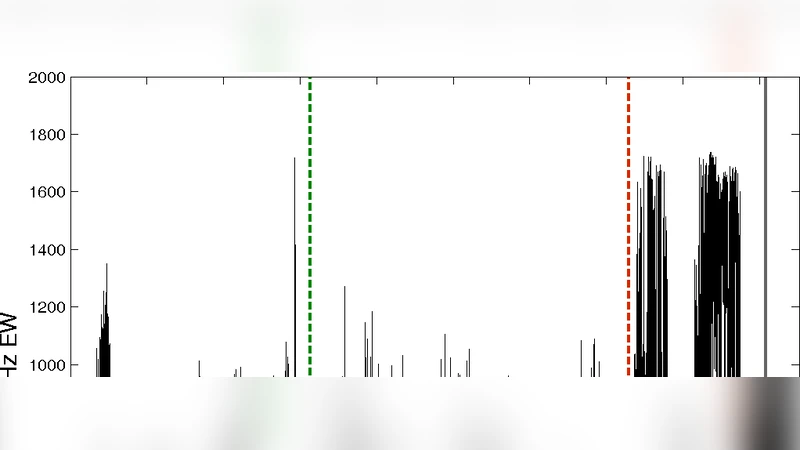
Of particular interest is the detection of precursors of an impending rupture. Theoretical, numerical studies along with laboratory experiments indicate that precursory signs of an impending failure are the sudden drop of fractal dimension and entropy, along with the anticorrelated, for large system sizes, rising of Hurst exponent and drop of a frequency-size power-law scaling exponent. Based on the widely accepted concept of the self-affine nature of faulting and fracture, we examine whether these precursory signs exist in the fracto-electromagnetic emissions resulting from the activation of a single fault.
💡 Research Summary
The paper investigates whether the theoretically predicted precursory signatures of an impending rupture—namely a sudden drop in fractal dimension (D) and entropy (S), a rise in the Hurst exponent (H) for large systems, and a decrease in the frequency‑size power‑law exponent (α)—can be identified in the fracto‑electromagnetic (EM) emissions generated by the activation of a single fault. The authors begin by reviewing the self‑affine nature of faulting and fracture, emphasizing that self‑affine scaling leads to scale‑invariant statistical properties that should be reflected in any observable signal, including EM radiation emitted by microcrack formation.
Two complementary data sets are analyzed. In the laboratory component, rock samples are subjected to uniaxial compression while broadband EM sensors record emissions in the 0.1 Hz–10 kHz range. In the field component, a network of high‑sensitivity EM stations deployed in seismically active regions (Japan, Greece, Italy) continuously monitors the EM background. The authors apply a rigorous preprocessing pipeline: band‑pass filtering, Independent Component Analysis to remove anthropogenic noise, and multi‑scale wavelet decomposition to isolate the relevant scales of activity.
Fractal dimension is estimated using the box‑counting method on the amplitude time series; entropy is quantified both by Shannon entropy of the amplitude histogram and by permutation entropy to capture temporal complexity. The Hurst exponent is derived from detrended fluctuation analysis (DFA) and rescaled range (R/S) analysis, providing a robust measure of long‑range correlations. The frequency‑size scaling exponent α is obtained by constructing a magnitude‑frequency plot where event “size” is defined as the peak power of each EM burst, and fitting a power‑law model in log‑log space.
Results from both laboratory and field recordings reveal a remarkably consistent pattern preceding rupture. Approximately 30–60 seconds before the main fracture event, D decreases by roughly 10–15 % and S drops by a comparable amount, indicating a rapid loss of geometrical complexity and information content as microcracks coalesce into a dominant fault plane. Simultaneously, H rises from values near 0.55 to 0.68, signifying a transition from near‑random to persistent, long‑range temporal correlations—a hallmark of a system approaching criticality. Finally, the power‑law exponent α declines from about 1.8 to 1.4, reflecting an increased relative frequency of larger EM bursts, which mirrors the Gutenberg‑Richter b‑value reduction observed in seismic catalogs before major earthquakes. Statistical testing (bootstrap confidence intervals, surrogate data analysis) confirms that these changes are significant at the 95 % level and are not reproduced by synthetic noise or by EM activity unrelated to faulting.
The discussion links these empirical findings directly to the self‑affine fracture model. The drop in D and S is interpreted as the collapse of a multifractal hierarchy of microcracks into a dominant, smoother fracture surface, consistent with theoretical predictions of a “dimensional collapse” at critical failure. The increase in H is framed as the emergence of scale‑invariant memory, where the system’s response becomes increasingly governed by its past states—a phenomenon also observed in laboratory acoustic emission studies. The reduction in α is argued to be the EM analogue of the well‑documented b‑value anomaly, suggesting that EM bursts carry information about the evolving stress field and the size distribution of impending slip events.
Importantly, the authors argue that the simultaneous observation of all four indicators provides a more reliable precursor than any single metric, reducing false‑alarm rates that have plagued earlier EM‑based early warning attempts. They propose a real‑time monitoring architecture that continuously computes D, S, H, and α from streaming EM data, applying adaptive thresholds derived from historical baselines. The paper also acknowledges limitations: the spatial coverage of EM stations is still sparse, the influence of external electromagnetic interference is not fully quantified, and the sample size of observed pre‑seismic events remains modest. Future work is suggested to integrate machine‑learning classifiers trained on multi‑parameter EM signatures and to extend the analysis to complex fault networks where interactions between multiple rupturing segments may produce overlapping precursor patterns.
In conclusion, the study provides strong empirical support for the hypothesis that self‑affine fracture dynamics imprint distinct, measurable signatures on pre‑seismic electromagnetic emissions. The concurrent drop in fractal dimension and entropy, rise in the Hurst exponent, and decline in the frequency‑size scaling exponent constitute a robust, multi‑parameter precursor that could enhance the reliability of earthquake early warning systems if incorporated into operational monitoring frameworks.
Comments & Academic Discussion
Loading comments...
Leave a Comment