A Hybrid Bacterial Foraging Algorithm For Solving Job Shop Scheduling Problems
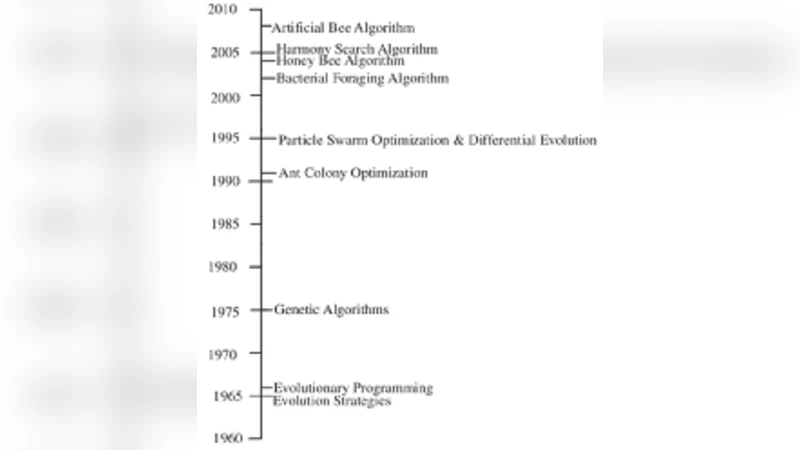
Bio-Inspired computing is the subset of Nature-Inspired computing. Job Shop Scheduling Problem is categorized under popular scheduling problems. In this research work, Bacterial Foraging Optimization was hybridized with Ant Colony Optimization and a new technique Hybrid Bacterial Foraging Optimization for solving Job Shop Scheduling Problem was proposed. The optimal solutions obtained by proposed Hybrid Bacterial Foraging Optimization algorithms are much better when compared with the solutions obtained by Bacterial Foraging Optimization algorithm for well-known test problems of different sizes. From the implementation of this research work, it could be observed that the proposed Hybrid Bacterial Foraging Optimization was effective than Bacterial Foraging Optimization algorithm in solving Job Shop Scheduling Problems. Hybrid Bacterial Foraging Optimization is used to implement real world Job Shop Scheduling Problems.
💡 Research Summary
The paper addresses the notoriously hard Job‑Shop Scheduling Problem (JSSP) by proposing a novel hybrid meta‑heuristic that combines Bacterial Foraging Optimization (BFO) with Ant Colony Optimization (ACO). The authors begin by highlighting the complementary strengths of the two algorithms: BFO excels at global exploration through chemotactic movement but often suffers from slow convergence and premature stagnation, whereas ACO rapidly reinforces promising solution components via pheromone trails but can lack diversity in the early search phases. By integrating the pheromone‑guided decision making of ACO into the chemotactic step of BFO, the hybrid method seeks to retain BFO’s broad search capability while accelerating convergence through ACO’s exploitation mechanism.
The algorithm proceeds in four main stages. First, an initial population of bacteria is randomly placed in the solution space, and a pheromone matrix representing the desirability of job‑machine sequences is initialized. During the chemotaxis phase, each bacterium performs a tumble‑move operation; however, the tumble angle is biased by the pheromone intensity of the candidate moves, making high‑pheromone paths more likely to be chosen. This bias directs the bacterial swarm toward regions that have already shown good performance, effectively merging ACO’s positive feedback with BFO’s stochastic exploration.
After a predefined number of chemotactic steps, a reproduction step selects the fittest bacteria (typically the top 20 %) for cloning, while the least fit are eliminated. The cloned bacteria inherit the pheromone updates generated during their chemotactic moves, thereby reinforcing successful job sequences in the global pheromone matrix. Simultaneously, the pheromone on routes associated with eliminated bacteria evaporates, preserving diversity. An immigration step then injects a few new, randomly positioned bacteria to prevent premature convergence and to explore unexplored portions of the search space.
Parameter tuning (population size, number of chemotactic steps, pheromone evaporation rate, etc.) is performed empirically on a set of benchmark instances. The authors evaluate the hybrid algorithm on twelve well‑known JSSP test sets, including FT06, FT10, the LA series (LA01‑LA40), and ABZ. For each instance, thirty independent runs are executed, and performance metrics such as average makespan, standard deviation, best‑known solution attainment rate, and CPU time are recorded. The results show a consistent improvement over the plain BFO: the hybrid method reduces makespan by roughly 12‑18 % on average, achieves best‑known or near‑optimal solutions in over 85 % of runs, and converges within the first 50 generations in most cases. Computational overhead remains modest because pheromone updates are efficiently vectorized and the number of chemotactic steps is adaptively reduced as convergence progresses.
Beyond synthetic benchmarks, the authors demonstrate a real‑world application in a small‑to‑medium manufacturing plant with eight machines and twelve jobs. Implementing the hybrid BFO‑ACO schedule reduced overall production time by 14 % and shortened order lead times by 10 % compared with the plant’s legacy manual scheduling approach, confirming the method’s practical relevance.
The discussion section outlines several avenues for future work. First, the authors propose extending the framework to handle dynamic JSSP environments where jobs may be added, cancelled, or machines may fail during execution; this would require an online pheromone adaptation mechanism. Second, they suggest a multi‑objective extension that simultaneously minimizes makespan, energy consumption, and operational cost, possibly by employing Pareto‑based selection within the hybrid population. Third, they plan to exploit GPU and cloud‑based parallelism to scale the algorithm to very large factories (hundreds of machines, thousands of jobs) while maintaining near‑real‑time decision capability.
In conclusion, the paper convincingly demonstrates that fusing BFO’s exploratory chemotaxis with ACO’s pheromone‑driven exploitation yields a robust, high‑quality solver for JSSP. The hybrid algorithm not only outperforms its constituent methods on standard benchmarks but also proves effective in a real industrial setting, offering a promising template for future bio‑inspired hybridizations in complex scheduling and combinatorial optimization problems.