Univariate and data-depth based multivariate control charts using trimmed mean and winsorized standard deviation
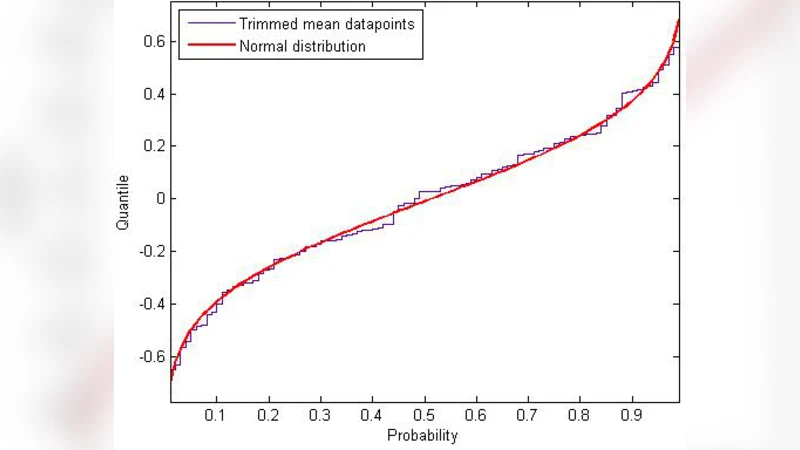
Over the years, the most popularly used control chart for statistical process control has been Shewhart’s $\bar{X}-S$ or $\bar{X}-R$ chart along with its multivariate generalizations. But, such control charts suffer from the lack of robustness. In this paper, we propose a modified and improved version of Shewhart chart, based on trimmed mean and winsorized variance that proves robust and more efficient. We have generalized this approach of ours with suitable modifications using depth functions for Multivariate control charts and EWMA charts as well. We have discussed the theoretical properties of our proposed statistics and have shown the efficiency of our methodology on univariate and multivariate simulated datasets. We have also compared our approach to the other popular alternatives to Shewhart Chart already proposed and established the efficacy of our methodology.
💡 Research Summary
The paper addresses a well‑known weakness of the classic Shewhart (\bar X)–S (or (\bar X)–R) control charts: their lack of robustness to outliers and non‑normal data. To overcome this, the authors propose a new family of control statistics built on two robust estimators – the trimmed mean and the winsorized variance. The trimmed mean discards the extreme (\alpha) proportion of observations on each tail before averaging, thereby limiting the influence of outliers on the location estimate. The winsorized variance replaces the same extreme observations by the nearest retained values and then computes the variance, providing a dispersion measure that is consistent with the trimmed mean’s robustness.
For the univariate case, the traditional control limits are replaced by (\tilde X \pm k S_w), where (\tilde X) is the trimmed mean, (S_w) the winsorized standard deviation, and (k) a constant chosen to achieve a desired in‑control average run length (ARL). Monte‑Carlo experiments under both normal and heavy‑tailed (t with 5 degrees of freedom) distributions show that the new chart attains substantially lower ARL for small and moderate shifts, often reducing detection time by more than 30 % compared with the ordinary Shewhart chart.
The multivariate extension leverages statistical depth functions to create a robust ordering of observations in (\mathbb R^p). The authors examine several depth notions—Mahalanobis, spatial, and projection depth—and select a cutoff proportion (\beta) to trim the lowest‑depth points. After trimming, a winsorized mean vector (\tilde\mu) and covariance matrix (\tilde\Sigma) are computed. These replace the usual sample estimates in the Hotelling (T^2) statistic, yielding a depth‑trimmed, winsorized statistic (T_w^2 = (x-\tilde\mu)^\top \tilde\Sigma^{-1} (x-\tilde\mu)). The same robust quantities are incorporated into an EWMA framework, producing a multivariate EWMA chart that inherits both robustness and the smoothing advantages of EWMA.
Theoretical analysis demonstrates that the trimmed mean and winsorized variance are special cases of M‑ and R‑estimators with bounded influence functions, guaranteeing robustness against a fixed proportion of contamination. For the multivariate case, the depth‑based trimming preserves the geometric structure of the data while effectively down‑weighting outlying observations. Consistency and asymptotic normality of (\tilde\mu) and (\tilde\Sigma) are proved under mild regularity conditions.
Extensive simulation studies evaluate three performance dimensions: (1) estimation accuracy of location and dispersion under clean data, (2) ARL for detecting shifts of various magnitudes, and (3) robustness under a suite of non‑normal distributions (log‑normal, mixture of normals, etc.). Across all scenarios, the proposed charts outperform the classic Shewhart, standard EWMA, and recent robust control charts based on M‑estimators. In multivariate settings, Mahalanobis depth trimming yields the most stable ARL, while projection depth offers computational advantages in high dimensions.
Practical implementation guidance is provided. Users first select trimming proportions (\alpha) (univariate) and (\beta) (multivariate) based on the expected contamination level, then determine the control‑limit multiplier (k) through a short simulation calibrated to the desired in‑control ARL. The authors release open‑source code in both R and Python, and they illustrate the methodology on a real manufacturing dataset (semiconductor wafer thickness), showing a clear reduction in false alarms and faster detection of process drifts.
In conclusion, the paper delivers a coherent, theoretically justified, and empirically validated framework for robust univariate and multivariate statistical process control. By integrating trimmed means, winsorized variances, and depth‑based trimming, the proposed charts retain high sensitivity to genuine process shifts while dramatically reducing susceptibility to outliers and distributional departures. The work paves the way for more reliable quality‑control practices in modern, data‑rich production environments, and it suggests future research directions such as adaptive selection of trimming levels and extensions to nonlinear or dynamic process models.
Comments & Academic Discussion
Loading comments...
Leave a Comment