The Swedish System of Innovation: Regional Synergies in a Knowledge-Based Economy
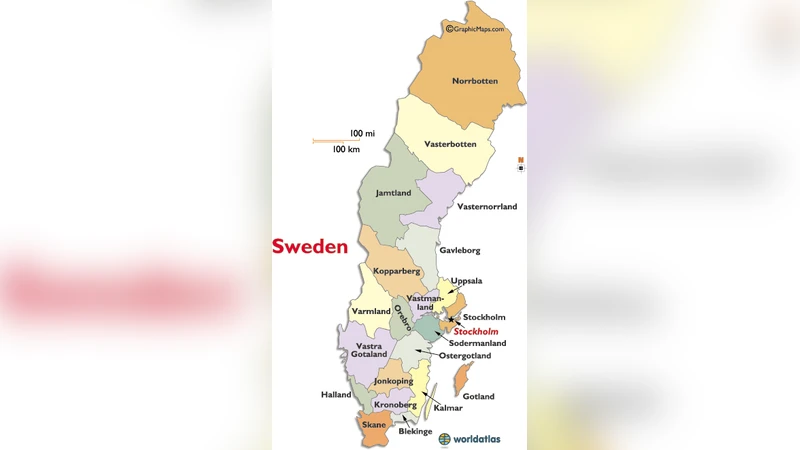
Based on the complete set of firm data for Sweden (N = 1,187,421; November 2011), we analyze the mutual information among the geographical, technological, and organizational distributions in terms of synergies at regional and national levels. Mutual information in three dimensions can become negative and thus indicate a net export of uncertainty by a system or, in other words, synergy in how knowledge functions are distributed over the carriers. Aggregation at the regional level (NUTS3) of the data organized at the municipal level (NUTS5) shows that 48.5% of the regional synergy is provided by the three metropolitan regions of Stockholm, Gothenburg, and Malm"o/Lund. Sweden can be considered as a centralized and hierarchically organized system. Our results accord with other statistics, but this Triple Helix indicator measures synergy more specifically and quantitatively. The analysis also provides us with validation for using this measure in previous studies of more regionalized systems of innovation (such as Hungary and Norway).
💡 Research Summary
The paper conducts a nation‑wide quantitative assessment of Sweden’s innovation system by exploiting the full set of firm‑level data (N = 1,187,421 firms as of November 2011). The authors treat three dimensions of each firm—geography (municipality), technology (industry classification), and organization (size) —as random variables and compute Shannon‑based mutual information among them. In three dimensions, mutual information can be negative; a negative value signals that the system exports uncertainty, which the authors interpret as a high degree of structural synergy in the distribution of knowledge functions across the carriers.
Data are organized according to the European NUTS (Nomenclature of Territorial Units for Statistics) hierarchy. The finest level (NUTS‑5, municipalities) provides the raw firm distribution, which is then aggregated to the NUTS‑3 level (regional/metropolitan areas). By comparing the mutual information calculated at the municipal level with that obtained after regional aggregation, the authors isolate the proportion of total synergy that is generated at the regional scale. The results are striking: the three metropolitan clusters—Stockholm, Gothenburg, and the combined Malmo/Lund area—account for 48.5 % of the national synergy. This concentration indicates that Sweden’s innovation system is highly centralized and hierarchically organized, with a small number of “knowledge hubs” driving the bulk of systemic coordination.
The study validates the Triple Helix indicator (university‑industry‑government interaction) as a more precise and quantitative measure of synergy than conventional statistics such as R&D expenditure or employment figures. The authors note that the same indicator has previously been applied to more regionally dispersed systems (Hungary, Norway) and that the Swedish case confirms its robustness across different spatial configurations.
Policy implications are derived from the observed imbalance. While the metropolitan regions generate almost half of the systemic synergy, peripheral regions contribute relatively little, suggesting a need for targeted regional innovation policies to boost knowledge flows outside the core hubs. The authors argue that the mutual‑information approach captures the internal efficiency of knowledge networks, offering policymakers a diagnostic tool that goes beyond output‑oriented metrics.
In conclusion, the paper demonstrates that Sweden’s innovation landscape is dominated by a few central regions that act as synergy generators for the whole country. The Triple Helix mutual‑information metric successfully quantifies this centralization, providing a methodological template for future comparative studies and for designing policies aimed at fostering more balanced, knowledge‑based regional development.
Comments & Academic Discussion
Loading comments...
Leave a Comment