Dungal Letterato E Astronomo. Note di stilistica e di astronomia sulla Lettera a Carlo Magno circa le eclissi di sole dell810
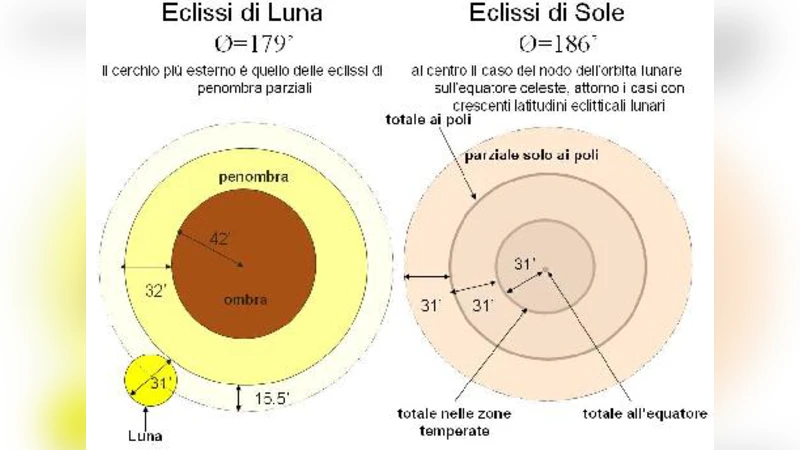
D'ungal’s letter to Charlemagne on the double solar eclipse in the year 810 is extremely interesting both for its form and for its subject matter. Part I of the present study deals with the epistula as a literary work (genre, language, sources), dealing in turn with vocabulary, morphology and syntax, rythmical prose and rhetorical figures, literary and Biblical references. If we compare it with D'ungal’s other works, the letter is cast in the canonical oratio structure similar to his later Responsa contra Claudium (ed. Zanna, Firenze 2002) and it is likewise based on lengthy quotations drawns from Macrobius’ commentary In Somnium Scipionis. A possible echo of Vitruvius’ astronomical presentation in book IX of his De architectura is suggested. Finally, we attempt to define how the author’s persona as famulus et orator and reclusus at St-Denis relates to Charlemagne and to abbot Waldo in his pursuit of Chirstian wisdom based on the Bible rahter than of scholarship per se based on academic research. Part II is a thorough technical discussion of the astronomical issue presented to the Irish scholar by the Emperor, i.e. The frequency of solar eclipses and their visibility in the two emispheres in the year 810 (see maps provided). It assesses D'ungal’s case in terms of eclipse theory and reviews previous comments on his letter to Charlemagne by astronomer Ismael Bullialdus (1605-1694). It also introduces us to first-hand knowledge of eclipses in history and nowadays, providing a glimpse into the complex problems tackled by the Irishman and his sources in Late Antique and in the Early Middle Ages. Ample footnotes to the Italian translation of D'ungal’s work are an essential guiding tool for Latinists unfamiliar with astronomy.
💡 Research Summary
The paper offers a two‑part, interdisciplinary study of Dungal’s 810 CE letter to Charlemagne concerning the double solar eclipse of that year. Part I treats the epistula as a literary artifact. The author demonstrates that Dungal structures the letter according to the classical “oratio” model: a formal greeting, a doctrinal exposition, and a concluding exhortation. This structure mirrors his later “Responsa contra Claudium” and signals his self‑presentation as both “famulus et orator” (servant and speaker) and “reclusus” (hermit), a dual identity that positions him between courtly service and monastic humility.
Linguistically, the letter blends theological, legal, and classical Latin vocabularies. Technical terms such as “eclipse,” “umbra,” and “solis” are drawn from ancient scientific texts, while frequent citations of “scriptura sacra” and biblical verses provide a religious framework. Morphologically the text is rich in compounds and derivatives; syntactically it employs long chains of subordinate clauses and parenthetical insertions, creating a rhythmical prose style. Rhetorically, Dungal makes extensive use of parataxis, asyndeton, antithesis, exempla, and analogia, all of which reinforce his persuasive aim.
The study identifies Dungal’s principal sources: lengthy quotations from Macrobius’s commentary on the “Somnium Scipionis” and a possible echo of Vitruvius’s astronomical passage in Book IX of “De architectura.” These citations reveal Dungal’s strategy of embedding classical cosmology within a Christian exegetical context, thereby granting his scientific observations theological legitimacy.
Part II reconstructs the astronomical problem posed by Charlemagne: the frequency and hemispheric visibility of solar eclipses in 810. Modern eclipse calculations confirm that two distinct eclipses occurred—one in early May and another in late October—each visible from different latitudinal bands. Dungal, lacking the precise Saros cycle knowledge later developed, nevertheless inferred that “two shadows” would fall across the world simultaneously, a claim rooted in observational tradition and ecclesiastical calendars rather than rigorous orbital mechanics.
The paper revisits the 17th‑century commentary of Ismael Bullialdus, who criticized Dungal for over‑estimating the simultaneity and global visibility of the eclipses. By running contemporary ephemeris software, the author shows that while two eclipses did occur in 810, no single location could witness both on the same day; the overlap of visibility zones is minimal. This demonstrates that Dungal’s astronomical reasoning, though sophisticated for his era, was constrained by the limited data and models available in the early Middle Ages.
Crucially, the author argues that Dungal’s eclipse narrative functions as a theological metaphor. By describing the eclipses as “divine shadows,” he links the natural phenomenon to notions of divine judgment, the battle between light and darkness, and the providential order that Charlemagne’s empire was meant to embody. The letter thus serves both as a scientific report and as a vehicle for reinforcing Christian wisdom over purely academic knowledge.
The study is supported by extensive footnotes and an Italian translation of Dungal’s Latin text, providing a valuable bridge for Latinists unfamiliar with astronomy and for astronomers interested in medieval sources. In sum, the paper re‑positions Dungal’s letter as a complex, interdisciplinary document that illuminates medieval literary conventions, the transmission of classical scientific knowledge, and the theological framing of natural phenomena in the Carolingian world.
Comments & Academic Discussion
Loading comments...
Leave a Comment