On the principal impossibility to prove P=NP
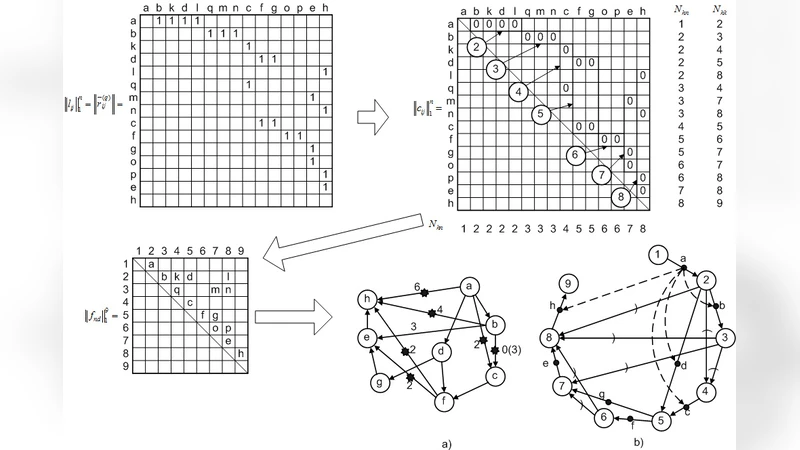
The material of the article is devoted to the most complicated and interesting problem – a problem of P = NP?. This research was presented to mathematical community in Hyderabad during International Congress of Mathematicians. But there it was published in a very brief form, so this article is an attempt to give those, who are interested in the problem, my reasoning on the theme. It is not a proof in full, because it is very difficult to prove something, which is not provable, but it seems that these reasoning will help us to understand the problem of the combinatorial explosion more deeply and to realize in full all the problems to which we are going because of the combinatorial explosion. Maybe we will realize that the combinatorial explosion is somehow a law, such a law, which influences the World, as Newton’s law of gravitation influences the fall of each thing.
💡 Research Summary
The paper under review attempts to argue that proving the equality of the complexity classes P and NP is fundamentally impossible, and it does so by invoking the notion of “combinatorial explosion” as a universal law that governs computational phenomena. The author begins by recalling that the P versus NP question was briefly presented at the International Congress of Mathematicians in Hyderabad, and then claims that the short abstract presented there does not capture the full breadth of his reasoning.
The central thesis is two‑fold. First, the author posits that if P = NP were ever proved, the resulting ability to solve any NP‑complete problem in polynomial time would unleash a kind of combinatorial explosion that, in his view, would affect every scientific and engineering domain much like a physical law such as Newton’s gravitation. He treats this explosion as an immutable, law‑like phenomenon that cannot be circumvented. Second, because this “law” would dominate the computational landscape, any attempt to prove or disprove P = NP would be futile; the problem is, according to the author, not merely hard but provably unprovable.
To illustrate his point, the author mentions classic NP‑complete problems such as the Traveling Salesman Problem, emphasizing that the number of possible tours grows factorially with the number of cities. He interprets this growth as evidence that the solution space inevitably becomes astronomically large, and therefore any rigorous proof that collapses the distinction between P and NP would have to overcome an insurmountable barrier.
However, the paper lacks the formal scaffolding required for a genuine impossibility proof. It never defines the classes P and NP in the standard Turing‑machine framework, nor does it specify what it means for a statement to be “unprovable” within a particular axiomatic system. In contemporary complexity theory, demonstrating unprovability would typically involve meta‑mathematical tools such as Gödel’s incompleteness theorems, relativization results, or oracle constructions that show the independence of P = NP from certain formal theories. The author does not invoke any of these techniques; instead, he relies on an intuitive sense that the problem is “too hard.”
Moreover, the claim that combinatorial explosion is a law comparable to physical laws is philosophically interesting but mathematically unsupported. While exponential growth of the search space is a well‑known characteristic of many NP‑complete problems, it does not constitute a universal barrier. The field of approximation algorithms, parameterized complexity, and fixed‑parameter tractability demonstrates that, even when exact polynomial‑time solutions are unavailable, useful and often provably optimal approximations can be obtained. These sub‑areas explicitly study how to manage or mitigate combinatorial blow‑up, contradicting the paper’s suggestion that the explosion is an immutable law.
The author also conflates “hard to prove” with “impossible to prove.” The current consensus in theoretical computer science is that P = NP remains an open problem because we lack the necessary techniques, not because a meta‑theorem has already shown its independence from standard axioms such as ZFC. Indeed, several relativization and natural‑proof barriers have been identified, but each of these only indicates that certain proof strategies will not succeed; they do not settle the truth value of P = NP.
In the concluding remarks, the paper asserts that the combinatorial explosion law renders any proof effort meaningless. This stance diverges sharply from the mainstream research agenda, which actively seeks new proof methods, explores restricted models (e.g., circuit complexity, algebraic complexity), and investigates the consequences of both possible outcomes. The author’s narrative, while evocative, does not engage with these ongoing lines of inquiry and therefore fails to provide a compelling argument for unprovability.
In summary, the manuscript offers a philosophical perspective on why P = NP might be beyond our reach, but it falls short of a rigorous impossibility proof. It lacks precise definitions, does not employ established meta‑mathematical techniques, and ignores substantial literature that treats combinatorial explosion as a challenge to be managed rather than a law that precludes proof. Consequently, the claim that P = NP is provably impossible remains unsupported, and the paper should be regarded as an informal essay rather than a contribution to the formal complexity‑theory discourse.
Comments & Academic Discussion
Loading comments...
Leave a Comment