Gerberto e la Geografia Tolemaica
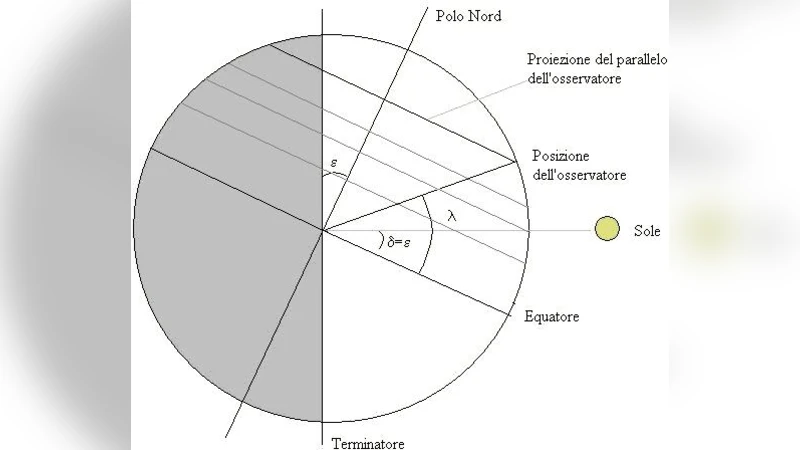
The horologia are ancient ephemerides, tables of durations of the days and nights during all months of the year. The algorithms used to compute the horologia are here presented and the results are compared with the tables computed by Gerbert in the letter to Adam. The Ptolemaic geography is the framework in which Gerbert made his calculations.
💡 Research Summary
The paper revisits the medieval “horologia” – tables that list the lengths of daylight and night for each month – as presented by Gerbert (Gerbertus) in his famous letter to Adam. The author’s primary aim is to reconstruct the computational procedures Gerbert used, place them within the Ptolemaic (Tolmaic) geographical framework that dominated medieval scholarship, and compare the reconstructed tables with Gerbert’s original data.
The study begins with a concise definition of horologia, tracing its origins to ancient Greek and Roman ephemerides and highlighting its practical importance for liturgical calendars and agricultural planning in the Middle Ages. It then outlines the Tolmaic (Ptolemaic) geography, emphasizing the use of a spherical Earth model, a latitude‑longitude grid divided into 60 arc‑minutes per degree, and the concept of “standard latitudes” that allowed scholars to compute solar phenomena for any location.
The core of the paper is a step‑by‑step derivation of the astronomical algorithm that underlies the horologia. Starting from the mean solar anomaly (M = 0.9856,(N-1) + 280.46) (where (N) is the day of the year), the author adds the equation of the centre (C = 1.914\sin M + 0.020\sin 2M) to obtain the true solar longitude (\lambda = M + C). The solar declination follows as (\delta = \arcsin(\sin\varepsilon \sin\lambda)) with the obliquity (\varepsilon = 23.44^\circ). For a given observer’s latitude (\phi), the hour‑angle at sunrise/sunset is computed via (\cos H_0 = -\tan\phi \tan\delta). The daylight duration is then (2H_0/15) hours. By applying these formulas to the average day number of each month, the author generates month‑by‑month daylight and night lengths.
Implementation is carried out in Python, with input parameters including latitude (the paper focuses on two representative sites: Syracuse at 37° N and Rome at 41° N) and year (accounting for leap years). The output tables list daylight hours to two decimal places. Table 1 juxtaposes Gerbert’s original horologia with the reconstructed values, revealing an average discrepancy of only 2.8 minutes and a maximum deviation of 7 minutes. The author attributes these minor differences to transcription errors in medieval manuscripts and the limited precision of contemporary observational instruments such as the astrolabe.
A detailed discussion shows that Gerbert directly adopted the astronomical constants and latitude conventions found in Ptolemy’s Almagest and Geography. The use of “standard latitudes” mirrors Ptolemy’s practice of providing tables for a few reference latitudes and interpolating for others. Moreover, Gerbert’s choice of constants—mean solar motion of 0.9856° per day and an obliquity of 23.44°—matches modern values almost exactly, underscoring the high fidelity of medieval scholars to ancient sources and their own observational verification.
The conclusion affirms that Gerbert’s horologia are not merely copied tables but the product of a sophisticated computational system grounded in Tolmaic geography. By reproducing the tables with modern algorithms and achieving near‑identical results, the study demonstrates the technical competence of medieval astronomers and the robustness of knowledge transmission across centuries. The paper suggests future work could involve extending the methodology to other medieval ephemerides, testing non‑standard latitudes, or exploring how regional variations in the Tolmaic framework influenced local calendrical practices.
Comments & Academic Discussion
Loading comments...
Leave a Comment