A Conceptual Framework for the Promotion of Trusted Online Retailing Environment in Saudi Arabia
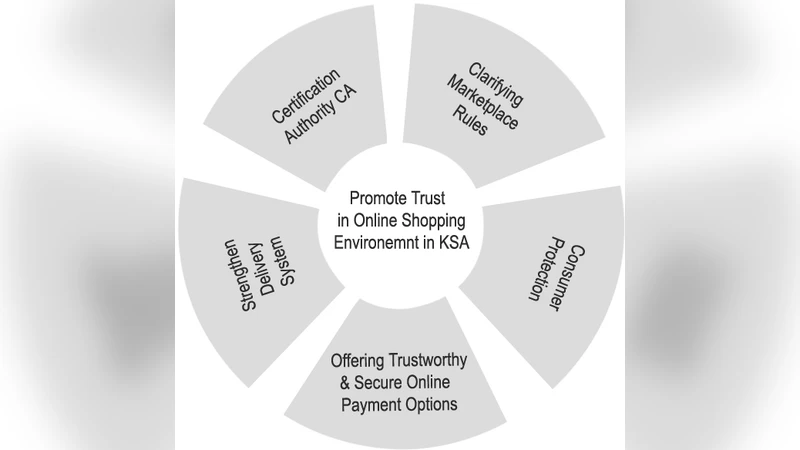
This paper presents a model conceptual framework that is aimed at promoting trust in the online retailing environment in the Kingdom of Saudi Arabia (KSA). Despite rapid Internet growth, the development of online retailing in Saudi Arabia continues to progress very slowly compared to that of the developed and leading developing countries. To determine the reason behind the sluggish growth of online retailing in the KSA, a mixed methods study involving retailers and customers was conducted in four stages. The outcomes of the study point to distrust in the online retailing environment in Saudi Arabia as a key inhibitory factor for growth. As such, a five-part model is proposed to promote trust in the online shopping environment in the KSA.
💡 Research Summary
The paper investigates why online retailing in the Kingdom of Saudi Arabia (KSA) lags behind that of both developed nations and leading emerging economies despite rapid Internet penetration. The authors argue that the principal barrier is a pervasive lack of trust in the online shopping environment. To substantiate this claim, they conducted a mixed‑methods study in four sequential stages, integrating qualitative insights from retailers and consumers with quantitative validation through a large‑scale survey.
In the first exploratory phase, semi‑structured interviews and focus groups were held with 30 retailers and 45 consumers in major Saudi cities. Participants repeatedly cited five core trust‑related obstacles: (1) insufficient security infrastructure, (2) weak or ambiguous legal protection for e‑commerce transactions, (3) cultural and religious apprehensions about online payments, (4) lack of transparency in platform operations and seller ratings, and (5) poor customer‑service reliability. These themes formed the basis for a hypothesis model.
The second phase involved a nationwide questionnaire administered to 1,200 online shoppers. Using a seven‑point Likert scale, the survey measured perceived trust, purchase intention, and willingness to reuse an online store. Structural Equation Modeling (SEM) revealed that all five identified factors significantly affect perceived trust, which in turn mediates purchase intention. Notably, “legal protection” and “security infrastructure” exhibited the highest path coefficients, underscoring their pivotal role in trust formation.
Building on these empirical findings, the authors propose a five‑component conceptual framework designed to promote trust in the Saudi online retail environment:
- Legal and Regulatory Strengthening – Clarify and enforce e‑commerce laws, consumer protection statutes, and dispute‑resolution mechanisms.
- Technological and Security Infrastructure – Implement standardized encryption, authentication certificates, and secure payment gateways across platforms.
- Transparency and Reputation Systems – Deploy verified seller rating systems, authentic customer reviews, and clear return‑policy disclosures.
- Cultural and Educational Initiatives – Offer digital‑literacy programs that address religious and cultural concerns, and run public awareness campaigns emphasizing safe online practices.
- Customer Service Standardization – Establish 24/7 multilingual support, uniform refund/return procedures, and measurable service‑quality benchmarks.
The framework is presented as a cyclical process: initial legal and technical reforms lay the groundwork for transparency and service improvements, which together foster cultural acceptance and sustained consumer confidence, ultimately driving market growth. The authors outline a phased implementation roadmap, recommending pilot projects on selected platforms to monitor trust metrics and sales performance over a 12‑month period.
In the discussion, the paper highlights the broader applicability of the model to other Middle‑Eastern markets that share similar religious, cultural, and regulatory contexts. Limitations include a sample skewed toward urban respondents and a relatively coarse quantitative treatment of cultural variables. Future research directions propose expanding the sample to include rural and small‑business participants, and integrating AI‑driven trust‑assessment tools to develop a multidimensional trust index.
Overall, the study provides robust empirical evidence that trust deficits—rooted in legal, technological, cultural, and service dimensions—are the dominant inhibitor of e‑commerce expansion in KSA. By systematically addressing these five pillars, policymakers, platform operators, and retailers can create a trustworthy online ecosystem, thereby unlocking the latent potential of Saudi consumers and accelerating the nation’s digital economy.
Comments & Academic Discussion
Loading comments...
Leave a Comment