Does a Daily Deal Promotion Signal a Distressed Business? An Empirical Investigation of Small Business Survival
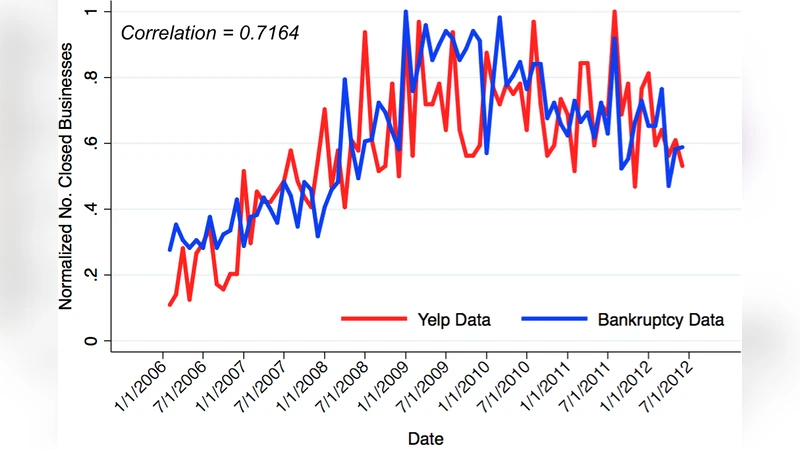
In the last four years, daily deals have emerged from nowhere to become a multi-billion dollar industry world-wide. Daily deal sites such as Groupon and Livingsocial offer products and services at deep discounts to consumers via email and social networks. As the industry matures, there are many questions regarding the impact of daily deals on the marketplace. Important questions in this regard concern the reasons why businesses decide to offer daily deals and their longer-term impact on businesses. In the present paper, we investigate whether the unobserved factors that make marketers run daily deals are correlated with the unobserved factors that influence the business, In particular, we employ the framework of seemingly unrelated regression to model the correlation between the errors in predicting whether a business uses a daily deal and the errors in predicting the business’ survival. Our analysis consists of the survival of 985 small businesses that offered daily deals between January and July 2011 in the city of Chicago. Our results indicate that there is a statistically significant correlation between the unobserved factors that influence the business’ decision to offer a daily deal and the unobserved factors that impact its survival. Furthermore, our results indicate that the correlation coefficient is significant in certain business categories (e.g. restaurants).
💡 Research Summary
The paper investigates whether the decision by small businesses to run daily‑deal promotions (e.g., Groupon, LivingSocial) is associated with unobserved factors that also affect the firms’ long‑term survival. Using a sample of 985 Chicago‑based businesses that offered a daily deal between January and July 2011, the authors model two binary outcomes simultaneously: (1) the choice to run a daily deal and (2) whether the business is still operating two years later (2013). To capture the correlation between the unobserved determinants of these outcomes, they employ a Seemingly Unrelated Regression (SUR) framework, which allows each equation to have its own set of covariates while estimating the covariance of the error terms.
The data set includes detailed business characteristics (industry category, age, annual revenue, online rating, location), local economic indicators (unemployment rate, median income, population density), and deal‑specific information (platform, discount depth, launch date). Logistic regressions are first run separately for each outcome to identify the direct effects of observable variables. The SUR model then estimates the error‑term correlation coefficient (ρ). A statistically significant positive ρ would indicate that latent factors making a firm more likely to adopt a daily deal also increase its probability of failure.
Results show a positive and statistically significant overall error correlation (ρ = 0.27, p < 0.01). This suggests that unobserved pressures—such as cash‑flow constraints, limited marketing resources, or managerial distress—drive both the adoption of daily deals and a higher risk of closure. When the sample is broken down by industry, the correlation is strongest for restaurants (ρ = 0.42, p < 0.001), moderate for other service categories, and not significant for sectors like beauty salons. The industry‑specific finding aligns with the intuition that restaurants have higher inventory and labor costs and are more dependent on immediate customer traffic, making a daily‑deal promotion a clearer signal of financial strain.
In the separate logistic regressions, higher online ratings and longer business age reduce the likelihood of running a deal, while lower revenue and higher local unemployment increase it. Conversely, survival is positively associated with larger revenue, higher ratings, and older age, and negatively associated with higher unemployment and younger firms. These patterns reinforce the interpretation that daily‑deal participation is not merely a proactive marketing tactic but often a reactive measure taken under adverse conditions.
The authors acknowledge several limitations. The analysis is confined to a single metropolitan area (Chicago) and to two deal platforms, which may limit external validity. Unobserved variables such as the founder’s managerial skill, informal debt structures, or competitive dynamics are not captured, potentially biasing the estimated correlation. Moreover, the study does not examine the long‑term effects of daily deals on customer loyalty or brand perception, focusing solely on survival as the endpoint.
Despite these constraints, the paper makes a methodological contribution by applying SUR to jointly model adoption and survival, thereby quantifying the hidden linkage between marketing desperation and business viability. Practically, the findings suggest that investors, lenders, and policymakers should treat daily‑deal participation—especially in the restaurant sector—as an early warning sign of distress. Additional financial diagnostics, targeted advisory services, or risk‑mitigation programs could be deployed to firms that opt for daily‑deal promotions, potentially improving their chances of long‑term survival.