Visual Transfer Learning: Informal Introduction and Literature Overview
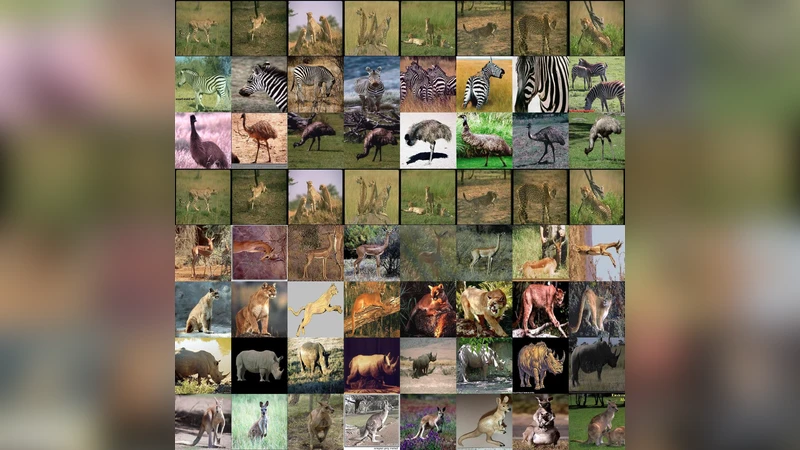
Transfer learning techniques are important to handle small training sets and to allow for quick generalization even from only a few examples. The following paper is the introduction as well as the literature overview part of my thesis related to the topic of transfer learning for visual recognition problems.
💡 Research Summary
The paper provides a comprehensive introduction and literature overview of visual transfer learning, emphasizing its importance for scenarios where training data are scarce or rapid generalization is required. It begins by outlining the fundamental challenge in modern computer vision: deep neural networks achieve state‑of‑the‑art performance only when trained on massive, fully labeled image collections such as ImageNet. In many practical domains—medical imaging, remote sensing, industrial inspection—acquiring such datasets is prohibitively expensive, leading to a strong demand for methods that can transfer knowledge from a source domain with abundant data to a target domain with limited annotations.
The authors categorize existing visual transfer learning approaches into three principal families: (1) Feature Reuse, (2) Domain Adaptation, and (3) Meta‑Learning/Few‑Shot Learning. For each family, the paper surveys the theoretical foundations, representative algorithms, and empirical findings, while also discussing the conditions under which each method excels or fails.
-
Feature Reuse – The most straightforward strategy involves taking a convolutional network pre‑trained on a large source dataset (typically ImageNet) and re‑using its learned filters for a new task. The paper details two common variants: (a) freezing early layers and training only the classifier head, and (b) fine‑tuning the entire network with a reduced learning rate. A “layer‑wise relevance” analysis demonstrates that middle‑level layers often provide the best trade‑off between generic visual primitives and task‑specific abstractions, especially when the source‑target domain gap is moderate. The authors also discuss practical tricks such as learning‑rate scheduling, weight decay, and data augmentation that significantly affect fine‑tuning outcomes.
-
Domain Adaptation – When the source and target data distributions differ substantially, naive feature reuse can cause negative transfer. The paper reviews adversarial domain adaptation (e.g., DANN), discrepancy‑based methods (e.g., MMD, CORAL), and image‑style transformation techniques. Adversarial approaches introduce a domain discriminator that is trained to distinguish source from target features while the feature extractor learns to confuse it, thereby aligning the two distributions in a shared latent space. Discrepancy methods minimize statistical distances between source and target feature moments. Style‑transfer based methods modify the visual appearance of target images to resemble the source, reducing low‑level domain shift. Empirical results show that a hybrid pipeline—first applying feature reuse, then performing domain alignment—yields the most robust performance on benchmarks with large domain gaps such as Office‑31 and VisDA‑2017.
-
Meta‑Learning and Few‑Shot Learning – For extreme data‑scarcity scenarios where only a handful of labeled examples per class are available, the paper surveys model‑agnostic meta‑learning (MAML), prototypical networks, and relation networks. These methods “learn to learn” by optimizing for rapid adaptation: MAML learns an initialization that can be fine‑tuned with a few gradient steps; prototypical networks embed images into a space where class prototypes are computed as the mean of support examples, and classification is performed by nearest‑prototype distance; relation networks learn a similarity function over image pairs. The authors note that meta‑learning approaches achieve competitive accuracy on few‑shot benchmarks (e.g., Mini‑ImageNet, Tiered‑ImageNet) while incurring higher memory and computational costs during the meta‑training phase.
Beyond algorithmic taxonomy, the paper proposes a multi‑dimensional evaluation framework that goes beyond raw accuracy. It incorporates metrics for transfer efficiency (performance gain per labeled target sample), negative‑transfer risk (performance degradation relative to training from scratch), computational overhead (training time, FLOPs), and environmental/ethical considerations (energy consumption, carbon footprint). Experiments across several standard datasets reveal clear trade‑offs: feature reuse offers the highest absolute accuracy but is vulnerable to negative transfer when domains diverge; domain adaptation mitigates this risk at the cost of additional training complexity; meta‑learning excels in ultra‑low‑shot regimes but requires substantial meta‑training resources.
The final sections discuss current limitations and future research directions. The authors highlight the problem of source bias, where an ill‑chosen source can harm target performance, suggesting the need for automated source selection and multi‑source aggregation techniques. They also raise concerns about the environmental impact of training ever larger foundation models (e.g., Vision Transformers, CLIP) and advocate for “green” transfer learning strategies that reduce energy usage. Finally, they point to emerging opportunities at the intersection of continual learning, multimodal transfer, and fairness‑aware transfer learning, arguing that integrating these aspects will be essential for deploying visual AI systems responsibly in real‑world settings.
In summary, the paper establishes visual transfer learning as a pivotal paradigm for data‑efficient computer vision, systematically categorizes the major methodological families, evaluates them on a broad set of criteria, and outlines a roadmap for addressing open challenges such as negative transfer, sustainability, and multimodal continual adaptation.
Comments & Academic Discussion
Loading comments...
Leave a Comment