Dynamical Capture Binary Neutron Star Mergers
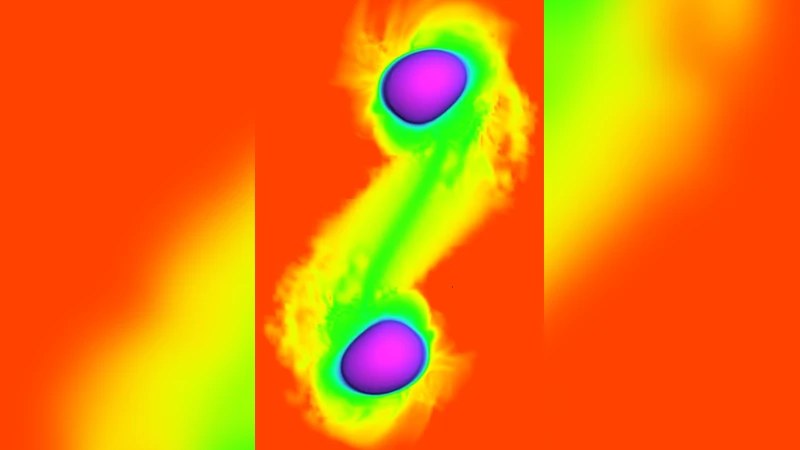
We study dynamical capture binary neutron star mergers as may arise in dense stellar regions such as globular clusters. Using general-relativistic hydrodynamics, we find that these mergers can result in the prompt collapse to a black hole or in the formation of a hypermassive neutron star, depending not only on the neutron star equation of state but also on impact parameter. We also find that these mergers can produce accretion disks of up to a tenth of a solar mass and unbound ejected material of up to a few percent of a solar mass. We comment on the gravitational radiation and electromagnetic transients that these sources may produce.
💡 Research Summary
The paper investigates binary neutron‑star (BNS) mergers that arise from dynamical capture in dense stellar environments such as globular clusters and galactic nuclei. Unlike the well‑studied quasi‑circular inspirals, dynamical captures involve highly eccentric or even parabolic encounters that lead to a rapid plunge and merger on a timescale of milliseconds. Using three‑dimensional general‑relativistic hydrodynamics with adaptive mesh refinement, the authors explore a suite of simulations that vary the impact parameter (or equivalently the pericenter distance) and the neutron‑star equation of state (EOS). All models assume equal‑mass stars of 1.35 M⊙, but the initial relative velocities span 0.2c–0.5c, covering the range expected from N‑body simulations of dense clusters.
Two distinct outcomes emerge. When the pericenter is small and the encounter is highly head‑on, the combined mass exceeds the threshold for prompt collapse, and a black hole forms essentially at the moment of contact. In this “prompt‑collapse” channel the surrounding accretion torus is negligible (≲10⁻³ M⊙) and the gravitational‑wave (GW) signal consists of a short, high‑amplitude burst followed by the ringdown of the newly formed black hole. Conversely, for larger impact parameters the kinetic energy is partially converted into differential rotation and thermal pressure, allowing a hypermassive neutron star (HMNS) to survive for several dynamical times before collapsing. In the HMNS cases, a massive, hot torus of up to ~0.1 M⊙ is generated, and the GW waveform displays a characteristic post‑merger oscillation in the 2–4 kHz band, whose amplitude and frequency depend sensitively on the EOS stiffness.
A robust ejecta component is also produced. The simulations show that 1–5 % of the total binary mass becomes unbound, with velocities ranging from 0.1c to 0.3c. This fast, neutron‑rich material is a promising site for r‑process nucleosynthesis and would power a kilonova that peaks in the optical/near‑infrared within a day and fades over a week, with peak luminosities of order 10⁴¹ erg s⁻¹. The presence of a substantial torus further suggests the possibility of launching relativistic jets, which could give rise to short gamma‑ray bursts (sGRBs) or, at later times, to radio afterglows as the jet interacts with the interstellar medium.
From an observational standpoint, dynamical‑capture mergers present a distinctive multimessenger signature. The GW burst is shorter and higher‑frequency than that of circular inspirals, making detection challenging for current ground‑based detectors but well‑matched to the planned sensitivity of third‑generation observatories such as the Einstein Telescope and Cosmic Explorer. Electromagnetic counterparts, especially the fast kilonova and potential sGRB, provide complementary diagnostics that can break degeneracies between impact parameter and EOS.
The authors conclude that dynamical captures constitute a non‑negligible channel for BNS mergers, especially in environments where stellar densities are high enough to produce frequent close encounters. Their results highlight the importance of incorporating eccentric merger templates into GW data analysis pipelines and of coordinating rapid electromagnetic follow‑up to capture the fleeting signatures unique to this class of events. Future work should focus on refining capture rate estimates, exploring unequal‑mass systems, and coupling the hydrodynamic output to detailed radiative‑transfer calculations to predict observable light curves with higher fidelity.