Generalized Network Tomography
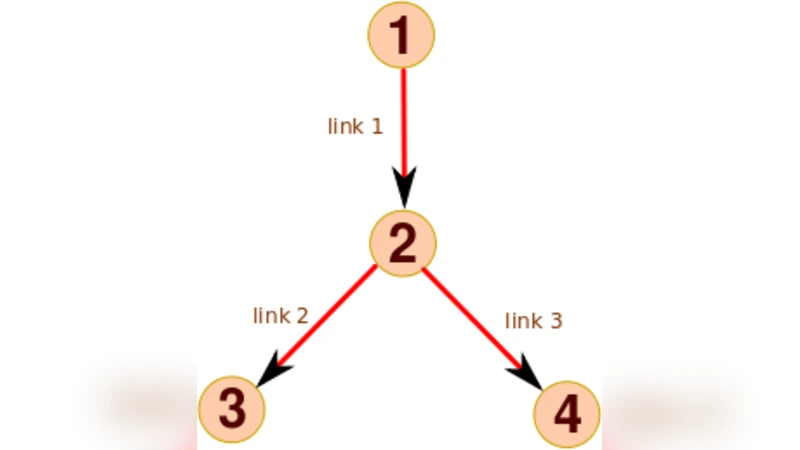
For successful estimation, the usual network tomography algorithms crucially require i) end-to-end data generated using multicast probe packets, real or emulated, and ii) the network to be a tree rooted at a single sender with destinations at leaves. These requirements, consequently, limit their scope of application. In this paper, we address successfully a general problem, henceforth called generalized network tomography, wherein the objective is to estimate the link performance parameters for networks with arbitrary topologies using only end-to-end measurements of pure unicast probe packets. Mathematically, given a binary matrix $A,$ we propose a novel algorithm to uniquely estimate the distribution of $X,$ a vector of independent non-negative random variables, given only IID samples of the components of the random vector $Y = AX.$ This algorithm, in fact, does not even require any prior knowledge of the unknown distributions. The idea is to approximate the distribution of each component of $X$ using linear combinations of known exponential bases and estimate the unknown weights. These weights are obtained by solving a set of polynomial systems based on the moment generating function of the components of $Y.$ For unique identifiability, it is only required that every pair of columns of the matrix $A$ be linearly independent, a property that holds true for the routing matrices of all multicast tree networks. Matlab based simulations have been included to illustrate the potential of the proposed scheme.
💡 Research Summary
The paper tackles a fundamental limitation of classical network tomography, which traditionally relies on multicast probe packets and assumes a tree‑shaped network rooted at a single sender. In many real‑world settings—enterprise networks, data centers, or the public Internet—multicast is either unsupported or impractical, and network topologies are far from tree‑like. To overcome these constraints, the authors formulate a “generalized network tomography” problem: given only end‑to‑end measurements obtained from pure unicast probes, estimate the performance parameters of every link in an arbitrarily connected network.
Mathematically, the network is represented by a binary routing matrix (A\in{0,1}^{m\times n}), where (n) is the number of links and (m) the number of observable end‑to‑end paths. Each link (j) is modeled by an independent non‑negative random variable (X_j); the vector of all link variables is (X). A unicast probe traversing path (i) experiences a cumulative metric (e.g., delay, loss) equal to (Y_i=\sum_{j}A_{ij}X_j). Collecting IID samples of the vector (Y=AX) is the only observable data.
The core contribution is an algorithm that uniquely recovers the distribution of (X) without any prior knowledge of the individual link distributions. The authors approximate each unknown marginal distribution (X_j) as a linear combination of a set of known exponential basis functions: \