Equitable Colorings of Corona Multiproducts of Graphs
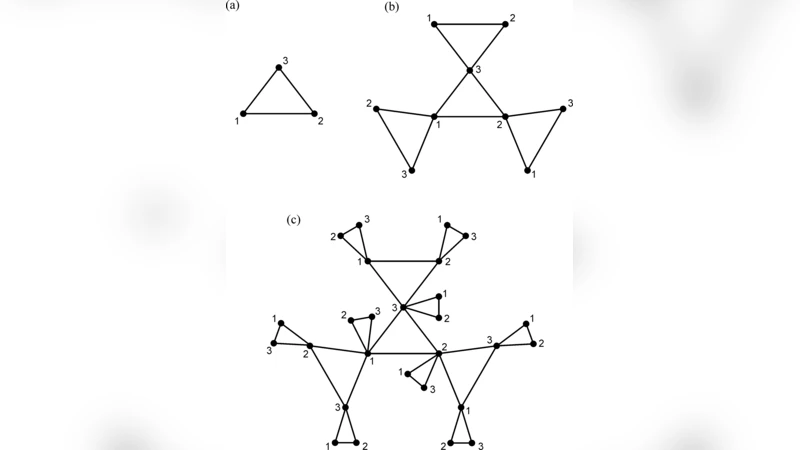
A graph is equitably $k$-colorable if its vertices can be partitioned into $k$ independent sets in such a way that the number of vertices in any two sets differ by at most one. The smallest $k$ for which such a coloring exists is known as the equitable chromatic number of $G$ and denoted $\chi_{=}(G)$. It is known that this problem is NP-hard in general case and remains so for corona graphs. In “Equitable colorings of Cartesian products of graphs” (2012) Lin and Chang studied equitable coloring of Cartesian products of graphs. In this paper we consider the same model of coloring in the case of corona products of graphs. In particular, we obtain some results regarding the equitable chromatic number for $l$-corona product $G \circ ^l H$, where $G$ is an equitably 3- or 4-colorable graph and $H$ is an $r$-partite graph, a path, a cycle or a complete graph. Our proofs are constructive in that they lead to polynomial algorithms for equitable coloring of such graph products provided that there is given an equitable coloring of $G$. Moreover, we confirm Equitable Coloring Conjecture for corona products of such graphs. This paper extends our results from \cite{hf}.
💡 Research Summary
The paper investigates equitable colorings of corona multiproducts, a graph operation that attaches a copy of a secondary graph (H) to every vertex of a primary graph (G) and connects each vertex of (G) to all vertices of its attached copy. Repeating this construction (l) times yields the (l)-corona product (G\circ^{l}H). An equitable (k)-coloring partitions the vertex set into (k) independent sets whose sizes differ by at most one; the smallest such (k) is the equitable chromatic number (\chi_{=}(G)). While determining (\chi_{=}) is NP‑hard in general and remains hard for ordinary corona graphs, the authors focus on a restricted but practically relevant setting: the base graph (G) is already equitably 3‑colorable or 4‑colorable, and the attached graph (H) belongs to one of four families—(r)-partite graphs, paths, cycles, or complete graphs.
The main contributions are threefold. First, the authors derive exact formulas for (\chi_{=}(G\circ^{l}H)) under the above assumptions. For an (r)-partite (H) they prove that if (G) admits an equitable (k)-coloring with (k\ge r), then the (l)-corona product also has equitable chromatic number (k). For paths and cycles they show that the same value of (k) suffices, with a minor adjustment for odd cycles that may require one extra color but still yields an equitable coloring. For a complete graph (K_t) they establish that any equitable (k)-coloring of (G) with (k\ge t) extends to an equitable (k)-coloring of (G\circ^{l}K_t). In each case the proofs are constructive: they describe how to distribute the colors of (G) among the copies of (H) so that the size balance is preserved.
Second, the constructive proofs lead directly to polynomial‑time algorithms. Assuming an equitable coloring of (G) is given, the algorithm proceeds iteratively. At the first level ((l=1)) it colors each copy (H_v) according to the prescribed scheme (e.g., assigning distinct colors to the parts of an (r)-partite graph, or alternating colors along a path). For each subsequent level the algorithm treats the already colored graph as the new “base” and repeats the same distribution on the newly attached copies. The total work is proportional to (l\cdot|V(G)|\cdot|V(H)|), i.e., polynomial in the size of the input and the number of iterations.
Third, the paper verifies the Equitable Coloring Conjecture (ECC) for the considered corona products. ECC posits that any graph (G) has an equitable coloring using at most (\Delta(G)+1) colors, where (\Delta(G)) is the maximum degree. The authors show that for the families of (H) studied, the equitable chromatic number of (G\circ^{l}H) never exceeds (\Delta(G\circ^{l}H)+1). This follows because the construction never introduces a need for more colors than the larger of (\chi_{=}(G)) and the intrinsic color requirement of (H) (e.g., (t) for (K_t)), and these quantities are bounded by the maximum degree plus one in the corona product.
The paper situates its results within the broader literature. Lin and Chang (2012) examined equitable colorings of Cartesian products; the present work extends the paradigm to corona multiproducts, which have a more hierarchical and densely connected structure. By focusing on cases where the base graph already admits a small equitable coloring, the authors obtain tight bounds and efficient algorithms, thereby bridging a gap between theoretical hardness and practical applicability. Potential applications include load balancing in parallel computing, frequency assignment in wireless networks, and any scenario where a set of resources (colors) must be distributed evenly across a replicated modular system.
Finally, the authors acknowledge limitations and future directions. The analysis assumes that (G) is equitably 3‑ or 4‑colorable; extending the results to higher base chromatic numbers or to arbitrary (H) (e.g., non‑partite, irregular graphs) remains open. Moreover, while the algorithm is polynomial for fixed (l), the vertex count grows exponentially with (l) ((|V(G)|(|V(H)|+1)^{l})), suggesting a need for more sophisticated techniques when (l) is large. Nonetheless, the paper makes a substantial contribution by delivering exact equitable chromatic numbers, constructive proofs, and polynomial algorithms for a non‑trivial class of graph products, and by confirming the Equitable Coloring Conjecture in this new context.
Comments & Academic Discussion
Loading comments...
Leave a Comment