Flexibility Induced Motion Transition of Active Filament: Rotation without Long-range Hydrodynamic Interaction
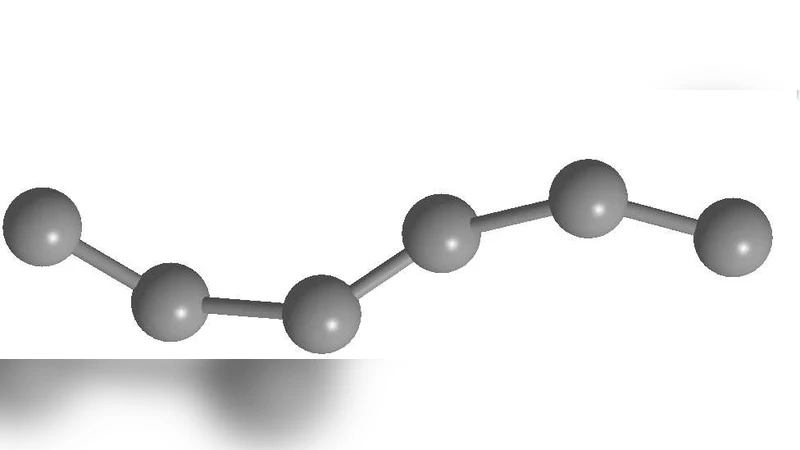
We investigate the motion of active semiflexible filament with shape kinematics and hydrodynamic interaction including. Three types of filament motion are found: Translation, snaking and rotation. Change of flexibility will induce instability of shape kinematics and further result in asymmetry of shape kinematics respect to the motion of mass center, which are responsible to a continuous-like transition from translation to snaking and a first-order-like transition from snaking to rotation, respectively. Of particular interest, we find that long-range hydrodynamic interaction is not necessary for filament rotation, but can enhance remarkably the parameter region for its appearance. This finding may provide an evidence that the experimentally found collective rotation of active filaments is more likely to arise from the individual property even without the long-range hydrodynamic interaction.
💡 Research Summary
The authors present a computational study of an active semiflexible filament whose internal elasticity can be tuned, and whose dynamics are governed by both shape kinematics and hydrodynamic interactions. The filament is discretized into N linked segments, each connected by linear springs (elastic constant κ) and dashpots (viscous coefficient γ). A constant active force f₀ is applied to every segment, mimicking self‑propulsion. Two fluid‑interaction models are employed: a purely local Stokes drag and a full long‑range hydrodynamic coupling based on the Oseen tensor. By integrating the equations of motion over time, the authors map out the filament’s behavior as a function of κ, while keeping other parameters fixed.
Three distinct motility regimes emerge. At high κ (stiff filament) the shape remains essentially straight; the active force balances drag, and the filament translates linearly without appreciable deformation. This “translation” mode preserves left‑right symmetry of the filament’s shape. As κ is reduced past a critical value κ₁, the straight configuration becomes unstable. Small perturbations grow into bending waves that travel along the filament, producing a sinusoidal‐like shape that oscillates while the center of mass follows a wavy trajectory. The authors term this “snaking”. The transition from translation to snaking is continuous (second‑order‑like): the amplitude of the bending grows smoothly from zero, and fluctuations become large near κ₁, indicating a soft mode associated with a shape instability.
Further reduction of κ below a second threshold κ₂ triggers a qualitative change: the filament adopts a persistent asymmetric curvature that defines a rotation axis. The whole filament rotates around its center of mass, which now moves on a closed circular orbit. This “rotation” regime is characterized by a discontinuous jump in order parameters (e.g., angular momentum, curvature asymmetry), reminiscent of a first‑order transition. Importantly, the rotation does not require long‑range hydrodynamic coupling; it appears in simulations with only local drag. When the Oseen‑type interaction is added, the rotation persists but the κ interval over which it exists widens and the rotation speed increases, demonstrating that hydrodynamic interactions can enhance but are not essential for the phenomenon.
The paper also reports hysteresis: increasing κ from the rotating state and decreasing κ from the translating state follow different paths, confirming the presence of multistability near the transition points. Energy analysis shows that the rotating filament minimizes a balance between active work and viscous dissipation by locking into a steady asymmetric shape, whereas the snaking filament continuously dissipates energy through traveling waves.
Overall, the study delivers three key insights. First, filament flexibility controls a cascade of shape instabilities that drive motility transitions. Second, individual filament rotation can arise purely from internal elastic asymmetry and active forcing, without the need for collective hydrodynamic coupling. Third, long‑range hydrodynamics, while not a prerequisite, significantly expands the parameter space where rotation is observable and boosts its efficiency. These findings have implications for the design of synthetic active materials, microswimmers, and for interpreting collective rotational behaviors observed in experiments with actin or microtubule bundles, suggesting that such collective phenomena may be rooted in single‑filament properties rather than exclusively in inter‑filament fluid‑mediated interactions.