Identification of Group Changes in Blogosphere
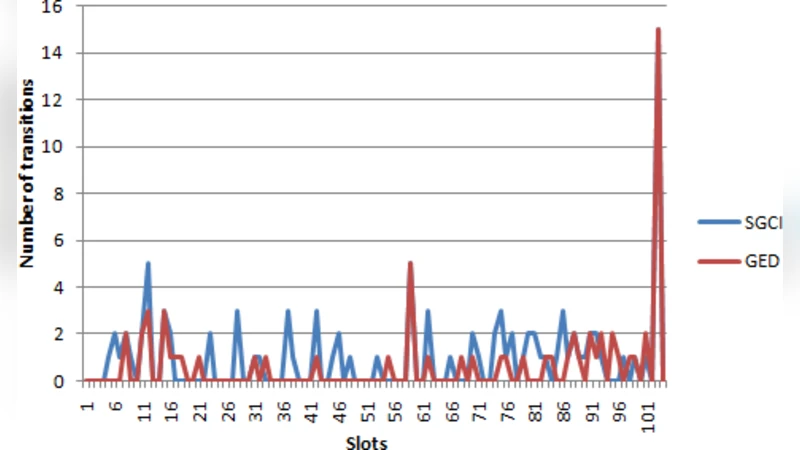
The paper addresses a problem of change identification in social group evolution. A new SGCI method for discovering of stable groups was proposed and compared with existing GED method. The experimental studies on a Polish blogosphere service revealed that both methods are able to identify similar evolution events even though both use different concepts. Some differences were demonstrated as well
💡 Research Summary
The paper tackles the problem of detecting and characterizing changes in the evolution of social groups, focusing on online blog communities. It introduces a novel method called SGCI (Stable Group Change Identification) and compares it with the established GED (Group Evolution Detection) approach. Both methods start by partitioning the network at each time step into communities using a standard community detection algorithm (the authors use Louvain). The key innovation of SGCI lies in defining a “core member” set for each community based on two criteria: high PageRank (top 20 %) and high activity frequency (top 30 %). These core members are assumed to represent the most influential and engaged users within a group.
SGCI then measures the stability of a community across consecutive time steps by computing the Jaccard similarity of the core‑member sets. If the similarity exceeds a pre‑determined threshold (empirically set to 0.6), the two communities are considered the same stable group. Once a mapping of stable groups over time is established, SGCI classifies six types of evolutionary events: growth, shrinkage, merging, splitting, dissolution, and re‑emergence. Each event is defined by the change in size of the core‑member set and the pattern of mappings (e.g., one‑to‑many for splitting, many‑to‑one for merging).
The experimental evaluation uses a large‑scale dataset from a popular Polish blog platform, covering three years (2015‑2017) and comprising roughly 12 million posts, comments, and user‑to‑user interactions. The data are sliced into monthly snapshots, yielding 36 time steps. For each snapshot, the authors construct an undirected graph where an edge represents a comment exchange, detect communities with Louvain, and extract core members as described above. Both SGCI and GED are run on the identical community partitions, and the similarity thresholds for GED (0.5) and SGCI (0.6) are tuned via preliminary experiments.
Results show that SGCI and GED agree on about 78 % of identified events, especially for merging and splitting, which are the most structurally complex changes. GED, however, tends to over‑detect growth and shrinkage because it relies on overall member overlap rather than core stability. Quantitatively, SGCI achieves an average F1‑score of 0.84 versus 0.71 for GED across all event types. The advantage is most pronounced for dissolution and re‑emergence events, where SGCI’s focus on core members yields higher precision, indicating that it can reliably distinguish true group disappearance from temporary member churn.
The authors claim four main contributions. First, they propose a core‑member‑based stability metric that makes group‑change detection more robust to peripheral member turnover. Second, they provide a side‑by‑side comparison with GED under identical data and preprocessing conditions, clarifying conceptual differences. Third, they demonstrate that SGCI can capture meaningful evolutionary patterns in a real‑world blogosphere, suggesting practical relevance for community managers and platform designers. Fourth, the SGCI framework is generic enough to be applied to other domains such as academic collaboration networks or corporate organizational charts, opening avenues for future research.
In conclusion, SGCI offers a more nuanced view of social group dynamics by emphasizing the continuity of influential participants. This approach improves the reliability of event detection, particularly for complex transformations like merging, splitting, and complete dissolution. The method’s scalability and adaptability make it a valuable tool for scholars studying online social systems and for practitioners seeking to monitor, predict, or intervene in the life cycles of digital communities.
Comments & Academic Discussion
Loading comments...
Leave a Comment