Physics Educators as Designers of Simulation using Easy Java Simulation (Ejs)
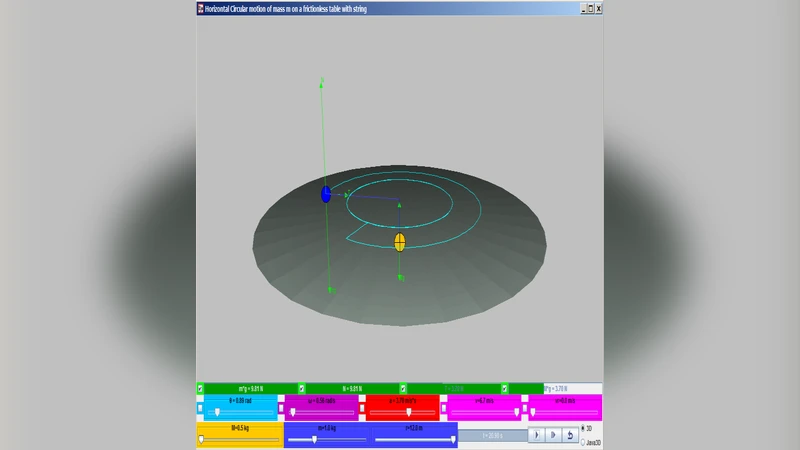
To deepen the professional practice of physics educators, I seek to highlight the Open Source Physics (OSP) and Easy Java Simulation (Ejs or EJS) community of educators that engage, enable and empower teachers as learners so that we can be leaders in our teaching practice. I learned through Web 2 online collaborative means to develop simulations together with reputable physicists through the open source digital library. By examining the open source codes of the simulation through the Ejs toolkit, I was able to examine and make sense of the physics from the computational models created by practicing physicists. I will share some of the simulations that I have remixed from existing library of simulations models into suitable learning environments for inquiry of physics. http://www.phy.ntnu.edu.tw/ntnujava/index.php?board=28.0
💡 Research Summary
The paper presents a comprehensive framework for physics teachers to evolve from passive users of educational technology to active designers and developers of interactive simulations, using the Open Source Physics (OSP) repository and the Easy Java Simulation (EJS) toolkit. The author begins by describing the wealth of openly licensed simulation models available through OSP, covering topics from mechanics and electromagnetism to quantum phenomena. These models are written in Java and are fully accessible, allowing educators to inspect the underlying mathematical equations, numerical methods, and initial‑condition parameters.
EJS serves as the bridge between code and pedagogy. Its graphical user interface lets teachers modify variables, add or remove differential equations, and instantly regenerate Java source code without deep programming expertise. This lowers the barrier to entry, enabling educators to tailor simulations to specific curriculum standards or inquiry‑based learning objectives.
A central theme of the work is collaborative development via Web 2.0 platforms. The author details how forums (e.g., the NTNU Java board), GitHub repositories, and wikis facilitate real‑time code review, bug fixing, and feature enhancement with contributions from physicists, software engineers, and fellow teachers worldwide. This community‑driven feedback loop not only improves the scientific fidelity of the simulations but also provides teachers with authentic professional development experiences that mirror scholarly research practices.
The “remixing” process is illustrated through several case studies. For instance, a simple pendulum model is re‑engineered to expose parameters such as string length, bob mass, air resistance, and driving forces. Students manipulate these parameters during class, observe the resulting motion in real time, and compare plotted data against theoretical predictions. By engaging directly with the model’s code, teachers can embed scaffolding prompts, data‑logging widgets, and assessment rubrics that align with inquiry‑based pedagogy.
Technical integration strategies are also covered. The author explains how to export EJS simulations as HTML5/JavaScript applets for seamless embedding in learning management systems (LMS) via SCORM packages, or to stream them to interactive whiteboards using wireless protocols. These deployment methods allow instructors to control simulations live, capture student‑generated data, and feed it back into classroom discussions.
Assessment is addressed through a teacher‑crafted rubric that evaluates conceptual understanding, data interpretation, model‑modification skills, and collaborative behaviors. The rubric provides concrete performance descriptors, enabling systematic monitoring of student progress throughout the simulation‑based inquiry cycle.
Finally, the paper discusses the legal and ethical implications of using open‑source licenses (primarily GPL and BSD). Because the code is freely modifiable and redistributable, teachers can adapt simulations without copyright concerns and are encouraged to contribute their derivatives back to the community, fostering a sustainable ecosystem of shared resources.
In conclusion, the study offers a practical, step‑by‑step roadmap that guides physics educators through discovery, analysis, remixing, integration, evaluation, and sharing of open‑source simulations. By adopting this model, teachers can enhance their professional practice, promote student‑centered inquiry, and contribute to the global advancement of physics education in the digital age.