Belief Propagation for Structured Decision Making
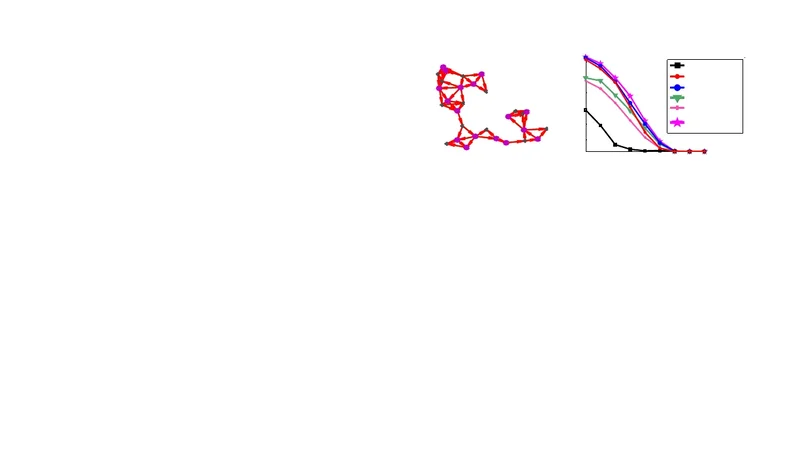
Variational inference algorithms such as belief propagation have had tremendous impact on our ability to learn and use graphical models, and give many insights for developing or understanding exact and approximate inference. However, variational approaches have not been widely adoped for decision making in graphical models, often formulated through influence diagrams and including both centralized and decentralized (or multi-agent) decisions. In this work, we present a general variational framework for solving structured cooperative decision-making problems, use it to propose several belief propagation-like algorithms, and analyze them both theoretically and empirically.
💡 Research Summary
The paper introduces a unified variational framework for solving structured cooperative decision‑making problems that are traditionally modeled with influence diagrams and multi‑agent influence networks. The authors begin by formalizing the decision problem as a joint distribution over random variables X, decision variables A, and utility variables U. Each agent possesses a local policy π_i(a_i|pa_i), and the global objective is to maximize the expected utility E_{p,π}