Combinatorics and the Rigidity of CAD Systems
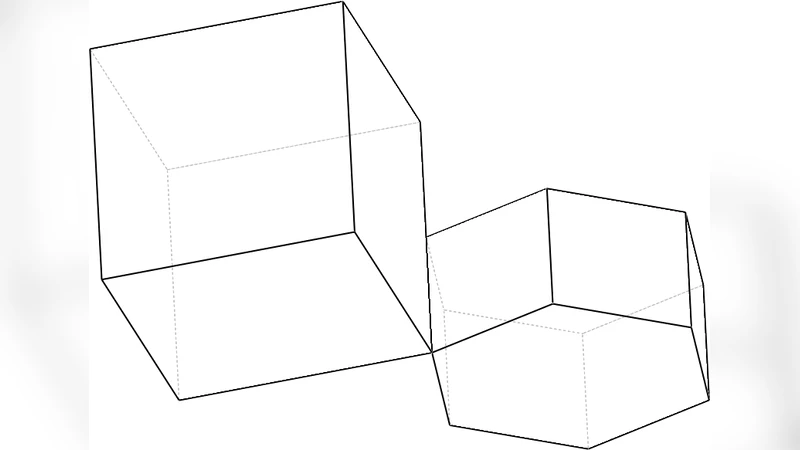
We study the rigidity of body-and-cad frameworks which capture the majority of the geometric constraints used in 3D mechanical engineering CAD software. We present a combinatorial characterization of the generic minimal rigidity of a subset of body-and-cad frameworks in which we treat 20 of the 21 body-and-cad constraints, omitting only point-point coincidences. While the handful of classical combinatorial characterizations of rigidity focus on distance constraints between points, this is the first result simultaneously addressing coincidence, angular, and distance constraints. Our result is stated in terms of the partitioning of a graph into edge-disjoint spanning trees. This combinatorial approach provides the theoretical basis for the development of deterministic algorithms (that will not depend on numerical methods) for analyzing the rigidity of body-and-cad frameworks.
💡 Research Summary
The paper tackles a long‑standing gap between the combinatorial rigidity theory that traditionally deals with simple distance constraints (e.g., bar‑and‑joint frameworks) and the rich set of geometric constraints actually used in modern 3‑D mechanical‑engineering CAD systems. The authors introduce the “body‑and‑CAD” framework, a model that treats each rigid part (a “body”) as a six‑degree‑of‑freedom object and represents every CAD constraint—coincidence of points, coincidence of a point with a line, line‑line coincidence, angular relationships (parallelism, orthogonality, fixed angles), and distance constraints—as an edge in a multigraph. Twenty‑one basic constraint types are catalogued; the analysis deliberately excludes only the point‑point coincidence constraint because its combinatorial representation is more intricate and would obscure the main result.
The central contribution is a generic minimal‑rigidity characterization that applies to any body‑and‑CAD framework built from the remaining twenty constraint types. Under the generic‑position assumption (i.e., the algebraic dependencies among the constraints are those forced by the combinatorial structure alone), the framework is minimally rigid if and only if its constraint graph can be partitioned into six edge‑disjoint spanning trees. The number six corresponds to the six independent motions of a rigid body in three‑dimensional space (three translations and three rotations). Consequently, a minimally rigid system with (n) bodies must contain exactly (6n-6) independent constraints, mirroring the classic count for bar‑and‑joint frameworks (2n‑3 in 2‑D) but now encompassing a heterogeneous mix of constraint types.
To arrive at this theorem, the authors first translate each constraint type into a “color” that encodes how many degrees of freedom it removes. For example, a distance constraint eliminates one translational degree, while a fixed‑angle constraint removes two degrees (one rotational and one translational component). By aggregating these colored edges, they construct a colored multigraph whose total edge count matches the required (6n-6). The necessity direction follows from a straightforward degree‑of‑freedom count combined with matroid‑theoretic sparsity arguments: any minimally rigid framework must be (6, (n-1))-sparse, meaning every subset of (k) bodies spans at most (6k-6) edges. The sufficiency direction is more subtle; it leverages the Tutte‑Nash‑Williams theorem on arboricity and a matroid‑partition theorem (Edmonds’ algorithm) to show that if the graph can be decomposed into six spanning trees, then the associated rigidity matrix has full rank generically.
Algorithmically, the paper converts the rigidity test into a matroid‑partition problem: given the colored edge set, decide whether it can be split into six independent forests. This can be solved in polynomial time using existing matroid partition algorithms, yielding a deterministic, non‑numerical method for rigidity verification. Moreover, when the partition fails, the algorithm produces a certificate—a minimal dependent set of constraints—that pinpoints over‑constrained regions in the CAD model. This capability is especially valuable for large assemblies where numerical solvers may suffer from ill‑conditioning or convergence issues.
The authors acknowledge a limitation: the exclusion of point‑point coincidence constraints. Such constraints can create “clusters” of points that must occupy the same location, leading to hyper‑edges rather than ordinary edges in the graph model. Handling them would likely require a hypergraph or clustered matroid framework, which the paper leaves as future work.
In the discussion, the authors highlight several practical implications. First, the combinatorial criterion enables CAD developers to embed a fast pre‑processor that flags rigidity problems before any geometric solving begins, potentially saving design time and reducing costly re‑iterations. Second, the theory is extensible to related domains such as robotic manipulators, deployable structures, and virtual‑reality avatars, where mixed angular and distance constraints are common. Finally, the work opens a new research direction: a full combinatorial rigidity theory for all 21 CAD constraint types, possibly integrating algebraic geometry tools to handle the remaining point‑point coincidences.
Overall, the paper delivers a rigorous, combinatorial foundation for analyzing the rigidity of realistic CAD assemblies, bridging the gap between abstract rigidity theory and the practical needs of mechanical‑engineering design.
Comments & Academic Discussion
Loading comments...
Leave a Comment