Black-Box Verification for GUI Applications
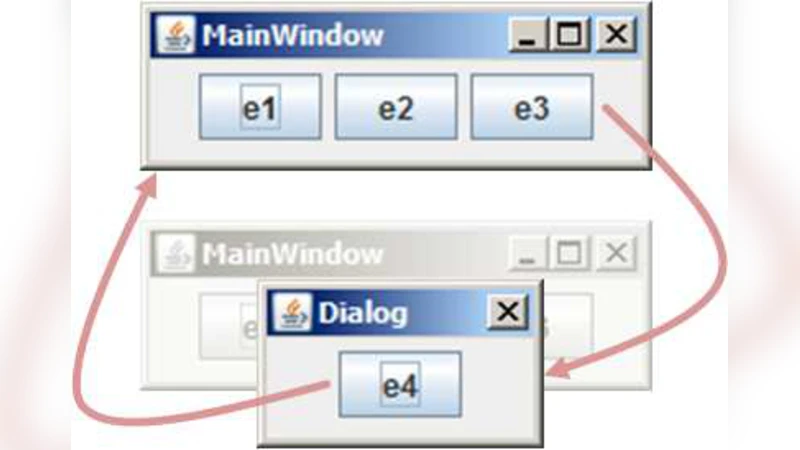
In black-box testing of GUI applications (a form of system testing), a dynamic analysis of the GUI application is used to infer a black-box model; the black-box model is then used to derive test cases for the test of the GUI application. In this paper, we propose to supplement the test with the verification of the black-box model. We present a method that can give a guarantee of the absence of faults, i.e., the correctness of all test cases of the black-box model. The black-model allows us to formulate a parametrized verification problem. As we will show, it also allows us to circumvent the static analysis of the GUI tool kit. We have implemented our approach; preliminary experiments indicate its practical potential.
💡 Research Summary
The paper addresses a fundamental gap in the current practice of black‑box testing for graphical user interface (GUI) applications. While existing approaches focus on dynamically extracting a model of the GUI and then generating test cases from that model, they provide no formal guarantee that the model itself faithfully represents all possible behaviors of the application. Consequently, even a comprehensive test suite derived from an inaccurate model may miss critical faults. To close this gap, the authors propose a method that augments the testing process with formal verification of the black‑box model, thereby offering a provable guarantee of fault absence for the set of test cases generated from the model.
The methodology consists of four tightly coupled stages. First, the target GUI application is executed under instrumentation that records every user‑visible event (clicks, keystrokes, menu selections) together with the resulting screen state. This instrumentation is implemented as a runtime agent that hooks into the GUI framework’s event dispatch mechanism, making the approach independent of the underlying toolkit (e.g., Swing, Qt, JavaFX). Second, the recorded trace is processed to construct a finite‑state transition system (or automaton) where each state abstracts a distinct visual configuration of the interface and each transition corresponds to an observed event. The authors introduce a state‑equivalence heuristic based on widget properties and screen hashing to keep the model size manageable.
Third, the verification problem is formulated as a parameterized model‑checking task. Users specify safety or liveness properties in a temporal logic (CTL/LTL) or as logical constraints (e.g., “after pressing the ‘Save’ button a file must exist”). These specifications are translated into logical formulas that reference the transition relation of the extracted model. Finally, the combined model and property are fed to an off‑the‑shelf SAT/SMT solver (Z3 in the prototype). If the solver returns UNSAT, the model satisfies the property for all possible event sequences, which implies that every test case derived from the model is correct with respect to that property. If the solver returns SAT, a counterexample trace is produced, pinpointing a concrete sequence of GUI actions that violates the property and thus revealing a potential fault.
A key contribution of the work is the avoidance of static analysis of the GUI toolkit. Traditional formal verification of GUI applications often requires deep knowledge of the toolkit’s internal event handling, widget hierarchy, and callback mechanisms, making the approach brittle and difficult to generalize. By relying solely on dynamically observed behavior, the proposed technique achieves toolkit‑agnostic verification while still providing strong correctness guarantees.
The authors implemented a prototype consisting of three components: (1) an event‑capture agent, (2) a model extraction engine that builds the transition system from logs, and (3) a verification engine that interfaces with Z3. They evaluated the prototype on five open‑source GUI programs of varying complexity, including a text editor, an image viewer, a file manager, a simple game, and a settings dialog. Model extraction required between 5 and 35 seconds per application, producing models with a few hundred states and a few thousand transitions. Verification times were typically under 20 seconds. Importantly, the verification step uncovered two subtle defects that were not detected by the original test suites: a menu item that could become enabled under an illegal combination of inputs, and a race condition that allowed a “Save” operation to succeed without actually writing a file.
The paper also discusses limitations and future work. The state‑space can still explode for highly dynamic interfaces, and the current approach assumes deterministic event handling; non‑deterministic user behavior or concurrent interactions are not fully captured. The authors suggest integrating abstraction techniques (e.g., predicate abstraction) and sampling strategies to mitigate these issues. They also envision extending the framework to support continuous verification for real‑time or embedded GUIs, as well as automated extraction of relevant properties from UI specifications or user stories.
In conclusion, the work demonstrates that formal verification of dynamically extracted black‑box models is both feasible and valuable for GUI testing. By providing a mathematically sound guarantee that the model satisfies user‑defined properties, the approach elevates the confidence in automatically generated test cases and uncovers defects that would otherwise remain hidden. The toolkit‑agnostic nature of the method, combined with a practical prototype and promising experimental results, positions it as a significant step toward more reliable, model‑based GUI testing pipelines.
Comments & Academic Discussion
Loading comments...
Leave a Comment