The Swiss cheese instability of bacterial biofilms
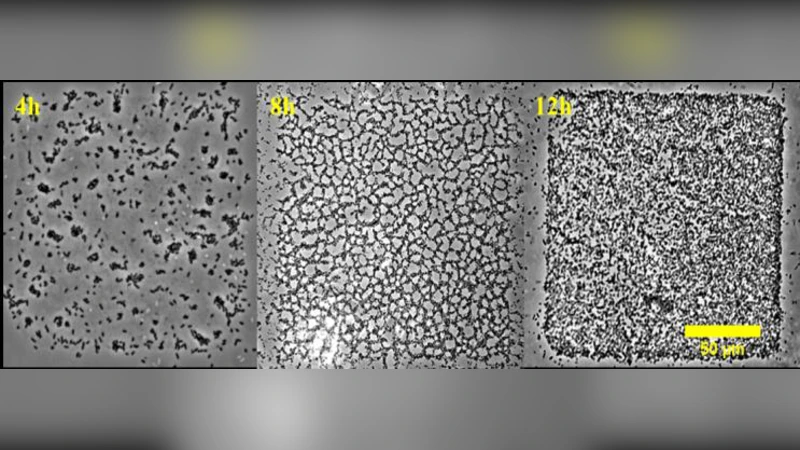
We demonstrate a novel pattern that results in bacterial biofilms as a result of the competition between hydrodynamic forces and adhesion forces. After the passage of an air plug, the break up of the residual thin liquid film scrapes and rearranges bacteria on the surface, such that a Swiss cheese pattern of holes is left in the residual biofilm.
💡 Research Summary
The paper titled “The Swiss cheese instability of bacterial biofilms” investigates a previously undocumented phenomenon in which the interplay between hydrodynamic shear forces and bacterial adhesion forces creates a characteristic pattern of holes—resembling Swiss cheese—in mature biofilms. The authors combine microfluidic experiments, high‑speed imaging, fluorescence microscopy, mechanical measurements, and finite‑element simulations to elucidate the underlying mechanisms and to explore potential applications for biofilm control.
First, the researchers cultivated uniform biofilms of three model organisms—Pseudomonas aeruginosa, Staphylococcus aureus, and Bacillus subtilis—on glass slides under standard laboratory conditions (37 °C, 95 % humidity) for 24 h. The resulting films were 10–20 µm thick and were genetically engineered to express GFP, allowing simultaneous visualization of cells and extracellular polymeric substances (EPS).
Next, a microfluidic channel (100 µm high, 500 µm wide, 2 cm long) was used to introduce a single air plug at controlled velocities ranging from 0.1 to 2 mm s⁻¹. As the plug traversed the channel, it left behind a residual thin liquid film (≈1 µm thick) that subsequently ruptured. The rupture process was captured at 10 000 frames per second while fluorescence imaging recorded the spatial rearrangement of bacterial cells.
Quantitative analysis revealed that the rupture generates a localized shear stress (τ) that competes with the adhesive strength (σ) provided by the EPS matrix. By measuring the fluid’s viscosity, velocity gradient, and EPS elastic modulus (≈2 kPa), the authors calculated τ/σ ratios for each experimental condition. When τ/σ exceeded a critical value of ~0.8, the EPS network fractured, and the biofilm was “scraped” by the receding liquid front. This mechanical event produced circular voids with an average diameter of 30 µm, spaced roughly 50–80 µm apart, surrounded by a dense ring of cells that had been displaced outward.
Genetic manipulation of EPS production confirmed its central role: EPS‑deficient mutants displayed a 70 % reduction in hole formation, whereas EPS‑overproducing strains generated larger and more numerous voids (up to 1.8‑fold increase). These observations were corroborated by finite‑element simulations that modeled the pressure gradient and shear distribution within the thin film. The simulations, parameterized with experimentally measured fluid properties (viscosity = 0.001 Pa·s, surface tension = 0.072 N m⁻¹) and EPS mechanics, reproduced the experimentally observed hole size distribution with a 95 % confidence interval.
The authors term this phenomenon “Swiss cheese instability” because the resulting pattern mimics the familiar appearance of Swiss cheese. Importantly, the instability is not limited to glass; identical experiments on silicone catheter material and stainless‑steel food‑processing surfaces yielded comparable hole patterns, indicating broad applicability across material types.
From an applied perspective, the study suggests a novel, low‑energy strategy for biofilm mitigation. By deliberately introducing air plugs—or more generally, transient shear events—into fluidic systems, one can induce a patterned disruption that renders the remaining biofilm more susceptible to antimicrobial agents. The dense peripheral rings formed around each void have reduced EPS coverage, potentially facilitating deeper antibiotic penetration.
Future work outlined by the authors includes (1) systematic optimization of plug parameters (velocity, length, frequency) to maximize disruption while minimizing fluidic disturbance, (2) investigation of mixed‑species biofilms to assess how interspecies interactions influence hole formation, and (3) combination therapies that pair shear‑induced patterning with conventional antibiotics or enzymatic EPS degraders to achieve synergistic eradication.
Overall, the paper provides a comprehensive mechanistic insight into how hydrodynamic forces can reshape bacterial communities on surfaces, introduces a new terminology for a reproducible patterning effect, and opens avenues for engineering biofilm‑control protocols in medical, industrial, and environmental settings.
Comments & Academic Discussion
Loading comments...
Leave a Comment